Making the Art Industry in India Accessible, Inclusive and Less Intimidating:
A Conversation with Meher Sachdeva
Written by Aanchal Bordoloi
In a world that is presenting us with more opportunities to dabble with the arts and live out our rockstar dreams, anArtizen stands out in the Indie music space. A brainchild of Meher Sachdeva, who is often seen in the scene, associated with helping creatives or artizens in reaching their potential, anArtizen aims to make the journey a little less intimidating. I got an opportunity to get in touch with Meher, and here is how our conversation unfolded:
To begin with, could you please tell us a little bit about your work, and the vision with which you approach artist management?
My work sits at the intersection of artist development, strategy, and cultural programming. I’ve always been driven by a desire to build frameworks that allow artists to be both creatively free and structurally supported.
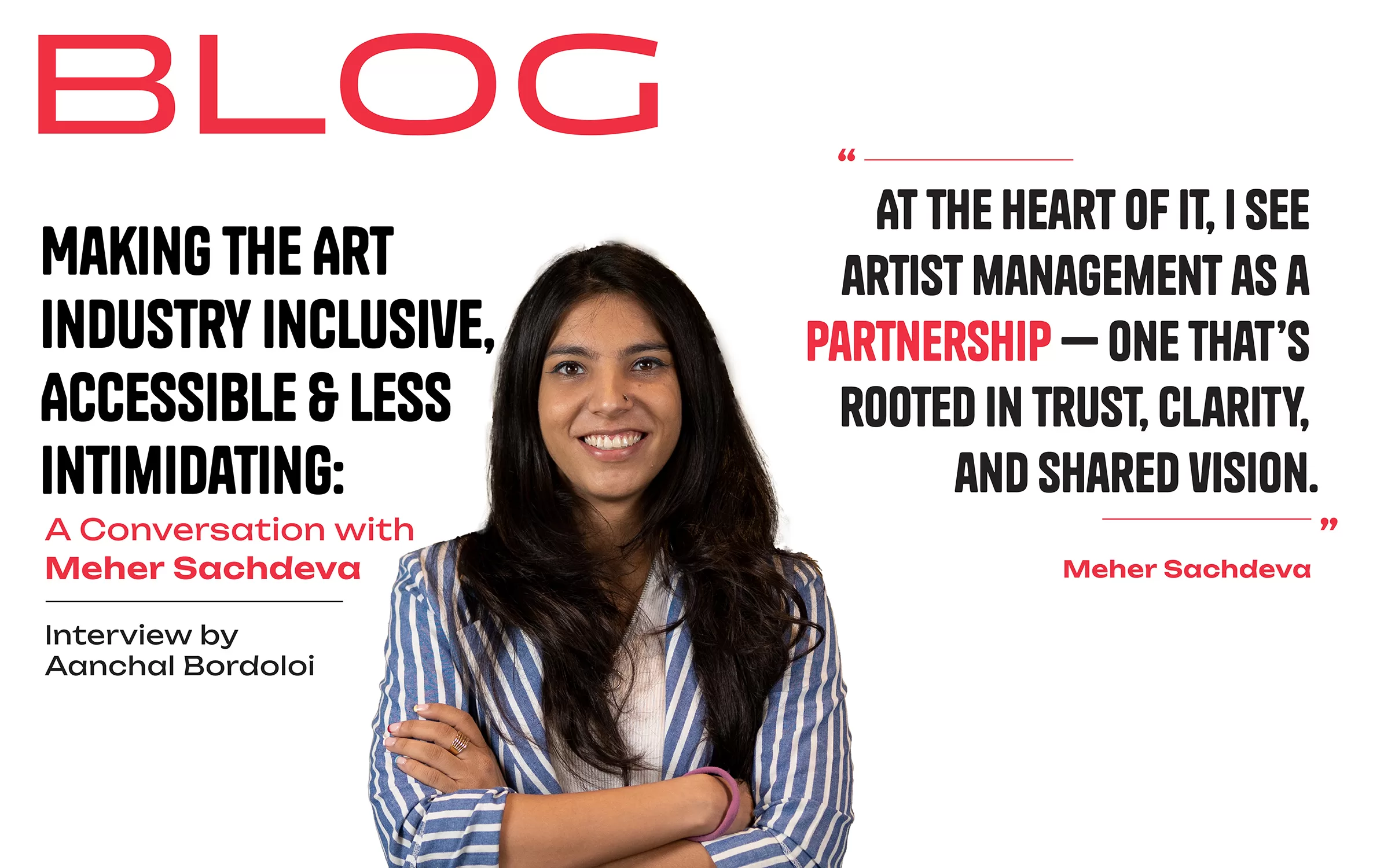
At the heart of it, I see artist management as a partnership—one that’s rooted in trust, clarity, and shared vision. A big part of my process is goal mapping: understanding where an artist wants to go creatively, professionally, and personally, and then working together to chart a path that’s both ambitious and sustainable. It’s not about chasing trends or quick wins—it’s about building something that lasts. Sustainability, for me, means setting up systems and timelines that allow artists to grow at a healthy pace, without burning out or compromising their values.
What qualities in an artist/band do you look for before signing them at your respective artist management companies?
I look for a sense of identity, an openness to evolve, and a willingness to treat the journey as a partnership. Management isn’t just about services—it’s about co-building a vision, together. So I pay attention to artists who are self-aware, willing to put in the work, and curious about growth. The numbers can always be built over time—what’s more important is the artist’s commitment to their craft and the kind of relationship we can develop. This isn’t a one-way street; it only works when there’s mutual trust and alignment.
Looking at current musicians in the Indie scene who have become very accomplished and successful in terms of performing their music and reaching large audiences, I’m sure it would have taken years of hard-work for these brilliant artists to finally get the spotlight.
With the rise of an ever-growing interest in the Independent music industry such as the growing number of artist management companies and music conferences, do you think that maybe we could speed up this process of getting better at identifying potential in artists and contributing to their growth in the early stages?
Yes, I do think we’re at a point where that process can be accelerated—but only if we evolve both our tools and our mindset. On a technical level, we now have access to more real-time data than ever before. Early signals like audience retention on short-form content, playlist performance across platforms, live engagement metrics, or even growth in niche online communities can all help us identify potential far earlier than we could a few years ago. But the challenge is interpreting that data with nuance—not just chasing numbers, but understanding patterns and context.
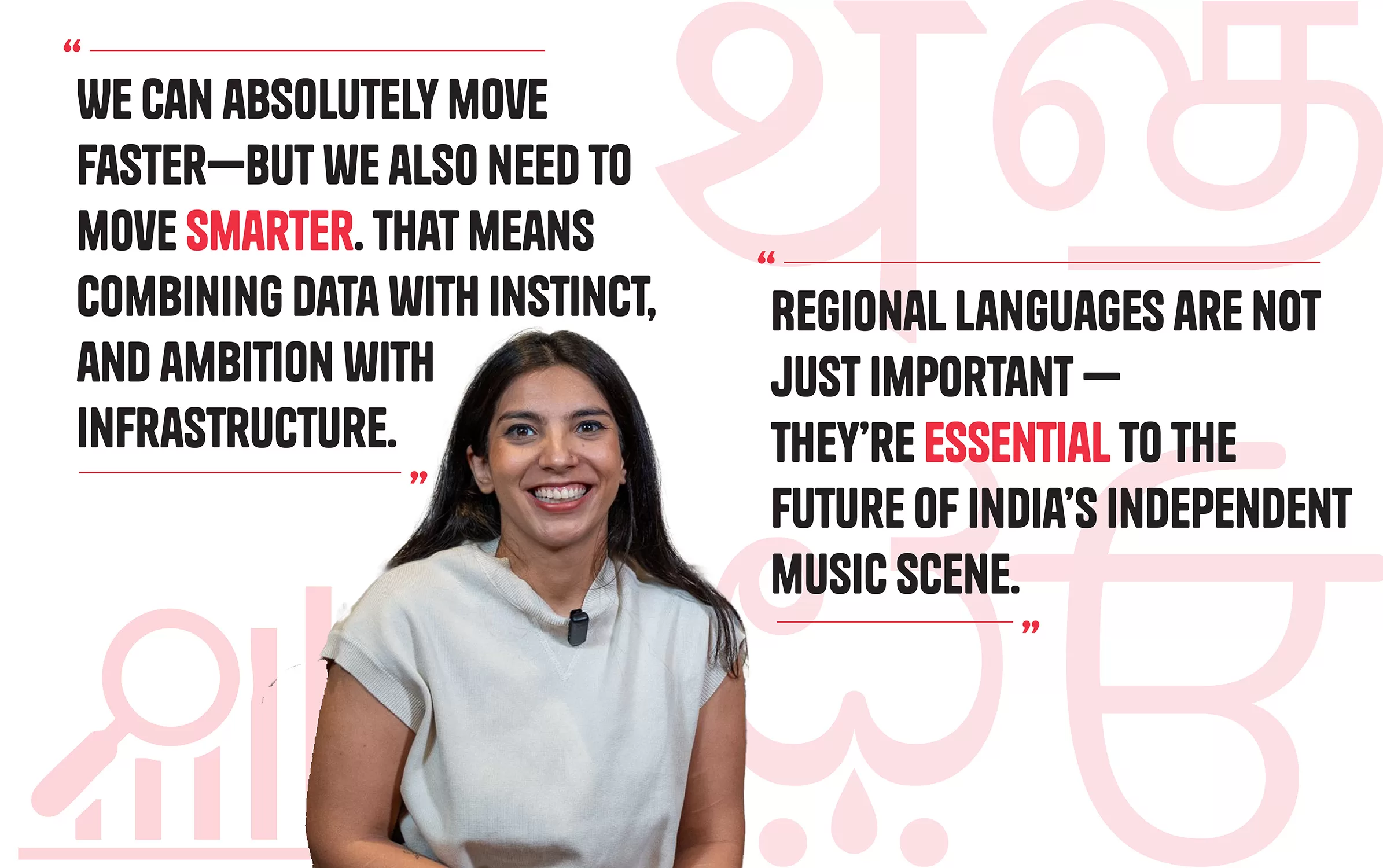
On the A&R front, the more we invest in structured discovery—through curated showcases, residency programs or digital-first scouting strategies—the better we get at spotting talent early. Ultimately, we can absolutely move faster—but we also need to move smarter. That means combining data with instinct, and ambition with infrastructure that’s built to support long-term careers, not just viral moments.
International acts such as Coldplay, Dua Lipa and Ed Sheeran have now begun to add India to their world tours. What implications would this have for the Indie scene in our country?
It’s an exciting time. International tours in India are definitely expanding the landscape for live music and setting a new benchmark for production, fan engagement, and experience design. But the real opportunity lies in how we integrate our own indie talent into this wave—opening for global acts, programming local festivals with the same energy, and investing in homegrown infrastructure. It can be a catalyst, but only if we ensure the momentum benefits our local ecosystem too.
When you are looking at signing artists, do the numbers really matter? – as in the number of Spotify listeners, Instagram followers? What does an artist need to do/work on to show their promise and potential in delivering good performances and honing their craft?
Numbers don’t paint the full picture. They can indicate momentum, but they aren’t a substitute for intention, effort, or artistic ability. I’m more interested in the long game—what are you building, and how do you show up for it every day? A strong partnership is what lays the foundation for everything else. Followers and listeners can grow with time and strategy, but things like work ethic, clarity of thought, and the ability to collaborate meaningfully—that’s what makes the difference. Artists don’t need to have it all figured out, but they need to be committed to the process.
Would you have any advice for aspiring singer-songwriters looking at getting signed?
Start by getting clear on why you’re doing this. Build a body of work, no matter how raw. Collaborate, perform, release music, get feedback, and stay in the loop with the community. Managers are always looking for artists who are already in motion—so the best thing you can do is start walking your path, and eventually the right people will join you on it.
How important are regional languages in music? We are aware that the film industry seeps into almost every aspect of our lives, from a socio-cultural perspective. As is the case in the state of Karnataka, a large portion of the Indian population is still yet to expand their listenership to songs written in the English language.
Regional languages are not just important—they’re essential to the future of India’s independent music scene. We’re seeing a real shift in how listeners engage with language in music. Tracks like ‘Tamdi Chamdi‘ have proven that regional languages can cut across geography, class, and culture when the music is rooted, honest, and sonically compelling.
These songs aren’t just doing well within their linguistic communities—they’re crossing over, being used in reels, live sets, playlists, and even brand campaigns. That’s a powerful signal. The idea that English or Hindi is more “universal” is slowly being dismantled as audiences open up to music that feels culturally specific but emotionally universal.
How do we work on making the Independent music industry more inclusive and accommodating of newer and fresher talent? For example, adding newer names to festival line-ups.
Inclusion starts with intention—but it doesn’t end there. While programmers, curators, and festival organizers do need to be more deliberate about bringing in new voices, it’s equally important to build audiences that are open and curious. Cultural education plays a huge role here. If we want diverse artists to thrive, we need to foster listening cultures that value experimentation, different languages, and alternative narratives—not just what’s familiar or trending.
It is nice to see so many more women taking up crucial roles in the music business. We would love to hear a bit about your personal journey as artist managers in this industry and if there were any roadblocks you faced that felt unique to you.
I’ve definitely been in rooms where people wouldn’t address me directly, or would assume I wasn’t the decision-maker—and of course, that’s tough. I think specifically in music, it’s also tough to work the hours we do in India in the nightlife world, and sometimes, that can also be intimidating.
But over time, I’ve learned that part of the work is in making conscious choices: choosing to stay in those rooms even when it’s uncomfortable, choosing to trust your voice, and choosing to find the right people who see and value what you bring to the table.
It’s not always easy, and it does take a toll sometimes. But you also learn how to back yourself, and how to navigate the industry in a way that’s honest to you. That clarity becomes your strength.
And thankfully, things are shifting. More women are entering this space with confidence, collaboration, and fresh perspectives—and that gives me a lot of hope for the future of the industry.