Zahara at GMI: A Retrospective
Written by Anchal Sethi
Edited by Sohaib Durrani
You must surrender mind and body completely to experience self expression through the art of music. On the 13th of September at Global Music Institute, Zahara (Annette Phillip), Grammy and Emmy-nominated musician, educator, and vocal improviser, breathed life into this phrase through her workshop, “The Singer’s Toolbox”; a full-day immersive experience on vocal improvisation and body movement. Over 80+ attendees from 12+ cities, of which I was one, gathered at the GMI Campus to claim this experience of a lifetime. It was primal. It was instinctive. But most importantly, it was freeing.
Here’s a recap of this memorable day!
“Vocal Play” Session: Free your mind and body
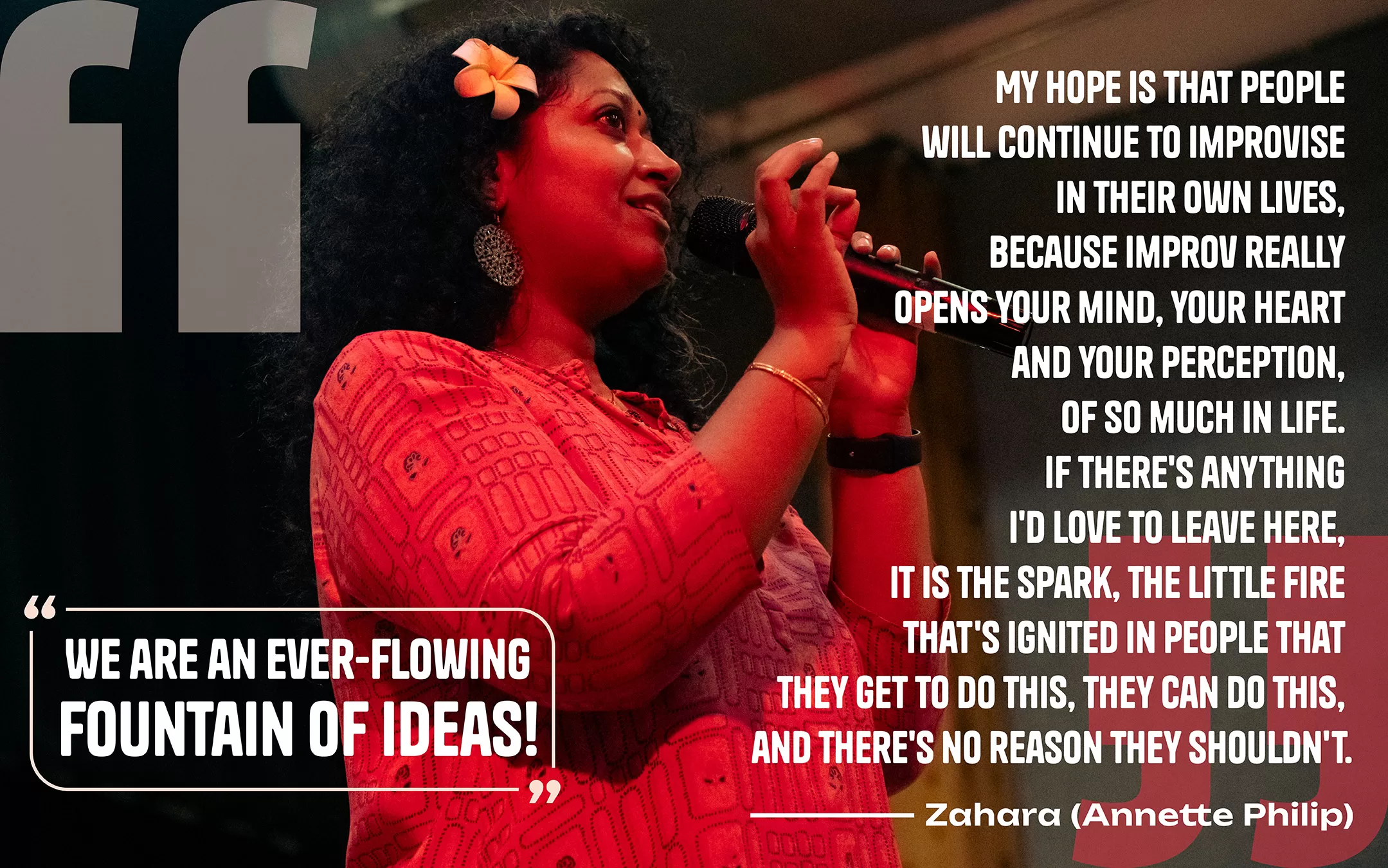
“We are an ever-flowing fountain of ideas!”
Before Vocal Play began, Zahara set this profoundly deep and encouraging premise deep in our hearts. With beautiful twinkling lights and lamps scattered across the stage were also about 27 vocalists, gathered in this raw and improvisational space, ready to embrace their bodies and voices so fully that the experience becomes a cathartic release, stripping away every inhibition.
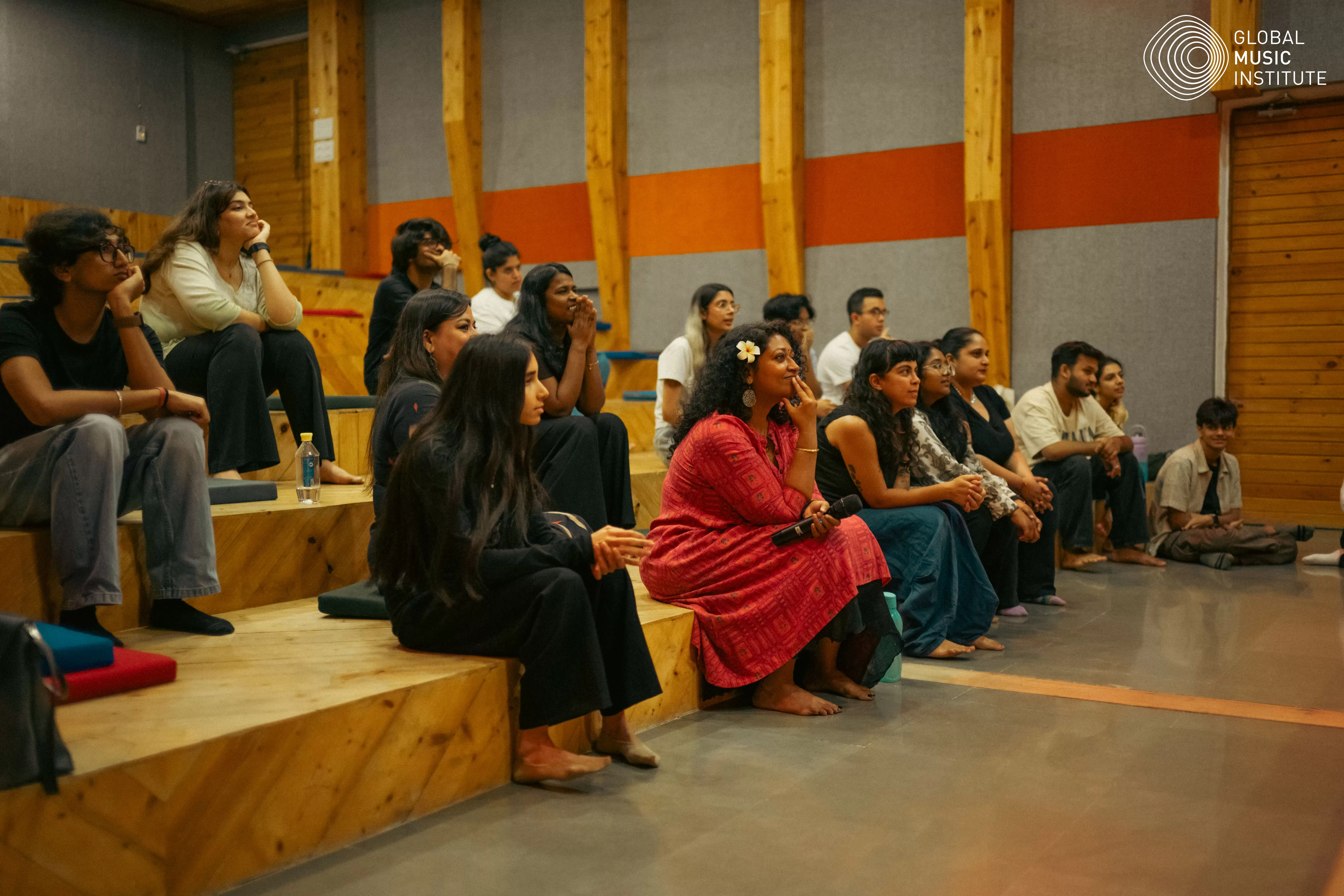
The curriculum for this session, inspired by Zahara’s long-time mentor, Rhiannon, creator of the Vocal River practice, uses vocal improvisation to unlock your potential and take your creativity to territories unexplored. As Zahara had suggested, from the very start, every exercise was improvisational, spontaneous, and free-flowing. One of the first things we did was write down names of things, of any shape or form, that we would like to throw away from our lives, and crumple up the pages in a pile to be disposed of. This momentarily made us put our mental baggage aside and fully commit to believing in our voices. As each new exercise approached, we explored and introspected, shedding away slivers of doubt that often bind us so terribly to our fears and weighing emotions.
Mirroring
Mind, body, and music have often been disconnected for me, until I realised that the movements of our bodies never needed to be so metronomically in sync. Rather, they can be free to flow, as if painting a canvas—music then simply becomes the guiding stroke. These thoughts sprang forward to me when doing the mirroring exercise. Communicating only through our eyes, partners in duos had to study each other’s voices and movements, mirroring them after a few attempts at syncing. The best amongst all this was how with little that we knew about each other, we got to connect through the driving force of movements and our voices.
Turn
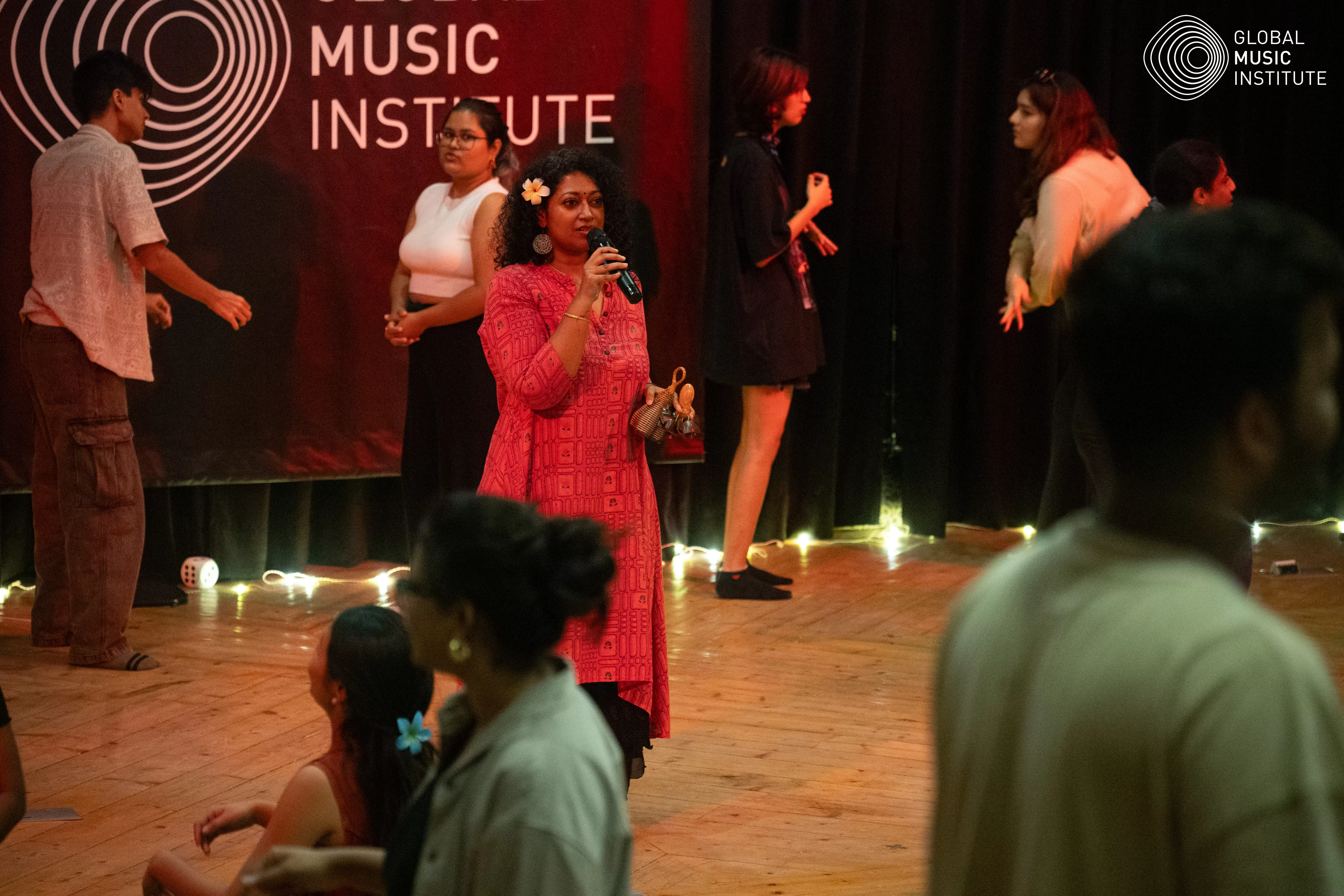
Next came an exercise called “Turn”, where we layered melodies, countermelodies, harmonies, and percussive sounds in a spontaneous flow, encouraging us to trust our instincts and experiment freely. This activity was a trust fall with ourselves just as much as with people in the group, unsure about where it would take us, but we’d let our instincts drive the scenic route of vocal harmonisation. It made me realise how often the burden of perfection and a technical approach to music takes away what our instincts offer the most, which is also the most authentic music we create.
Train
I loved telling everyone later on how many of us cried at the end of this session. What led to this collective sob was the last activity we did called “Train,” and just as the name suggests, it took us on yet another improvisational journey. While it started as individual harmonies building up, we split into groups to sing one-part harmony each, and slowly we all synced into one big choir chamber—one instrument. Zahara’s movement across the room, conducting us in a way that bound us, brought us closer to a big climax, which we ended with a massive and complete silence. The high energy lingered in this silence, the vibrations of utter joy, and this sane feeling of belongingness suddenly filled the room. This silence spoke plenty and felt like a warm, comforting hug. When I felt tears welling up, I wanted to internalise expressing my emotions, but it was to no avail, as it felt like a safe space, and I broke down, much like the rest of the people. These were tears of experiencing such blissful joy of coming together to simply… sing, to live the joy of music to our heart’s content. These experiences come and go in a heartbeat in this contemporary day and age, so one is bound to feel overwhelmed and grateful to have at least experienced it.
“The Singing Well”— CircleSong Session:
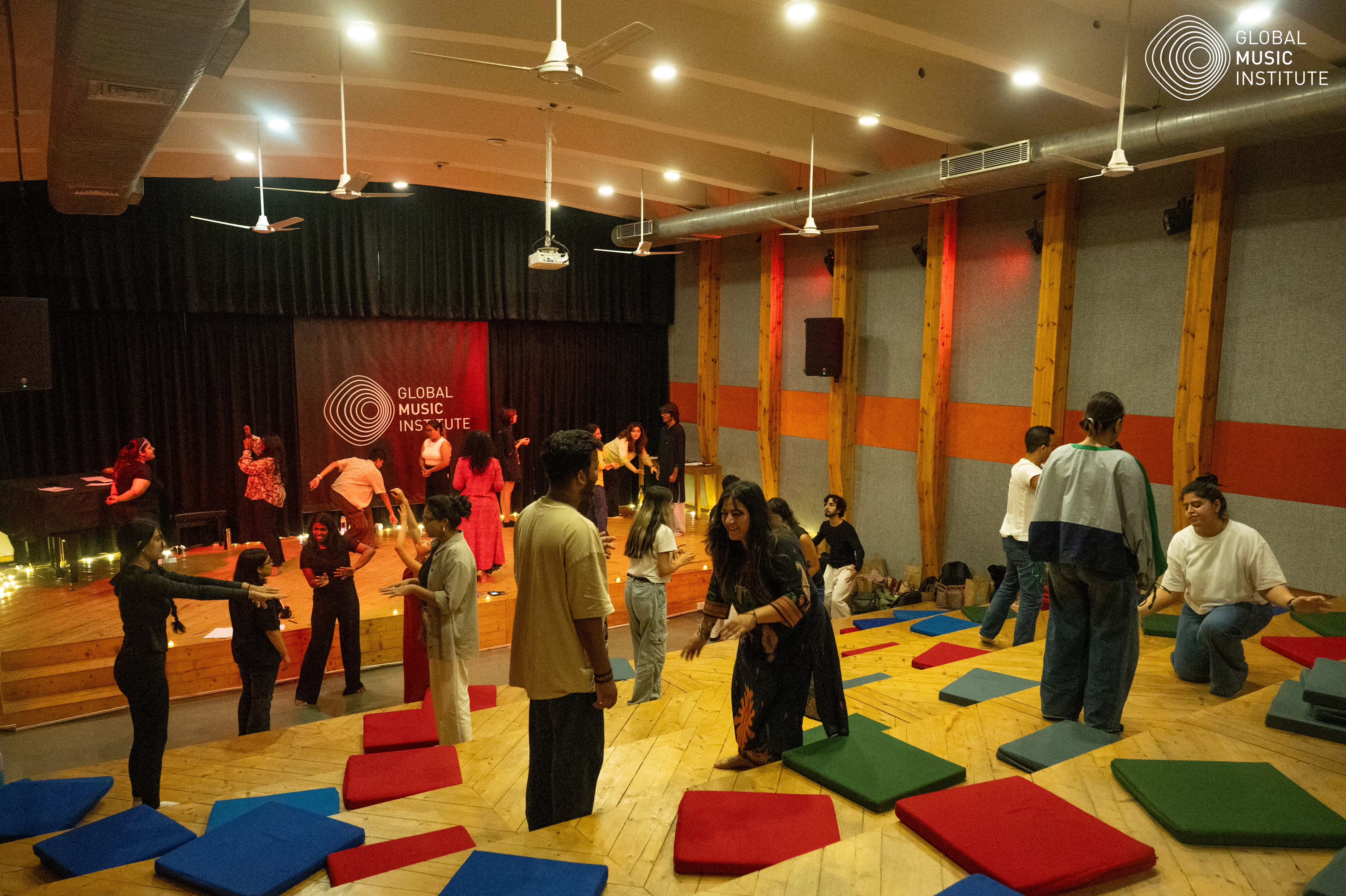
The second session did not involve crying, I promise. The group, having grown four times its size, with about 80+ people, included people from all walks of life. We began with simply jumping and moving around the room, exchanging glances and smiles with familiar and unfamiliar faces. With the number of people now increased, this collective instrument now sounded grander, soul-stirring. We basked in Zahara’s improvisational approach to vocal harmonization along with body percussion. We created circle songs based on the teachings of Bobby McFerrin. It made us own the space we were in—to fill it up with our physical presence, our aura, our firm footsteps on the floor, and our voices.
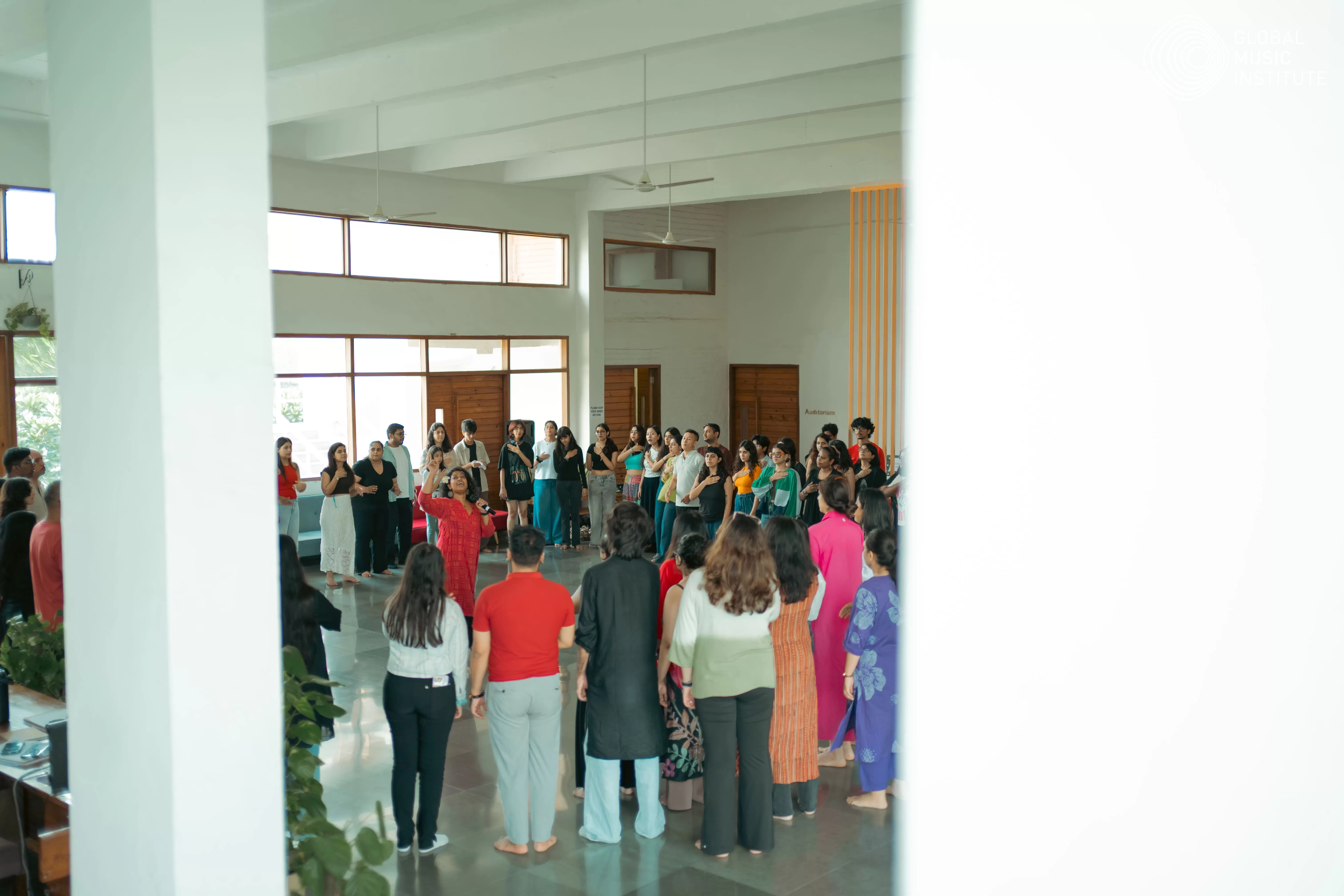
In another exercise, called “See you on the other side” we went to our favorite spot in the room and closed our eyes to sing a note of our choice. The room was ringing with several tones and textures of voices singing different beautiful notes. People perceived the music we created in several ways, but mostly it felt like an “out of body” experience, where we were in infinite space, simply floating away. “We did that,” Zahara would say with such appreciation, acknowledgment, and astonishment, and it would sum up exactly what we were creating.
By the end, the group was taken out of the auditorium to GMI’s Lobby to conclude the session. The reverb in the space complemented the grandeur of our circle singing. We began building up the energy with our synced voices and body percussion. Zahara then took one person’s hand and encouraged the circle to hold hands and walk around in the space. Everyone followed suit, which broke into further joy of engaging and enjoying the music we were singing. We then ended with a synchronized clap. 80+ people, 80+ claps, all at one time. That sound still rings my ears.
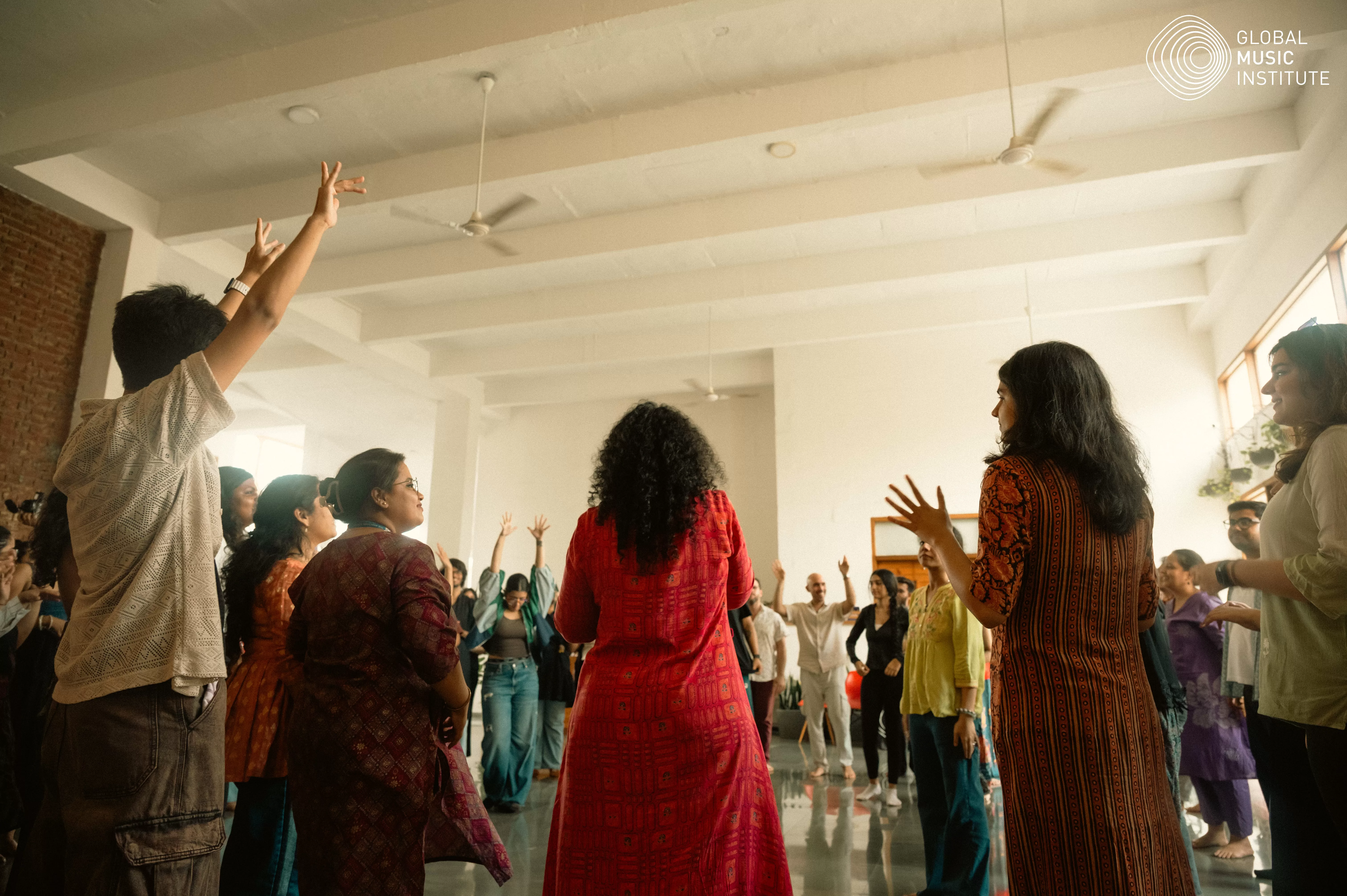
“It never occurred to me before that music can be done in such a powerful way without using even a single musical instrument. Just the voices and such a pleasant symphony created by them. The energy, the enthusiasm, and the openness of the facilitator and the participants were commendable.”
Sudhanshu Shekhar | Music Professional
In Conversation: Zahara x Aditya Balani
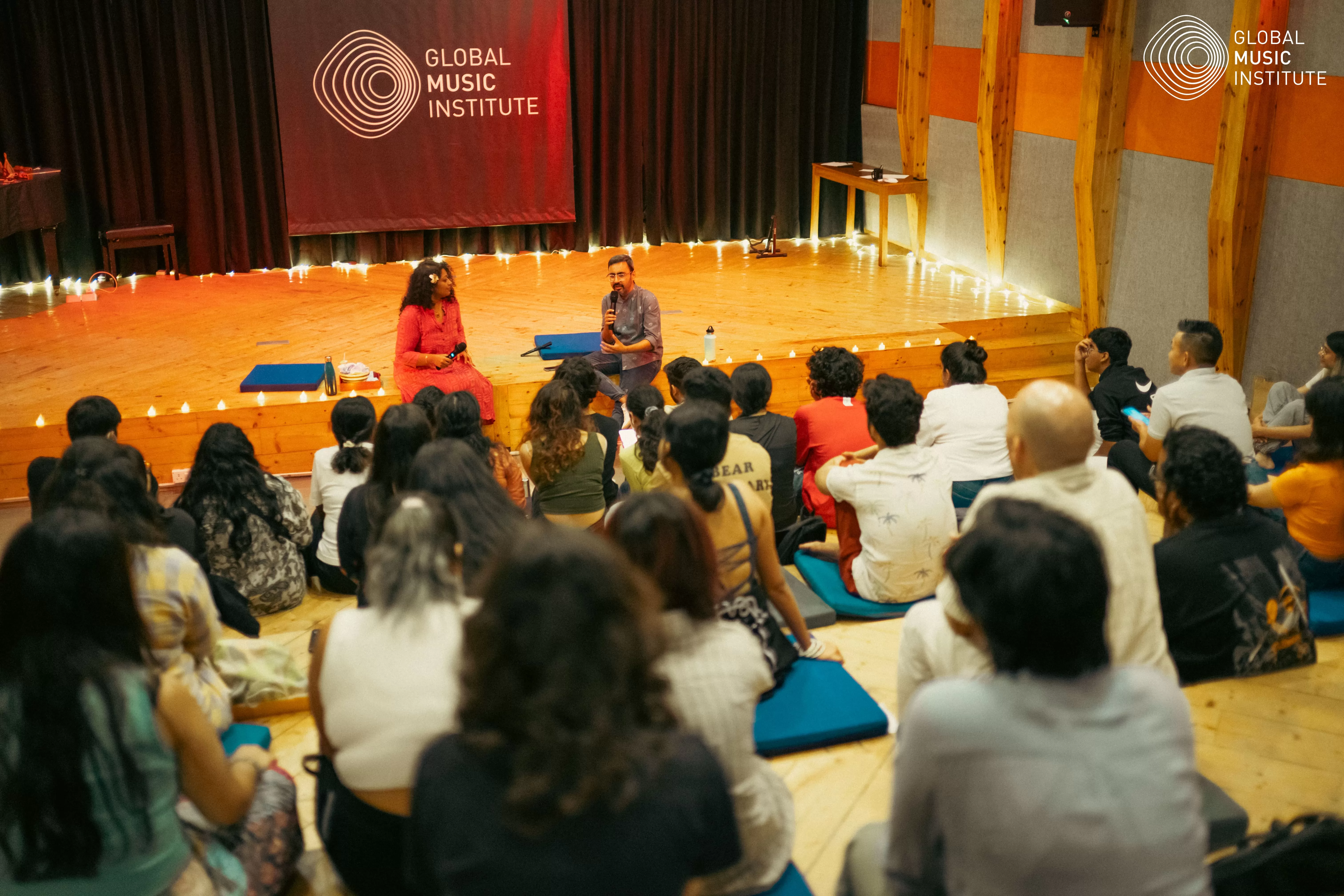
The third session continued with Aditya Balani, Co-Founder of GMI, in a conversation with Zahara as old friends. Everyone was curious to get to know Zahara, and so the dialogue started with learning about Zahara’s early years in her career as a singer, and took us to getting to know more about how she befriended the improvisational way of living and performing. Participants sprang up with interesting questions about the industry and about her time at Berklee, where she has founded and led the Berklee Indian Ensemble since 2011. She even met a current student of her alma mater, Lady Shri Ram College for Women!
It’s a wrap!
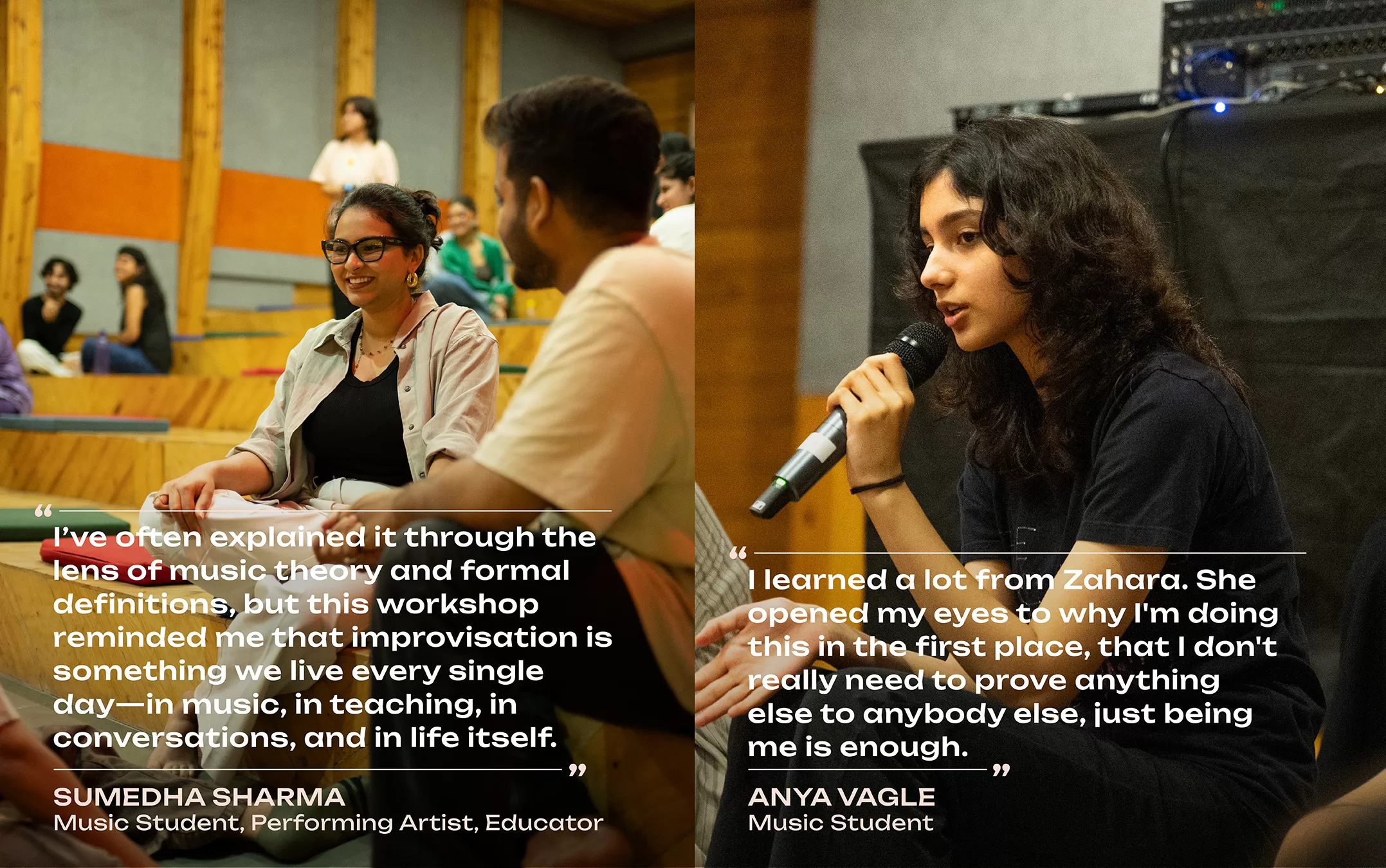
With our hearts full, enriched with key takeaways from the workshop, we shared a collective awe and gratitude for Zahara, our mentor not only for the day but perhaps beyond, who guided us into these beautiful practices of deep musical immersion. She was the heart of this big choir, guiding us like waves, and leaving us transformed, inspired, and liberated.
About the Author:
Anchal Sethi is a 23-year-old singer-songwriter and vocalist based in Delhi. She harbours an undying love for vocal harmony since her college years. In 2023, she returned to her alma mater, Janki Devi Memorial College (University of Delhi), as the music instructor for it’s Western Music Society and A Cappella group, ‘Euphonie’. Besides her A Capella endeavours, Anchal is a second runner-up at GMI’s Songweavers’2025.