Dhadkan Dil Ki Ginn Lo Naa:
A Conversation with Naalayak
Written by Aanchal Bordoloi; Edited by Sohaib Durrani
Hindi-Urdu lyricism that connects, electrifying live performances, a voice that manages to reach out and heal and above all, sheer warmth and authenticity, Naalayak, the Chandigarh-based pop sensation is here to stay. I got a chance to understand a bit about what goes on behind the scenes of the rockstar dream. Our conversation touched upon being consistent with creative processes, which in this case dealt with songwriting, the essence of grit in the music industry and the magic of giving his 100 percent in live performances, as — “Sound can travel online, but soul can’t.”

I was watching one of your interviews where you stated that when you had first started out with live performances before early fame, that you were adamant about doing only original music. This was a very bold step to take, knowing that even now members of the audience request cover songs even though they are aware that a musician is performing their original material. Could you emphasize on how this was a bold and essential move to make, which eventually paved the path to your success?
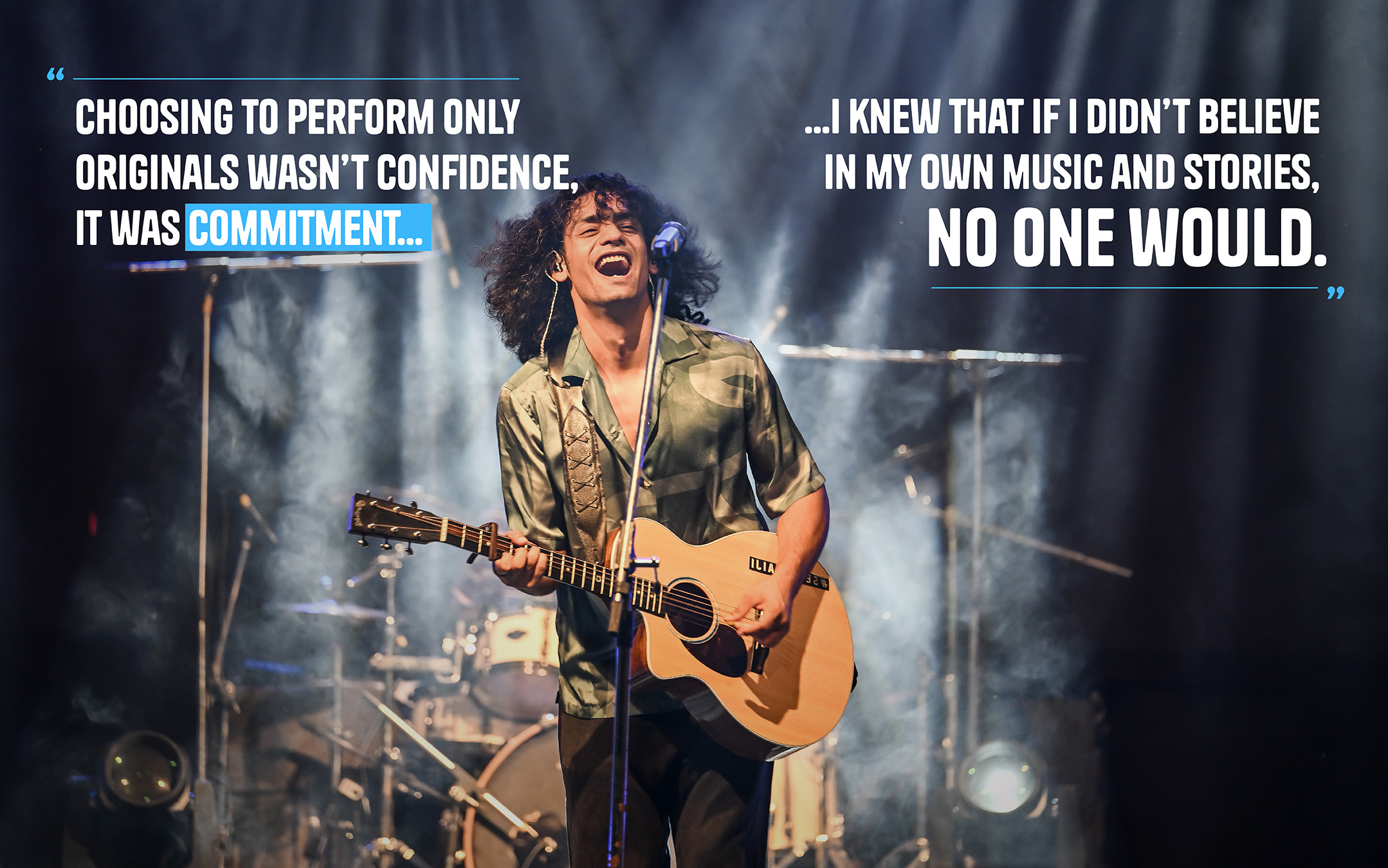
When I started playing live, choosing to perform only originals wasn’t confidence, it was commitment. I knew that if I didn’t believe in my own music and stories, no one would. At that time, audiences expected covers, and taking that route would’ve been easier and safer. But I didn’t want to be remembered for singing someone else’s emotions. I wanted people to know me, not a playlist. Covers can get you claps, but originals give you identity. Of course, it came with rejection. But slowly rooms started filling up with people who came for my songs. That’s when I realised that this ‘bold’ decision was actually the foundation of everything that followed. The success I have today is built on that one choice, to show up with honesty, not convenience.
How did Chandigarh play an integral role in your music influence and journey?
Chandigarh didn’t just influence my music, it built my foundation. The city has a calmness that lets you sit with your thoughts, and a restlessness that pushes you to express them. That balance shaped my sound. and that duality became a big part of my music. Growing up in a place where the indie scene was small meant I had to carve my own path, song by song. Every small stage, every local crowd, every rehearsal room here taught me authenticity. Chandigarh gave me the space to find my voice and gave me the courage to be ‘Naalayak’.
When everybody was quitting music during the COVID lockdown period, you had used the time to write around 600 songs. This goes to show that you wanted to be in the Indie music scene and persevere nevertheless. How important a role does grit play in the journey of an artist? This can help inspire and ignite a spark for some of our readers who are also on that same journey.
When the world shut down during COVID, a lot of musicians felt stuck, and honestly, I felt that too. But I also realised that if I stopped writing, I’d lose the only thing that kept me sane. So I used that time to write. Not because I wanted numbers, but because writing was the only way to stay alive creatively. Grit is everything in an artist’s journey. Talent starts it, passion fuels it, but grit is what keeps you going when doubt is louder than confidence. If there’s one thing I want people to take from my journey, it’s this: you don’t need perfect conditions to create. You just need to keep showing up. Write when you’re scared, sing when you’re unsure, and stay with your art even on the days it feels pointless. That consistency becomes your strength. And one day, it becomes a story worth telling.
How have the preparations been going on and how excited are you for the Marammat tour?
The preparations for the Marammat tour have been intense in the best way. This album is deeply personal, so taking it on the road feels like carrying a part of myself to every city. We kicked things off with the first show for Spotify Radar India at Piano Man Eldeco, and the energy there set the tone. Hearing people scream ‘pagalpan hai’ with me during Gulfam is a feeling that stays. What makes this tour special is that it’s not just about performing; it’s about sharing the stories and the healing behind Marammat, and connecting with people who’ve lived their own versions of these songs. If the first show was any sign, this tour is going to be wild, emotional, and unforgettable. I’m genuinely excited for what’s coming next.
“Sound can travel online, but soul can’t,” – You had quoted this in one of your interviews on the essence of live music performance. Do you have any pre and post gig rituals you follow alone or with your band? How do you know when you’ve given your 100 percent at a performance?
‘Sound can travel online, but soul can’t’, that’s why live shows feel sacred to me. Before a gig, I need a little silence to calm my head, and right before we go on, the band and I just check in and promise to give everything we have. After the show, I usually go quiet for a bit. Performing feels incredible but it’s exhausting in a real way. I drink water, sit backstage, and let my heartbeat settle before the band joins in and we talk about the moments that stood out, the crowd, the songs, the surprises. I know I’ve given my 100 percent when my voice is a little gone, my emotions feel raw, and my heart feels fuller. When the crowd’s energy and mine meet and stay even after the music stops, that’s when I know it was real.
Sahil has already hit the road as part of the Marammat Tour and is all set to grace stages in Mumbai, Pune, Hyderabad and Bangalore, the experience of which will turn out to be wild, emotional and unforgettable.
Dates for upcoming shows on tour:
December 12 – Pune
December 19 – Hyderabad
December 20 – Bengaluru
About Marammat:
‘Marammat’ means repair — and that’s exactly what this album sets out to explore.
It’s Sahil’s most vulnerable work so far, a deeply personal reflection on betrayal, emotional burnout, and eventually, healing. Crafted in the aftermath of personal and professional loss, the songs find him at his most stripped-down, but also his most resilient.
The sonic palette blends Hindi pop-rock with haunting balladry, soaring choruses, and tender verses — inviting listeners into his process of heartbreak, reckoning, and quiet repair.