Last Minute India: In Conversation with Oshin
Ab Main Kya Karun
Kaise Jiyu
Mera koi nahi hai ab yahaan
There is something powerful about a song that does not try to be loud, but instead chooses to sit quietly with emotion.
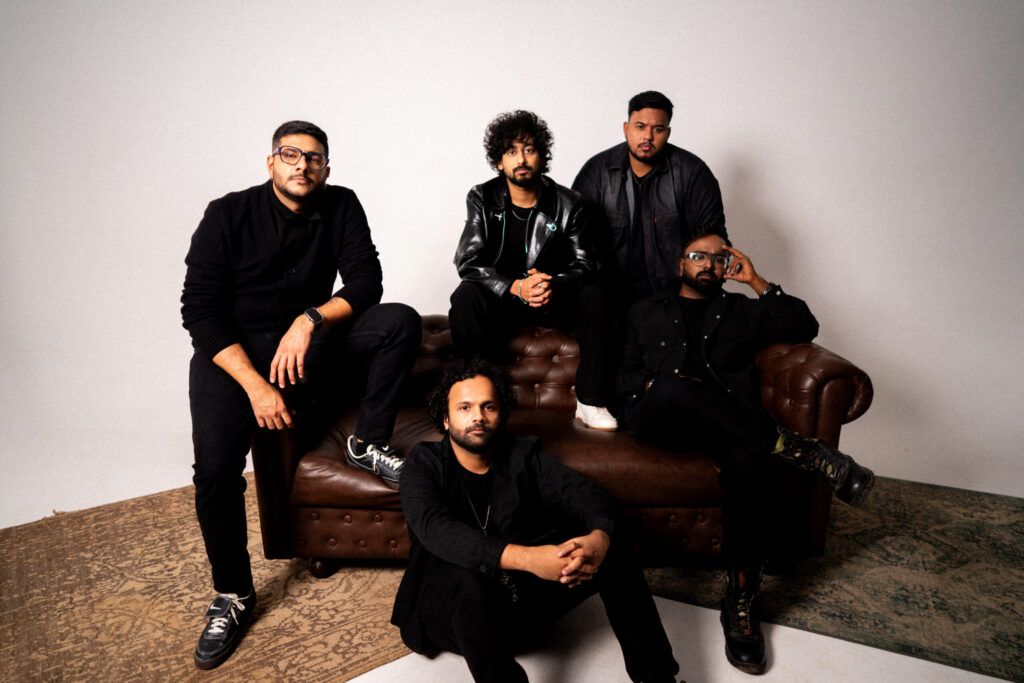
On the day of their latest release, Ab Main Kya Karun, a song that gently navigates the loss of a loved one and the quiet aftermath it leaves behind, Mumbai-based Hindi Rock/Alternative Pop band Last Minute India — comprising Subodh Gupta, Austin Furtado, Bhumit Gor, Purusharth Jain, and Parth Malhotra — sat down for a conversation that moved effortlessly between process, humour, and deeply personal reflection. What stood out to me almost immediately was how unfiltered everything felt. Nothing was over-explained or over-performed. The band spoke the same way they make music, instinctively, honestly, and without trying to fit into a mould.

Having followed their journey from college competitions to building a growing presence across live and digital spaces, this felt like the right moment to pause and understand not just the music, but the people behind it.
What unfolded was not just an interview about a release, but a conversation about identity, vulnerability, and what it really means to stay real as everything around you changes.
“We were literally introduced as ‘No Name’” — The Origin Story
To start off with, your journey began quite accidentally with a name chosen in a rush before a college competition. Subodh, you mentioned something like “this is almost like the last minute of our lives and we have to decide.” Bhumit, Subodh, and Austin, you founded the band. Looking back now, over a decade later, how do you make sense of that moment to where you’ve reached today?
Bhumit:
It started with, you know how you have these college competitions, and we didn’t have a name. In the first competition, we entered the stage and we were introduced as “No Name”. The host thought our band’s name is No Name, so he’s like, “The next band is No Name,” and we were just standing there on stage.
The second time it happened, again the guy’s like, “What’s your name?” and we’re like, “Oh, we don’t have a name.” So we went with Last Minute, like, “last minute band ka naam rakhna hai.”
That stayed for a while. Then we realised that, especially back then, to get more search results, we needed something more specific. So we added India.
And funnily enough, now if you search “Last Minute,” we show up first, even with so many other artists using similar names. So yeah, now we are Last Minute India, and we are quite proud of it.
The First Song that Shaped their Identity
Seeing how your Spotify has grown, it shows such an organic and really fluid growth for all of you. Last Minute India is the first thing that pops up for me as well when I search it. So that’s incredible.
Even your first song, Yaadein, was more than just a song, right? It was a foundation for your band’s identity, especially going back to your early college years. How do you view that song today after everything you’ve experienced and created since, given that it was your first single, your signature song? How do you feel about it now?
Austin:
So that was our first composition which we had done. We were really young. I was around 16 at that time, and Subodh and Bhumit were around 18.
What happened is, accidentally, I just came up with a melody on the guitar and I went to Subodh and showed it to him. Subodh is like, “Oh, this sounds great, man. So let’s write a song on it.” And that is where it started.
We started playing college competitions, and we used to do our original songs instead of doing covers. So that was a very big catch for us at that time.
So yeah, that song really started everything for us.
Subodh:
I mean, today, whenever we play that song, the thing is, it still hits home. We’ve played that song so much in colleges, in those environments. You know how college fests are, right? You get like 15 minutes and you have to play that one song.
Now when we take our time, when we give our story, when we perform in front of the crowd, like we just played Pandit Deendayal Energy University (PDEU), and people just wanted to hear that song. You’ll see reels where people are just singing it. So imagine getting booked for one of the songs that people already love. That’s how it has travelled for us.
Bhumit:
Also, considering it was our first song, it gave us a lot of confidence.
From the first competition that we ever played till now, we’ve always played that song. And because we made that song as kids, it made us believe that, “Yeah man, we can make songs.”
It wasn’t like we just randomly made something and somehow won competitions. People actually liked it. So we got a lot of faith that yes, this is something we can do.
Growth, Change, and Staying Grounded
So having grown from winning college competitions to performing at large scale festivals and platforms, what do you think has stayed constant in who you are as a band? And what do you think has fundamentally changed, whether it be your sound, your voice, or your approach?
Subodh:
To be very honest, when you are doing pro audio — that’s the term we use when we give our stage requirements — things are much more structured now. Especially in the last two years since Puru has joined, it’s become like a job where we know what we have to do.
But the fun is still there. When we play, we forget everything.
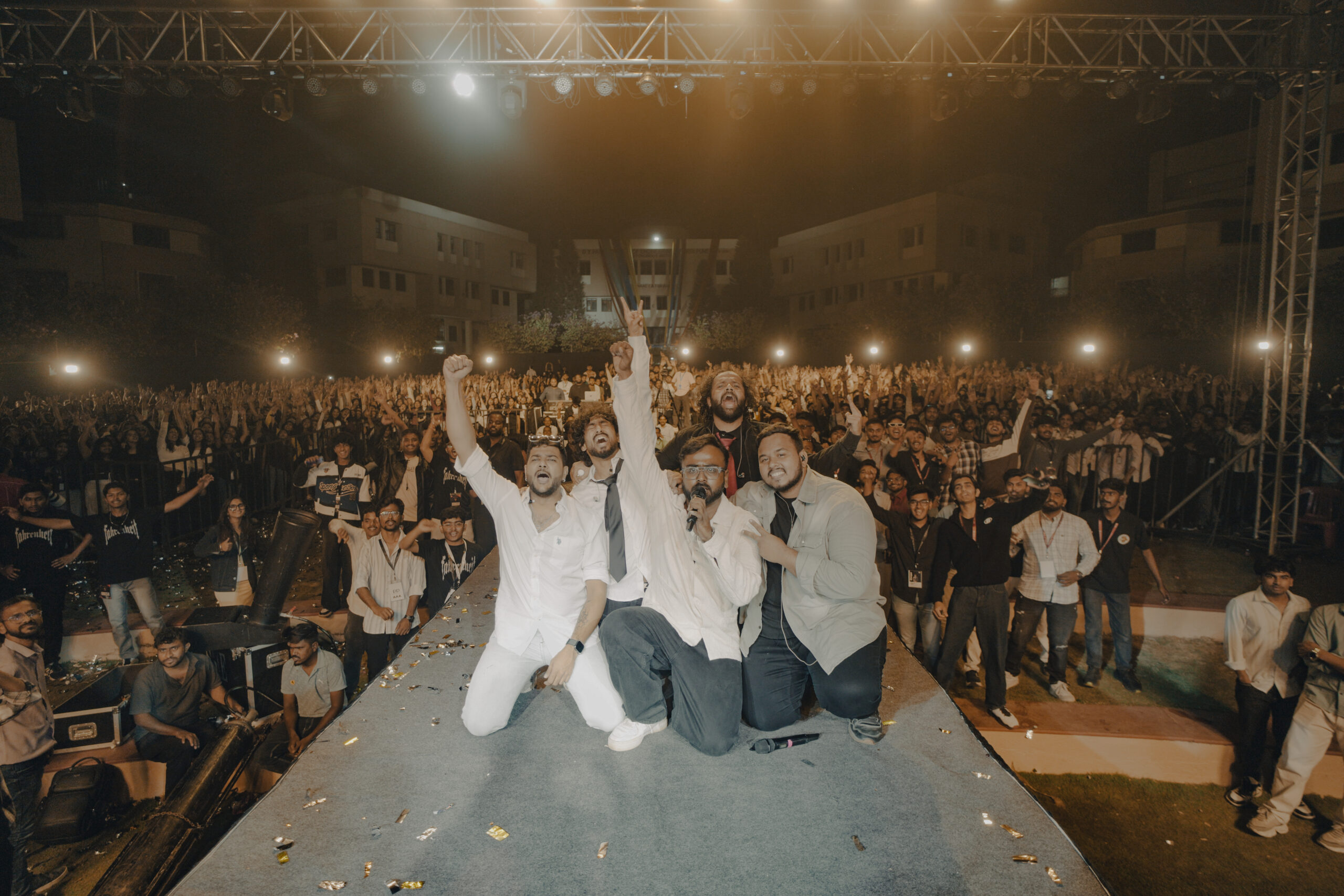
What has changed is the routine, the preparation, the thinking, how you deliver the best quality as a band. We’re trying to maintain a standard where we think, how would a foreign band sound? How would an A-lister sound? That’s what we’re aiming for.
But on stage, we are still the same. We’re just having fun.
Purusharth:
Yeah, to be able to go mad on stage, there is a lot of preparation that needs to happen.
Everything should be right. Good soundcheck, good warm-up, good rehearsals. Everything should shift from your conscious mind to your subconscious.
Then your conscious mind is completely empty while you are performing, so you can interact with the audience, listen to them, see them.
That’s the whole point. It should look effortless. But the hard work behind it, we are doing a lot.
“I don’t make up things”
Coming to your single “Ab Main Kya Karun, Kaise Jiyun?” It’s such a simple, but overwhelming question. When you first wrote or sang that line, Subodh, did it feel like you were asking that for yourself? Or did you also want that to be something extended outward to people who would hear the song? When you first started writing and translating it into a song, was that your intention?
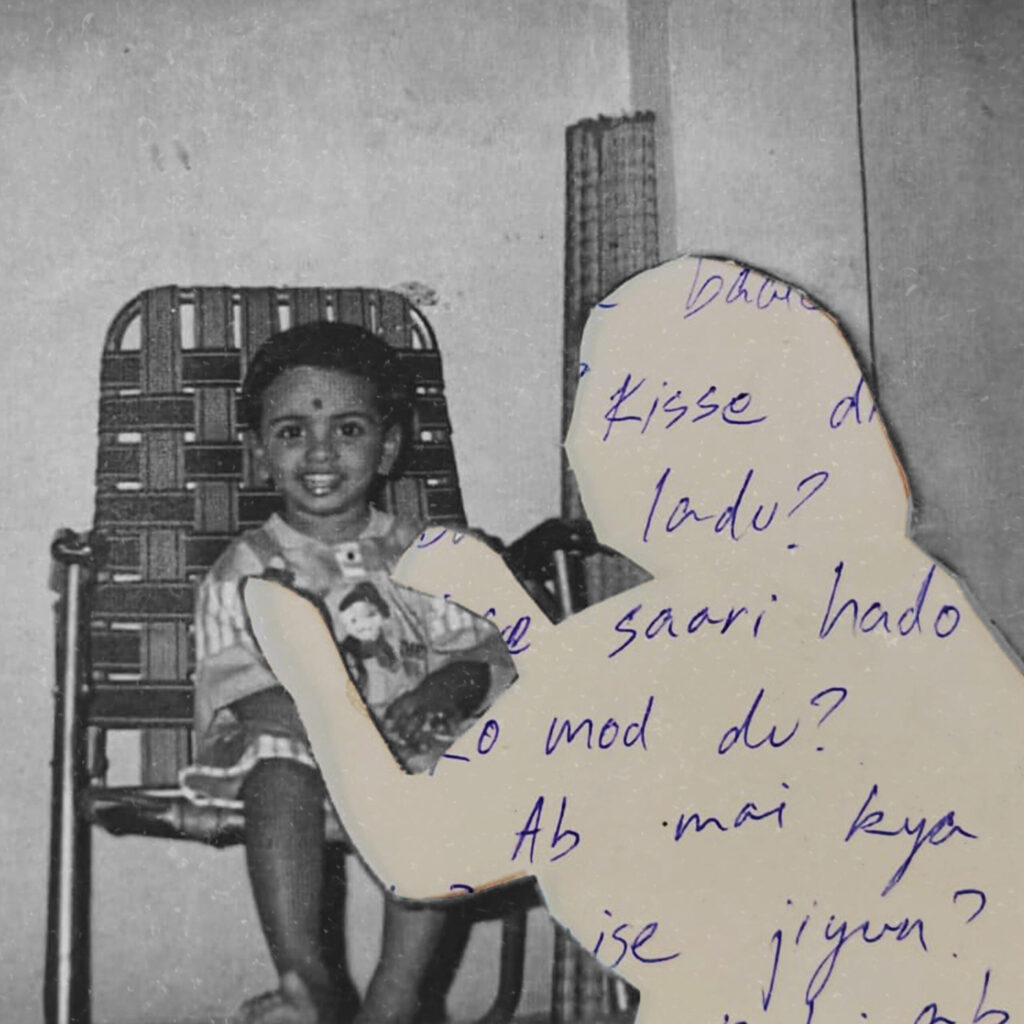
Subodh:
I mean, to be very honest, I don’t make up things. For me, writing a song is writing about something I have experienced. Otherwise, I don’t write songs. If you see my discography, other people will tell you they make 100 songs … I don’t make 100 songs. I make 10 songs that I want to live with.
And then I leave it to the crowd. Even if it’s a love track or anything else, I write it from my experience, I live with it, and then I give it to others for their emotions.
On Vulnerability and Keeping It Real
I think in every song that you’ve done — songs about first love, personal struggles — it’s all very rooted in your experience of who you are.
Bhumit, you mentioned that this is one of your most vulnerable releases. Was there ever a moment of hesitation in sharing something this personal so publicly?
Bhumit:
I mean, it was actually very personal to Subodh, this song especially.
And I’ve known him for a long time. He’s one of those people who accepts reality and is pretty bold in speaking it out. A lot of people going through things keep it within themselves, which is not always good. He’s found a way to express it through music.
For me, it matters a lot because when you explain what the song means to you personally, as it connects really well with the audience. And from my end, there was no hesitation, but I don’t know if he felt that.
Subodh:
For me, I’ve never shown that something is happening. No matter how much stress there is, whatever happens, I try to be normal. Maybe I’ll tell Bhumit or Austin something small, but otherwise everything stays normal.
Because when you take care of people, you can’t show vulnerability. So for this song, I just tried to be strong. What you hear is what I felt but I can’t say that openly to my family.
I released it after a year, when things were different.
And when I posted it, I got 200–300 messages from people saying they relate to it. That’s when you realise how many people go through this but don’t express it.
Shaping Emotion into Sound
As Purusharth had mentioned earlier, the song doesn’t rely on dramatic grief. It lingers. It sits with you.
When the song was coming together, of course, Subodh was the one who wrote the song but as it was coming together for the other members of the band, did this sense of space and restraint emerge naturally? Did you find yourselves making conscious choices in terms of arrangement or dynamics?
Though this is slightly technical, I’m sure when you’re making a song and you have to also cater to something that is this vulnerable — how exactly did all of you react to doing your part for the song?
Purusharth:
I personally love sad songs. Even when I’m listening to music, most of what I gravitate towards are songs that are quite sad, almost devastating. That might sound a little sad in itself, but that kind of music has a depth of feeling that a party track usually doesn’t. There’s a certain emotional weight to it, and I naturally connect with that.
This song, especially, is extremely difficult. I’ve trained with multiple vocal teachers, and when I spoke to one of them about this track, she told me something very interesting. She said, “Puru, if you really want to nail this song, you have to go into that space. First, don’t even sing it. Just sit with that emotion. Fall into that pit.”
And then she immediately followed that by saying, “I don’t want you to do that, but if you really want to get it right, that is the only way.”
At the same time, she also explained that it’s not always necessary to completely immerse yourself in that darkness. Like actors, you see them perform something extremely emotional, and the moment the take is done, they’re back to laughing. They know how to enter that space and come out of it.
So for me, this song is not for everybody, I’ll be honest. But at some point in life, everyone goes through something like this. Everyone reaches a moment where they feel that same question.
Going into that emotional space was very difficult for me. But music, for me, is very… spiritual. I’m not a very religious person, but the only god I really believe in is music.
So connecting to that emotion through music, it doesn’t feel forced. It just happens.

“This song can hit anyone, at any point”
Parth:
I mean, I’ve very recently become a part of the band, but I’ve known these boys for almost a decade now. We’ve shared a lot of really good memories and good times together, so there’s already a strong bond there.
When they sent me this song, I could instantly connect with it. I’ve had my own experiences at different points in life, and it just clicked on a very personal level.
For me, this song is very subjective. People at different stages of their lives, going through different emotions, will connect to it in their own way.
Like Purusharth said, “Sabke life mein wo ek instance aayega,” Something will happen, whether it’s good or bad, but that feeling of “Ab main kya karun, kaise jiyu” can come to anyone, at any point in their life.
“If someone feels even a part of it, that’s a win for us”
Bhumit, I read that you mentioned that even if one person feels less alone because of the song, then you’ve kind of done what you needed to do with it. Do all of you feel a sense of responsibility when creating this music for other people as well? Or is that just something that happens naturally?

Purusharth:
Yeah, I mean, because this is not a song that I have composed, but I am singing something that comes from someone else’s experience. So for me, it becomes a very big responsibility to deliver it in a way that it actually connects with the audience.
And I think that connection is there, or at least I hope so.
Even if the audience understands a little bit of it, or even if they feel even a small part of it, that itself becomes a win-win situation for us.
Balancing Independence and Label Collaborations
I mean, congratulations again on releasing such a beautiful song. Like I said, I found myself listening to it quite a bit while I was writing these questions.
I think the feeling of loss is something everyone will relate to at some point. To have a song that can act as a kind of cushion while you’re dealing with something like that is really important.
With releases like Jaane Anjaane, you’ve also begun exploring collaborations with labels, right? I think that was one of your first tracks where you worked with HITZ Music, while still maintaining your independence as a band.
But that’s quite different from your earlier, more organic approach. So how do you navigate that balance between having creative control over your work while also trying to reach wider audiences?
Subodh:
I really like this question.
So the thing is, we did a label deal (with HITZ Music) because we were playing this show with Zaid and Farhan Akhtar, it was called Vibin. Some people from the HITZ office were there, and literally within an hour after the show, they came up to us. They had heard the song, they saw people singing along, and they said they wanted to take the track.
For me, doing a label deal is very personal. I already work in the music business, so I’ve handled these things for other artists, but doing it for your own song is different.
Now, when you work with labels, there is always some level of creative involvement from their side. You have A&Rs who are listening to your track, giving inputs, shaping things. That’s just how it works.
In our case, with Jaane Anjaane, that didn’t really happen because they liked the song as it was. So we were lucky in that sense. Even with the other track we’ve done, we’ve mostly been able to do things our way.
But there are definitely moments where you have to adjust. For example, I always wanted to do a proper music video for that song, like a small web-series type concept. But they had a different plan for it.
So yeah, that’s where the balance comes in. There are things you want to do, and there are things the label wants. You meet somewhere in between.
Live vs Digital: Finding Authenticity Online
You’ve built quite a strong audience through your live performances and your digital platforms. Even on Instagram and Spotify — you have around 95K monthly listeners, which is incredible.
Since there is this growing reach with so much potential to expand further, do you see yourselves more as a live-first band adapting to digital spaces, or has that identity shifted over time? Because from what I’ve seen, you still feel very much like a live-first band.
Bhumit:
We’ve actually had fights about this, Oshin. Because we come from an era where we used to listen to music on TV, VH1, MTV, YouTube. At that time, there was no concept of Instagram reels or short-form content.
And one day, Subodh just comes to me and says, “Bro, we’ve got to make reels.” And I’m like, “Reels?” He’s like, “Exactly. Where are people listening to music? Reels.”
And I’m like, “I don’t like making reels.” And he’s like, “I don’t care, you have to.”
So it’s something we’ve had to adapt to. And I think not just us, even as humans, we keep adapting. Maybe ten years later, we’ll be adapting to something else.
We’re still learning. Luckily, we have people in the band who are good at it, who have an eye for it. Because honestly, I suck at making reels.
Subodh:
When I told them to make reels, it was like five years back. We tried a lot of things, acoustic videos, trends, different formats, but it didn’t feel like us.
Then when Puru joined, things changed.
View this post on Instagram
Purusharth:
Yeah. I felt we can easily make reels, but we have to make them in a way where we are not cheating.
In our natural habitat. On stage.
Because if someone like Bhumit isn’t comfortable making content off stage, that’s fine, but on stage, he’s full power. So I said, let’s capture that. We were doing a lot of shows, so we had the opportunity to shoot properly. Initially, there were a lot of issues with angles, audio, everything. It took us around six to seven months to figure it out.
We didn’t release anything for a long time because we didn’t like what we were making. But slowly, we understood the process.
Also, everything you hear is real. We record the live audio. We don’t dub it later. We don’t overlay the original track either. And that’s actually very difficult because sometimes the video is great but the audio isn’t. And sometimes the performance is good but the energy isn’t right.
So we do a lot of shows, and from that, we pick small moments. And those moments are very precious for us.
This is how real we want to be. We want people to see exactly how we sound on stage. This is us.
Subodh:
In short, we just try to do what we are good at.
If you see the views on our reels, they’ve worked. In a time where people are dancing or lip-syncing, we’re performing live. We’ve had multiple videos cross one crore views over the last couple months, and that’s just us doing what we actually do on stage. That’s what connected.
And that really comes through. Even for someone who hasn’t seen you live, your reels feel like an entry point into that experience. It’s not just content, it’s almost like a documentation of what you already are as a band.
Originals, Instinct, and the Absence of a Formula
After doing so many covers, is the goal now to move more into originals? And when you think about the future, do you still see your music being rooted in personal experiences, or are you looking to experiment more with sound and direction?
Bhumit:
I’m really glad you asked this.
We’ve always done originals, even during college competitions. But yes, right now the ratio is still somewhere around 40% originals and 60% covers.
View this post on Instagram
For me personally, the goal is to increase that ratio. But that only happens when people know your songs, when they come to a show already familiar with your music.
So the bigger goal is to keep putting out music, keep building that audience, so that one day we can do a full two-hour set of just our own songs and people are singing along. That’s the dream.
We’ve started experimenting with that shift already. Recently, at a show where we were opening for Shreya Ghoshal, we took a bit of a bold step and tried a 70–30 split, 70% originals and 30% covers. And honestly, the response was amazing. The interaction we got gave us a lot of confidence.
As an artist, you’re always dealing with that question: do I play an original, or do I play something the crowd already knows? Do I take that risk, or do I play it safe?
That’s a barrier we really want to break. We want to get to a place where our originals are what the crowd is waiting for.
Subodh:
Honestly, there is no fixed game plan in terms of what kind of music we make.
There is a game plan when it comes to discipline. We know we need to sit more, create more, and be consistent. But there’s no conscious decision to make a specific kind of song. All five of us listen to very different music in our personal lives. But when we come together, something just happens.
If Austin is in a certain mood and he plays something, that melody already carries his influences. Then I’ll add my input to it. Then Puru brings in his vocal style. So the song keeps evolving naturally through all of us.
And I’ll be very honest, sometimes I don’t even know how a melody came. When people ask how we made something, I might give them an answer, but the truth is, it just comes.
If you hear the first loop of Ab Main Kya Karun, if you hear Main Sach Kahun, Rehnuma, or Kaagaz Ki Naav — whatever Austin has played to me on an acoustic guitar in my small bedroom — that is the exact tune we carry into every concert.
Because it never changes. There’s no need for it to change.
For example, when Puru sang Ab Main Kya Karun for the very first time, what you’re hearing now is very close to that moment. It’s basically him sitting alone and singing it.
Austin:
I feel musicians are very moody people. We go according to what we feel.
We never sit and think, “Okay, now I’m going to write a song.” Whatever comes naturally, we just do that. It’s the same for me. I don’t consciously think of coming up with a melody. Whatever I feel, I try to put that down on the guitar.

Basically, we are the music. Instruments are just a way to channel it. So whatever we feel internally, it just comes out naturally.
And Parth, as a drummer, how does this translate for you when you’re bringing your perspective into compositions?
Parth:
I mean, being the drummer, the one right at the back of the stage, it works a little differently while writing songs.
These guys usually start with melody, because as a rhythm instrument, drums can’t really be the front or the starting point of a composition.
So for me, it’s always about serving the song, serving the music, and making sure everything comes together.
Drums are what hold the whole band together. That’s how I see it. It’s about being the backbone, staying in the pocket, playing the groove, whether it’s 4/4, 7/8, 6/8, whatever the song needs.
Just holding it tight with everyone else, because that’s how the band works. If even one member is off, the whole thing starts to fall apart.
Albums, Legacy, and What Stays
With this single, you are already moving towards more originals. Do you see an album as part of your long-term goals for the band?
Subodh:
Obviously. We’ve all grown up listening to albums. Even for me, I discovered a lot of independent and world music through albums, across rock, metal, everything. That format means a lot to us.
But we want to do it the right way, at the right time. Right now, we are still building our audience. We haven’t even done a full-length EP yet, even though we have a lot of songs.

An album, for me, is about telling a full story. Like in the early 2000s, albums felt like conversations from start to finish. One track would lead into another.
For that to work today, you need listeners who will stay with that journey.
So yes, it is definitely something we would love to do. I won’t say we are actively planning it right now, but it is there. And for that, you have to come to our concerts.
I think albums are a goal for every band, but for you guys especially, because you are so rooted in storytelling, it feels like something that is naturally going to happen at some point. Finally, if someone listens to your music years from now, what do you hope they carry with them? A feeling, a memory, or something else entirely?
Subodh:
For me, it’s like a time capsule.
Whenever I hear a certain song, I go back to a specific time in my life. So if someone is listening to our music even a hundred years from now, I would want it to take them back to something they’ve lived. A moment, an incident, something significant to them.
Like a small message hidden in the tune.
Whatever they hear, it should connect to something personal. Because that’s the energy I want to give. If I’m saying there is hope in the song, I want that hope to reach them in their own way, in their own life.
Bhumit:
As a live band, we always try to leave an impression every single time we perform. A lot of our following comes from live shows, so that experience matters.
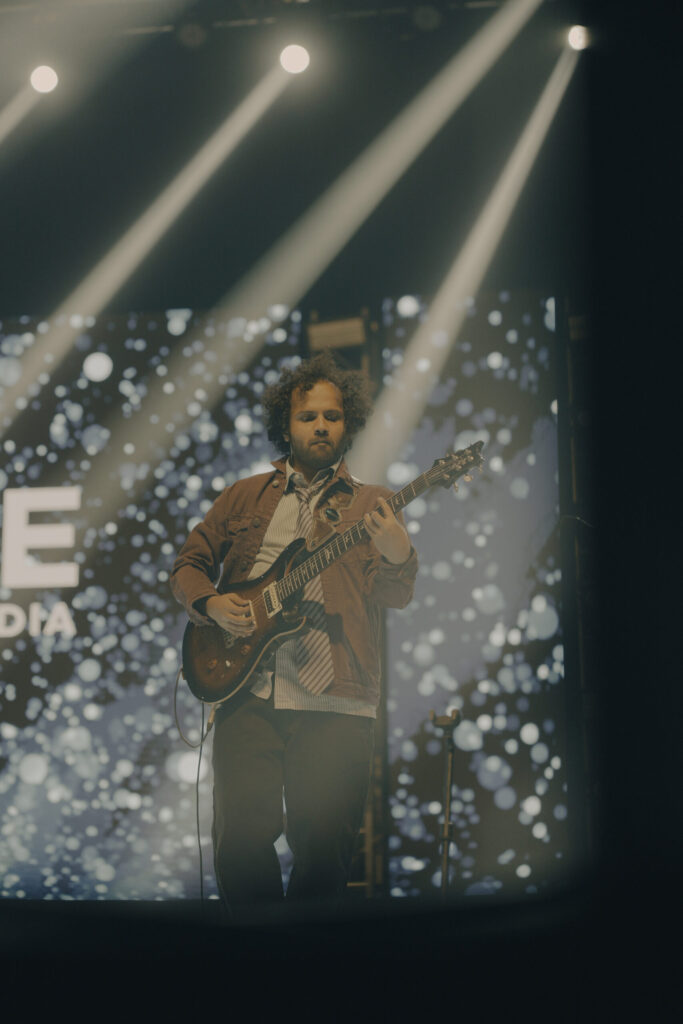
There was this one college gig where, the previous year, things had gotten out of control and people were injured. So when we came back to headline, the rule was that the audience had to sit down. For a rock concert.
We spoke to the faculty and told them, trust us. They are your students, but they are also our audience. We will make sure they are safe.
Midway through the set, we asked them to stand up. And they did.
After that, we got so many messages saying it was one of the most memorable nights they had experienced. That is what we want. To give people something they carry with them.
Purusharth:
For me, the dream is simple. I want to see us playing at places like the Royal Albert Hall or the Sydney Opera House, and the entire crowd is singing. To a point where we do not even have to sing the full song. I sing one line, and the audience takes over. That is the dream.

Parth:
That same gig, when we played Ab Main Kya Karun, there was this feeling across everyone. I had goosebumps through the entire song. Even after we finished, all of us were just talking about it on our talkbacks, like that was probably the best we have ever played it.
Those are the moments you do this for.
And I think that’s what makes it powerful. That relationship between artist and audience where you’re both giving and receiving at the same time.
Because listening isn’t passive. It becomes personal.
And that’s something that really stands out with all of you. There’s so much honesty in the way you approach music. At a time where things can feel diluted, where identity can get lost, you’ve held on to storytelling.
Even after a decade, even with new members, even with everything evolving, that core hasn’t changed.
Subodh:
And I think that’s where we want to stand out.
A lot of people try to be something. But I look at these guys and I don’t see copies. I’ve never seen someone like Bhumit. The story Austin carries, people will know one day. Puru, you can’t find another one like him.
These are all very different people. Very distinct.
We don’t have to act. That’s the point.
If you just take our lives from the past twenty years, it’s already a full story. It has everything. Emotion, chaos, humour, heartbreak. You don’t need to fake anything.
It’s just about making it big enough to tell it properly.

Last Minute Thoughts
As the conversation winds down, what becomes clear is that Last Minute India isn’t trying to fit in. They are not chasing trends for the sake of visibility. They are not manufacturing emotion for relatability. If anything, their process works in the opposite direction. Experience comes first, music follows.
There is a certain honesty in the way they speak about their work. Whether it is Subodh’s refusal to “make up things,” Purusharth’s insistence on emotional authenticity, or Bhumit’s focus on building towards a future where originals take centre stage, everything points back to one idea. They are building something real.

In an industry where identity often gets diluted, that refusal to perform a version of themselves might be their biggest strength.
And maybe that is what “Ab Main Kya Karun” ultimately represents. Not just a question, but a moment of pause. A willingness to sit with uncertainty, and still choose to express it.
Because sometimes, the quietest songs stay with you the longest.