In Conversation with Aanchal Bordoloi
Edits & Visual Formatting: Oshin Hephzibah
Who are you?
And who are we?
A speck of dust
A moment’s worth of eternity
∼ Home
Bangalore was recently blessed with mango showers. Petrichor made my heart pound with joy. I booked an auto and listened to Shourya Malhotra’s debut album, ‘Everybody Knows, Everybody Understands’ on the ride home and I remember vividly, that moment being the calmest I have felt in ages.
I could hear some Indian instruments playing on the record, which complimented Malhotra’s Indie-folk tune beautifully. We sat together to discuss the album, and here are some key takeaways from our conversation:
Your debut album, “Everybody knows, Everybody Understands” released on 18th February. What can listeners expect from this release?
Shourya says that the album is an insight into him trying to find his own sound and the progress he is making.
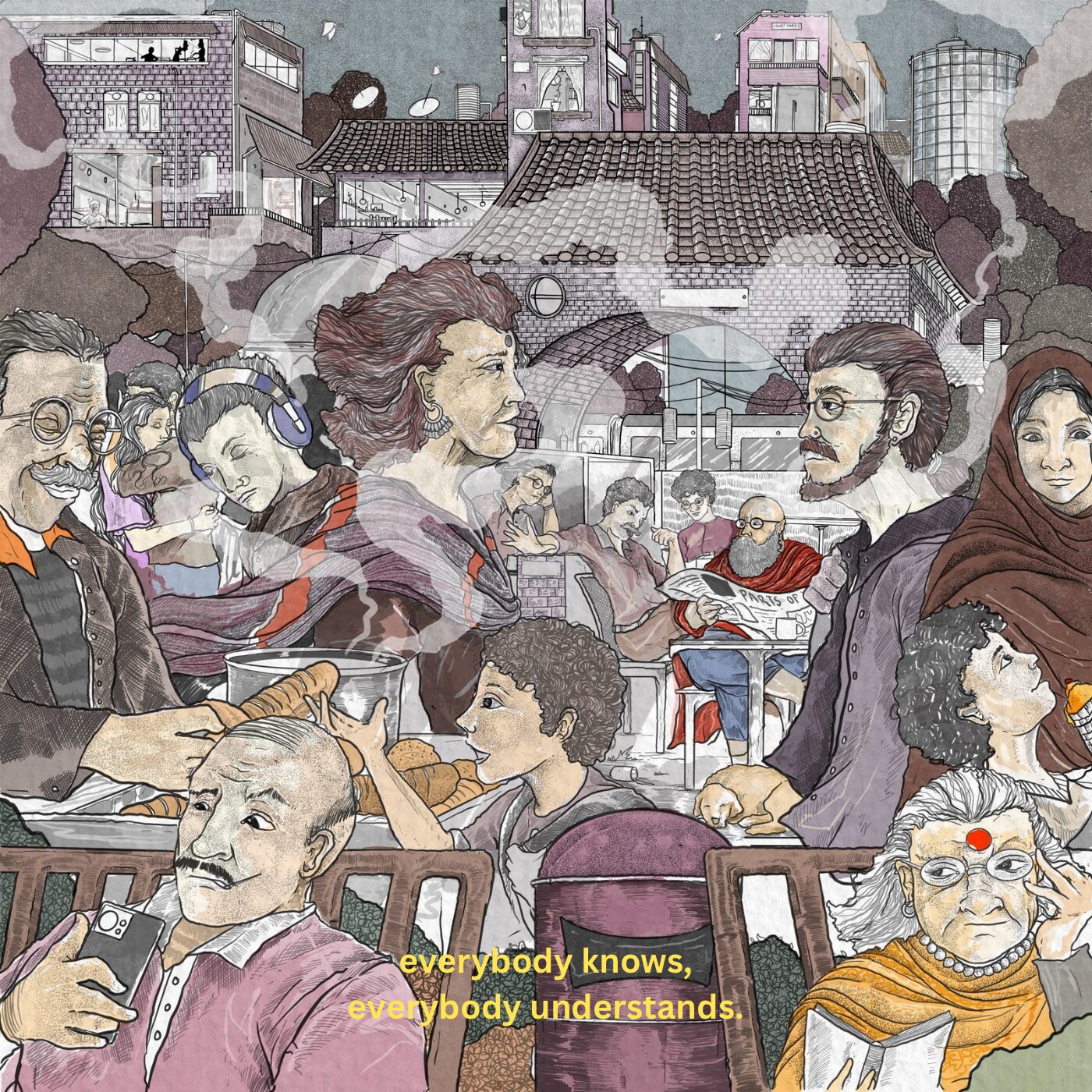
The album features musicians such as Elijah Peter, Akhil Garg, Varun Rajput, Ishita Singh, Roradoll, and Rini Rajput. Both lyrically and instrumentally rich, it is a companion that soothes and entertains. An interesting find is the Sarod playing and beautifully complementing the conversation that happens in the track, Home (as quoted above):
Shourya’s love for dogs can be seen and heard in the music video for opening track, Paws; something that dog lovers can relate to.
A wag, a leap.
A howl, a treat.
Walls that brew
With memory of you.
Two hearts, two tails,
Two round parades.
My peace resides
In life spent with you
A beautiful music video by Ramuna Pun for the song Courtyard adds a lovely visual element to the album:
Courtyards we walked on
With dusty feet
And tall grass to lay on.
And mango trees.
It’s interesting that you’re also a metal vocalist, now exploring Indie-folk. Do you consider yourself genre-agnostic? How is it like to work with different genres and experiment sonically?
I’ve always swung in two totally opposite directions with Indie-folk on one side and extreme or heavy music on the other. I like not being restricted.
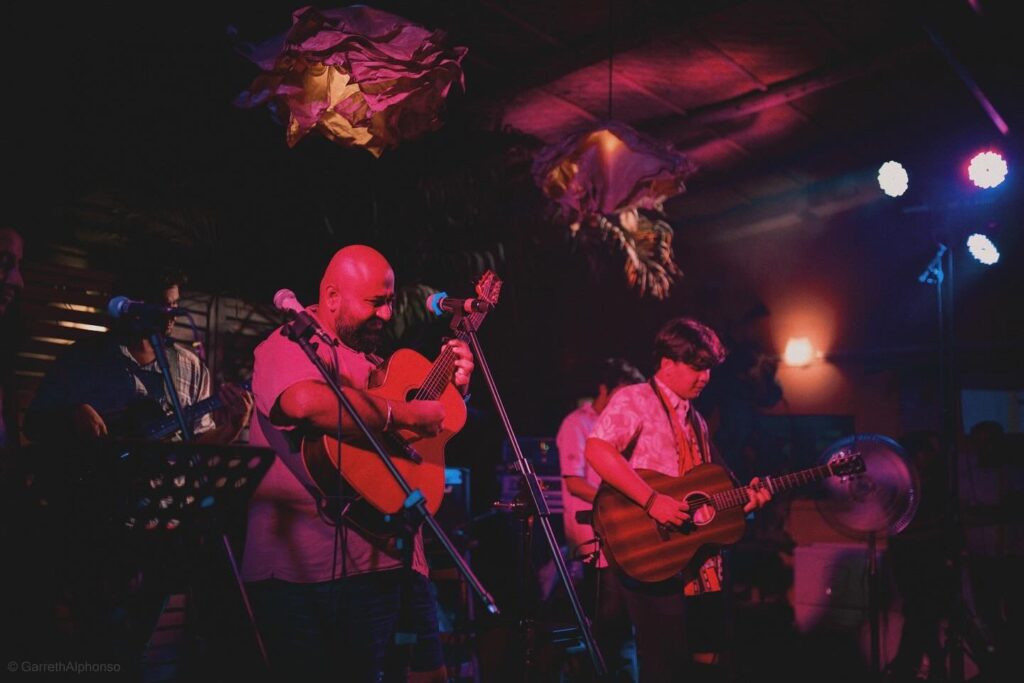
From hardcore metal to soft acoustic, Shourya gravitates towards “extreme” genres, as he likes to call it and tries to find a place where they converge. Other than pop music, his influences range from Adrianne Lenker, Elliot Smith, Nick Drake to Meshuggah and Gojira. He appreciates the writing of artists such as Nick Drake, especially for their ‘dark’ and unconventional song topics.
I was going through your Instagram and found a write-up called, “The Nature of Life” – on living the life of a creator…creating something out of thin air…and still hustling despite the uncertain nature of the artistic field. Despite the uncertainty and fickle nature of the music industry, how do you keep yourself motivated to thrive musically and creatively?
‘By having a life outside of music.’
The music industry is one of the most difficult industries to be a part of and make money in, especially if it does not fall in the category of being mainstream. He believes that it is important to ‘have a life outside of music’ and if possible, have a source of income that is not related to the music industry. It is of course amazing to make the music that you want to make and still earn a substantial income from it, but this is not possible for a lot of musicians.
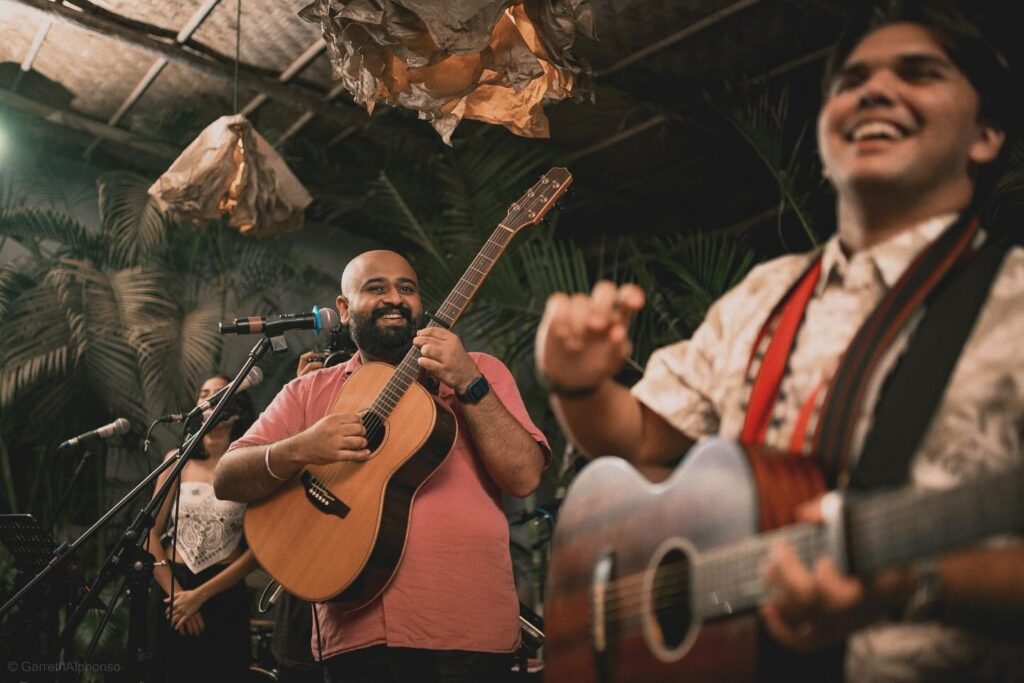
Shourya also works as a media and entertainment lawyer. He makes it a point to not put pressure on himself to make a living solely out of music. He believes it could be a little restricting creatively, to write music for the masses/music that could actually generate a substantial amount of money. Having other interests outside of music – be it in sports or writing would be helpful. Such hobbies can serve as a good distraction and also help deal with anxiety around music.
What are your insights on singer-songwriters writing and singing in English in a diverse country such as ours?
I was born in 1991 and grew up listening to English music much more than Hindi or regional music. Artists like Metallica, Lamb of God, Nile, Meshuggah, Gojira, etc., shaped my identity as a metalhead. Later, I discovered softer, acoustic-focused artists like Nick Drake, Elliott Smith, Iron & Wine, Bombay Bicycle Club, etc., which inspired me to write softer acoustic-folk music.
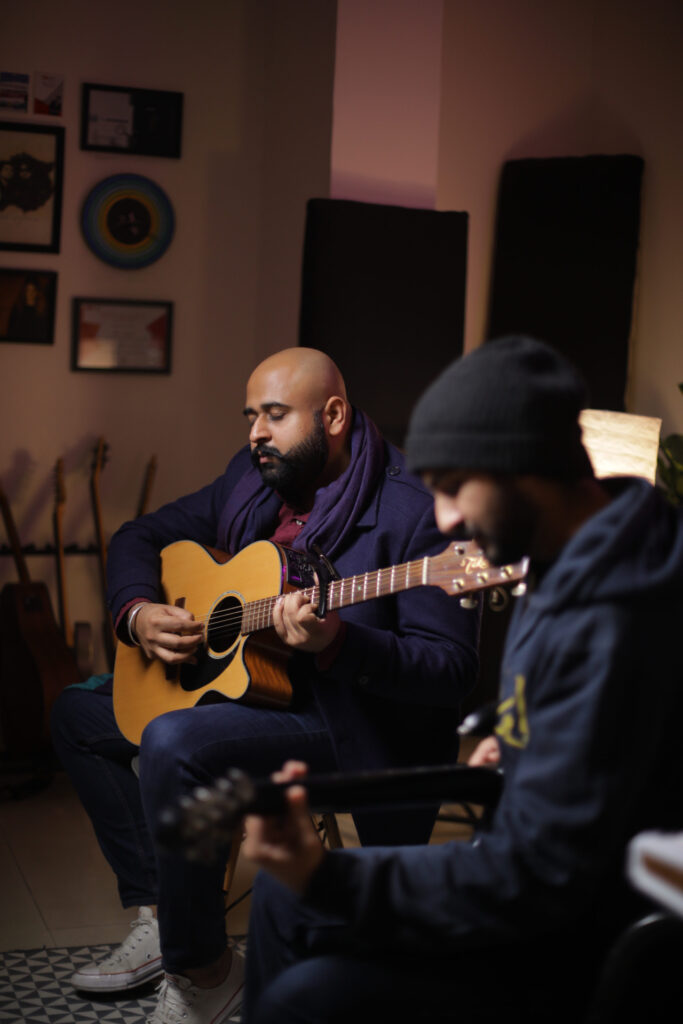
I remember being in households where speaking Hindi as a language was banned so the children would be more comfortable with the “global language” of English. The point is, Western music and the English language have been integral parts of our cultural fabric. Recently, as I’ve attended various conferences and talks, I can’t help but feel that, as an English songwriter, I’m in a bit of a dilemma between a rock and a hard place. Domestically, we’re encouraged to be bilingual and release music in Hindi or other regional languages if we want to grow.
Internationally, we’re often advised to represent Indian culture, offering foreign audiences a sense of novelty through our music. I may be wrong, but I think that in this pursuit of novelty and staying close to our “culture” and “identity,” we sometimes forget that the English language and Western music have also been part of our ethos. Maybe sometimes we just want to create music that aligns more with the sounds we grew up with, and with the Western artists we fell in love with.

What are your thoughts on the intersection of law and music—importance of knowing one’s rights, claiming royalties and understanding the legalities behind making and releasing one’s music?
‘Knowledge is power – the more you know, the more you can ask for!’
Shourya has an Instagram page where he discusses important topics such as copyright registration in India, types of music label deals, invoicing as an artist and legal hygiene for musicians making merchandise. He aims to simplify the legal aspects of the industry with these videos. Knowing one’s rights in the industry is essential to not get exploited and knowing what we can ask for. He claims that India has one of the strongest copyright laws in the world which gives the artist the unwavering right to collect royalties from their music.
View this post on Instagram
Final Thoughts
Every artist has a duty to inform and educate themselves about such legal aspects.
I did not expect to relate so much with a metal vocalist when it came to Indie-folk influences such as Laura Marling and Adrianne Lenker. The emphasis placed on the craft of songwriting is interesting to note, considering that for some musicians, the technicality and musicality of always playing the right notes in complex ways stands above the lyric. We also discussed the book, ‘Autopilot – The Art and Science of Doing Nothing’ which talks about why it is important for artists and creative people to sit around and actually do nothing. Boredom serves the creative mind.

I enjoyed our conversation on singing and writing songs in English and the challenges that come with it.
All in all, it is interesting to note the convergence of different fields: Indie-Folk and metal, law and music, taking care of our mental health to nurture our creativity, making music which is not very mainstream and above all, putting in a great amount of effort into building something that may not reap remarkable rewards. What stands out is the love artists have toward honing their craft and continuing to make music, simply because they love to do it.
Shourya’s album is a testament to this undying love.