Abuzar Akhtar x House of Akhtar Music
In Conversation with Oshin
Abuzar Akhtar’s journey sits between storytelling, resilience, and constant reinvention, from playback singing in Bollywood to carving out a space for himself as an independent artist and now building his own label, House of Akhtar Music.
The highlight of this conversation was not just the shift in his career, but the clarity with which he talks about ownership, intention, and what it actually means to build something on your own terms in an industry that often doesn’t make that easy.
We spoke about his recent release Ehtram, the long journey behind Saaware, his experience inside the Bollywood playback system, and how all of that eventually led him to create House of Akhtar Music. At its core, this wasn’t just a conversation about music, but about finding a voice that feels fully your own.
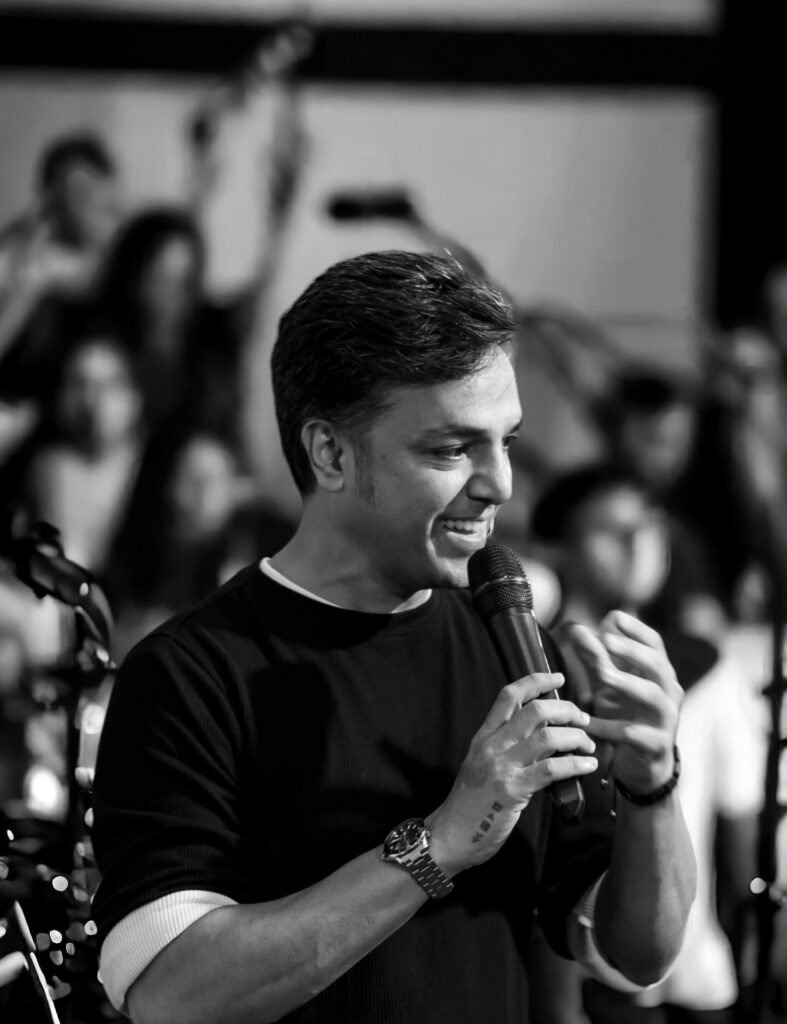
I wanted to start with your recent single Ehtram. It’s such an intense and layered track, especially in the way it blends Sufi philosophy with a contemporary, almost electro-pop sound. I am really curious about where it all began for you. What was your starting point for the track? Was it a sound, a feeling, or something more lyrical that sparked it?
Abuzar:
The starting point was the lyrics, the story. As an independent artist, I see myself as a storyteller. Ehtram is my journey into music and how I’ve been pursuing it.
When you’re struggling, people don’t always acknowledge your effort, even those close to you. But once you reach somewhere, suddenly people enjoy talking about your failures, your journey. While you’re in that phase, there’s hesitation. People question you. They don’t take you seriously.
I’ve had a very different journey. I’ve been a businessman, then a stay-at-home dad, and then I became a musician. Music was always a part of me, but when I chose to pursue it seriously, people around me didn’t understand it. That’s where Ehtram comes from. It’s that space where you’re not taken seriously, even when you are fully committed.
I feel like I’m walking a line. On one side there is failure, which all of us face daily, and on the other side is success. I’m walking that line patiently. I have gratitude for where I’ve reached, but I know there is a long way to go.
Shifting from Playback to Independence
When you talk about surrender and humility within the track, I can see how personal it is, and how your lived experience has shaped that perspective.
You’ve also had quite a shift in your career, moving from Bollywood playback into the independent space, which is a huge transition, especially in India where playback is often seen as the end goal. So I wanted to understand that decision a bit more deeply. What really prompted that shift for you? Was there a point where you felt like this isn’t where you belong creatively?
Abuzar:
My first major recognition came from a playback song called Speaker Phat Jaaye in Total Dhamaal. But my voice suits romantic ballads, Sufi songs, and softer music.
Speaker Phat Jaaye was a full dance number, like an item song, because when you’re starting out, you take what you get. You can’t always say no to opportunities.
But I realised that this is not my space. I want to say my story in my voice. Playback is more like a project. You come, you sing what is needed, and you leave. Even today, if someone calls me for playback, I’ll go and do it as a project.
But when I’m creating something like Ehtram or Saaware, it is a part of me. It is my life. I’m putting my lived experiences out there for people to connect with or not.
That’s where the shift happened. Independent music gives me peace. It’s job satisfaction. Even if a song doesn’t do well, I sleep happy knowing I’ve expressed myself honestly.
That distinction between doing something as a project and creating something that’s deeply personal is so important, especially for artists trying to define their identity.
But with that freedom, I’m sure there are challenges as well. When you stepped away from that structured system, what were some of the biggest challenges you faced? Was there a moment where you had to rethink how you were approaching your releases?
Abuzar:
The biggest challenge is how to release your music.
Making a song is one part. But then what? Where do you put it? Who is going to listen to it? Why would anyone come to your channel?
I made Saaware eight years ago and I was sitting on it because I didn’t know how to release it. I met multiple labels—Zee, Sony, Venus—they all liked the song, but nobody was ready to take it forward.
Even if you make a video, then what? Where does the video go? Who is going to open your channel and watch it?
It’s not just about picking up a guitar and putting something on Instagram. That makes you an influencer. I’m trying to be an artist.
That gap in release, distribution, and visibility is what pushed me to figure things out on my own and eventually build my own system.
Saaware: Metrics, Personal Thoughts, and More
That’s such an important distinction, and I think a lot of independent artists are navigating that exact same confusion.
And speaking of Saaware, it crossed around 100K streams in its first week, which is incredible, especially for a song that’s been with you for so long. How did you interpret that response? Did it change how you approach your releases now? And how important are numbers to you personally?
Abuzar:
It is more personal for me. Numbers are temporary, but they are still important in understanding your audience and seeing what is working, where your voice is being accepted, and using that to guide your future direction. They should inform you, but they should never define your expression.
Saaware was very personal. I wrote it for my girlfriend, who is now my wife, when she had gone abroad. It came from that space of longing in a long distance relationship.
Over the years, I made multiple versions of the song, around six or seven. I have versions like tabla, electro-pop, lounge, and a piano reprise. Every few months, it would start to feel dated, so we kept reworking it and refining it.
There was also a creative tension in deciding the direction, whether to go for a more upbeat, club-style version or stay with the soulful, emotional core of the song. I was very clear that the essence had to remain about longing and emotional depth, not something for dancing.
Eventually, we released the version that felt most balanced. Even now, I feel like I want to release all the versions someday and let people decide for themselves what they connect with most.
That level of iteration really shows how much thought goes into your work.
I also wanted to talk about your sound. Your music sits at an interesting intersection of spirituality and contemporary production. With Ehtram especially, how did you approach balancing something as introspective as Sufi philosophy with a sound that still feels modern and accessible?
Abuzar:
A lot of credit goes to my composer and producer, Prateek Gandhi. He is a singer, composer, and music producer, and we really brainstormed together on the direction this track should take.
I was very clear that I didn’t want it to sound too traditional. My base is pop rock, but I also understand that today’s audience, especially Gen Z and Gen Alpha, connect differently with music.
So the idea was to retain the Sufi essence in the lyrics and emotional core, but build a contemporary sound around it. We experimented with multiple directions until the fourth draft really clicked.
He introduced a Dilruba-based motif (a traditional North Indian bowed string instrument, similar in tone to a sitar/violin blend) that gave it a slightly Arabic and Mediterranean texture, which instantly elevated the sound.
When I heard that version, I knew this was the space I wanted to go in, and we decided to move forward with it.
Building House of Akhtar Music
Now, I want to move into something that feels like a natural extension of everything you’ve been talking about, which is House of Akhtar Music. From what you’ve said so far, it doesn’t feel like just a business move, it feels like something that came directly out of your own struggles with releasing music and navigating the industry.

When you founded the label, what gap were you trying to fill, especially for independent artists who are in that same position of not knowing how to get their work out there?
Abuzar:
The gap is getting original storytelling out instead of running after numbers.
My father always told me that results are not in your hands, your effort is. So House of Akhtar Music is effort-oriented.
I was running around with my songs, meeting labels, and trying to figure out how to release them. Even when the songs were liked, there was no real commitment to take them forward, and I was constantly stuck in that loop of waiting and uncertainty.
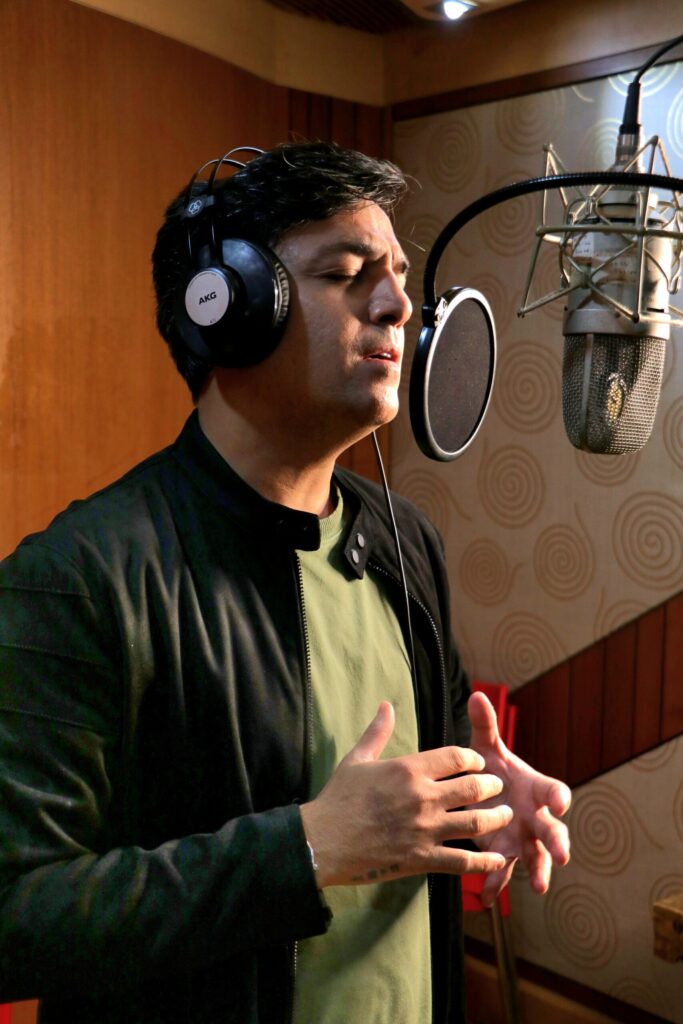
So instead of continuing that, I decided to create my own space. Now I don’t have to depend on anyone or wait for permission. I can release my music, put it out directly, and let people hear it and decide for themselves.
The shift from asking for a platform to building your own is quite important. At the same time, the way most labels function today can be quite transactional. Artists get signed, but not necessarily supported. So how are you approaching this differently? What does that support system actually look like within House of Akhtar Music?
Abuzar:
That’s exactly the issue.
A lot of labels sign many artists but only work on a few. The rest are just numbers. Some artists get stuck for years. They take an advance, they sign a contract, and then nothing really happens. You are just waiting, hoping something will move.
Eventually you either keep waiting endlessly, or you reach a point where you ask to be released from the contract. I’ve been there. I’ve done that.
So I don’t want to operate in that way. We will probably sign four or five artists so we can actually focus on them properly.
And we are very clear that we want storytellers. I don’t want someone to just come and sing something I give them. That becomes playback. I want artists who come with their own thoughts, their own conviction, their own story.
When I hear their music, it should feel like something they believe in, something I can also stand behind and say, yes, this is a story worth putting out on my label.
You also mentioned earlier that when you sign an artist, it’s not something temporary. So what kind of relationship are you trying to build with artists who come onto your label?
Abuzar:
For me, it is like a marriage.
If I sign an artist for five to seven years, it is a commitment. It is not experimental. It is not something where we are just trying things out and seeing what happens. It is a long-term responsibility.
They are mine and I am theirs in that sense. The artist belongs to the label and the label belongs to the artist.
We will do everything possible to help them grow. I have been in that position where I didn’t have support or guidance, so I understand what is needed on the ground.
It is about staying invested in their journey, not switching focus or treating them like numbers on a roster.
That kind of long-term thinking is rare, but it’s exactly what artists need. I also wanted to touch on storytelling beyond just the music itself. Visual identity plays such a big role today. How are you thinking about that within the label?
Abuzar:
Storytelling is important, but it does not always have to be visual.
Some songs will have videos, some will not. Even if there is no video, the song itself should carry a strong story in its audio and emotional core.
For example, my next song is not releasing with a video. We are just putting out the audio and the artwork first to see how people respond to it.
We have already made two videos for other releases, so we are experimenting with this approach. If people connect with the song, we can always build a visual layer around it later and expand the storytelling.
Before we wrap up, if you had to describe the next phase of your artistic journey in one word, what would it be, and why?
Abuzar:
Fantastic.

I have taken time to reflect and understand what I want to do, and now I am very clear.
My focus is on ticketed concerts. I want audiences who choose to be there.
If I perform at a wedding with 500 guests, they don’t really have a choice. They have to listen to me because I’ve been invited and the performance is part of the event. But if someone pays even 100 rupees to come and watch me, they are choosing to be there.
That changes everything. That is where the real connection begins.
When someone has consciously paid to attend, it creates a different kind of commitment. That is what I want to experience as a performer.
Even if I start small, with a 100-rupee ticket and 500 people, I want to understand what my real worth is in that setting and how people genuinely respond when they are there by choice.
That’s a grounded and honest way to look at it, and it really reframes what success looks like as an artist. Finally, is there anything you’d like to share with your audience, or even with emerging artists who might be reading this?
Abuzar:
Just one thing. Please listen.
Whether it is my music or any independent artist’s work, a lot of effort goes into making a song. When you sit on the other side and actually make something, you realise how much time, detail, and emotion goes into it.
Even today, sometimes your own friends will watch but not like or comment. That happens.
So my only request is, at least give it one listen. If you like it, engage with it—like, comment, follow, whatever you feel like. If you don’t like it, then give feedback and tell us what didn’t work.
That is how we improve, and that is how artists grow.
Final Thoughts
What stayed with me after this conversation is a sense of direction more than any one standout line. There’s a clear shift in how Abuzar looks at his work now, less as separate releases, and more as part of something he is actively building over time.
Across music, performance, and starting his own label, the focus seems less about constant output and more about having control over how things are made and where they sit. It’s a quieter kind of ambition, but a very intentional one.
If there’s one takeaway, it’s that independence in music isn’t just about stepping outside existing systems. It’s also about trying to define those systems for yourself, even when they don’t fully exist yet.