In Conversation with Oshin
The sound designer/ADR supervisor behind award-winning Khauf, Class, Nishaanchi, and Panchwa Paratha on post-production, psychological horror, and the film industry’s disparities.
Most people who watch Khauf (Prime Video series) will tell you it got under their skin. They might point to the writing, the performances, the unrelenting dread of it. Very few will think to credit the sound. That invisibility, as it turns out, is exactly the point.
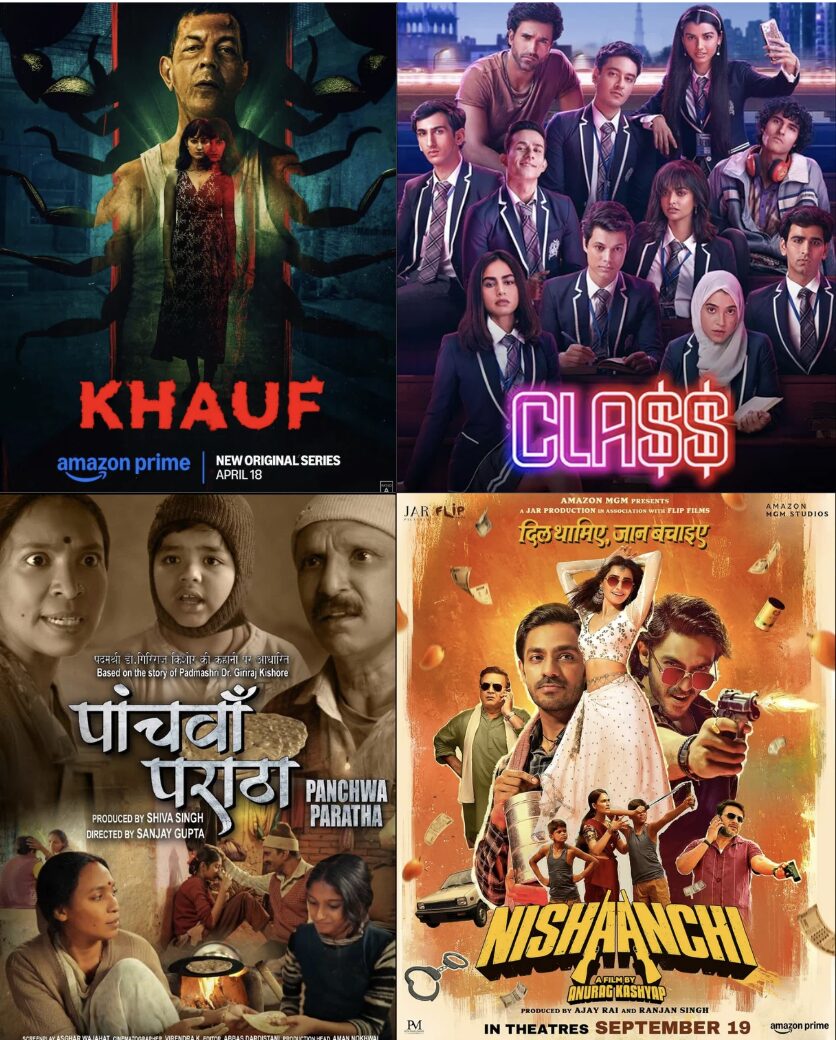
Bhumit has been working in post-production sound for Indian film and television for several years now, building a filmography that includes the award-winning show Khauf (associate sound designer & ADR supervisor), Class (sound effects editor), Nishaanchi (sound effects editor, directed by Anurag Kashyap), and Panchwa Paratha (sound designer) among others. He is also the rhythm guitarist of Last Minute India (a band we have covered previously on GMI blogs) which makes him, depending on the day, either a musician moonlighting as an engineer or an engineer who never quite left the stage.
View this post on Instagram
I first met Bhumit at KM Music Conservatory, where he was doing the part-time audio engineering programme while I was studying music full time. He was, if I remember correctly, the only one in his batch to pass on the first attempt. That tracks. He has always had a particular kind of patience for the craft…the sort that lets you spend half an hour looking for the right sound of a door shutting and not lose your mind doing it.
We sat down to talk about how he got here, what sound design actually involves, and why, if you want anything to change about how sound is treated in Indian cinema, you have to start with attitude.
Your LinkedIn bio says “musician by heart, engineer by brain.” Which one actually showed up first, and at what point did you realise sound engineering wasn’t just a technical pursuit but a creative one too?
Music, always. As a child, my father used to keep listening to songs, his favourite artists, and that kind of got to me as well. Which led me to picking up my first guitar when I was probably ten, twelve years old. Then, of course, life happens, studies happen. My parents were supportive, they weren’t telling me to leave the passion. They were like, it’s good to have something like this. So I kept at it.
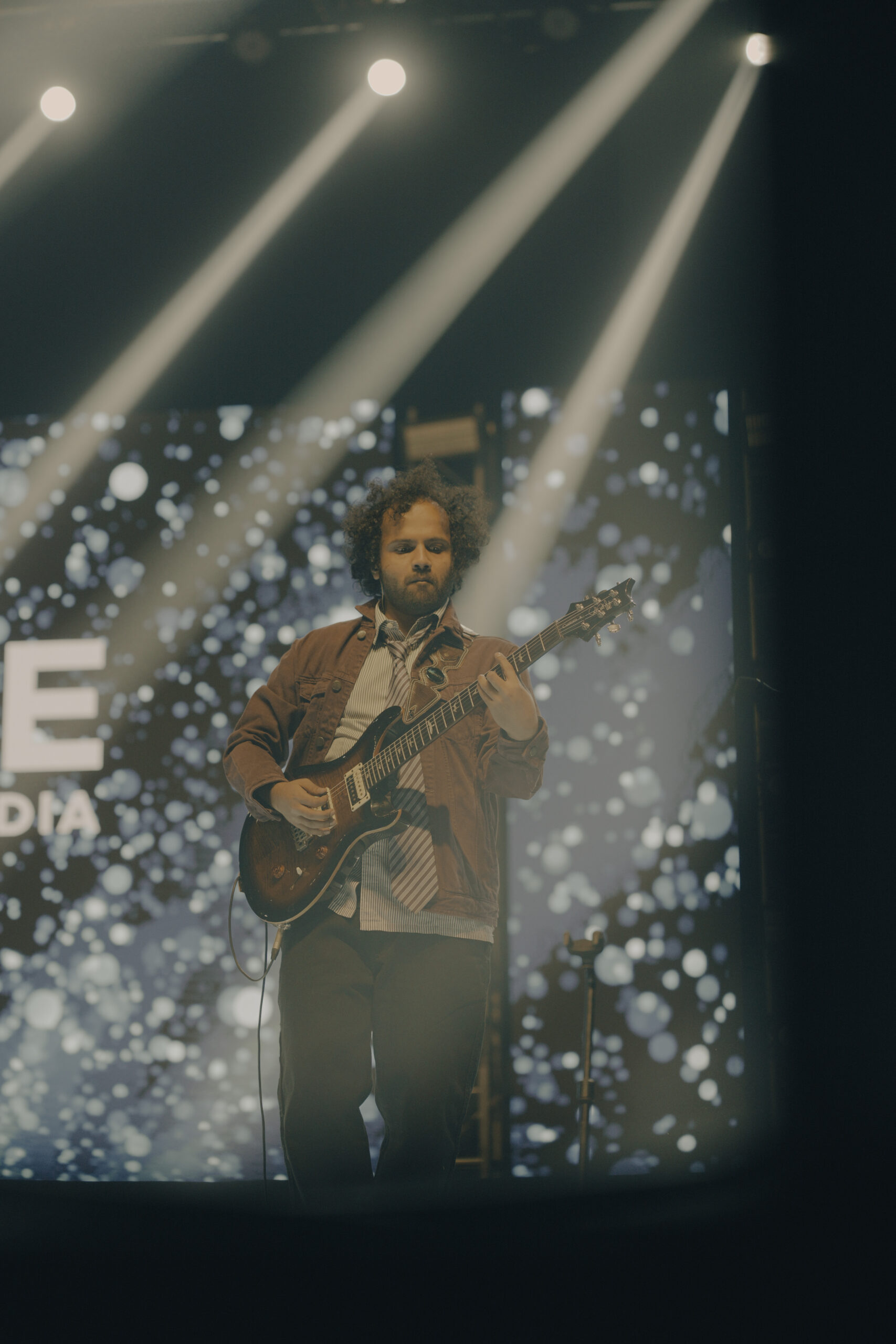
In my final year of engineering, when you kind of have to make choices about what you’re going to do after graduation, that’s also around the time a bunch of like-minded musicians got together and formed a band. I was already playing guitar. And I thought, okay, why not try audio? If you’re interested in music anyway and you have a band, having audio engineering as a skill is a good asset.
When you were at KM doing the audio course part-time, were you working on projects alongside it? And if so, how did juggling that shape your discipline early on?
Yeah, I think so. It started with music, but getting into audio was a decision I made. When I was doing the course in Chennai, I was also doing things on the side. A friend of mine who was studying filmmaking kept reaching out asking for background scores for his short films. So while I was studying audio, I was also working on these small school-project films. The part-time format actually helped with that. Our professor used to tell us that the reason you only have six or seven hours of lectures a week is because the remaining time is for you to explore yourself with the DAW. So there was always space to do other things alongside it.
You’ve worn a lot of hats: sound editor, sound effects editor, sound designer, ADR supervisor. For someone who doesn’t know the difference, how would you explain how these roles actually feel different from the inside?
These are all roles mainly associated with post-production for film and television. Almost everything you hear in a film is recreated. A sound editor puts each sound according to what you see visually on screen. An ADR editor handles dialogue — a lot of what’s recorded on set needs to be dubbed again in the studio, and the ADR editor’s job is to make sure the pitch, tone, dialect, and perspective of that dialogue is as close to the original as possible.
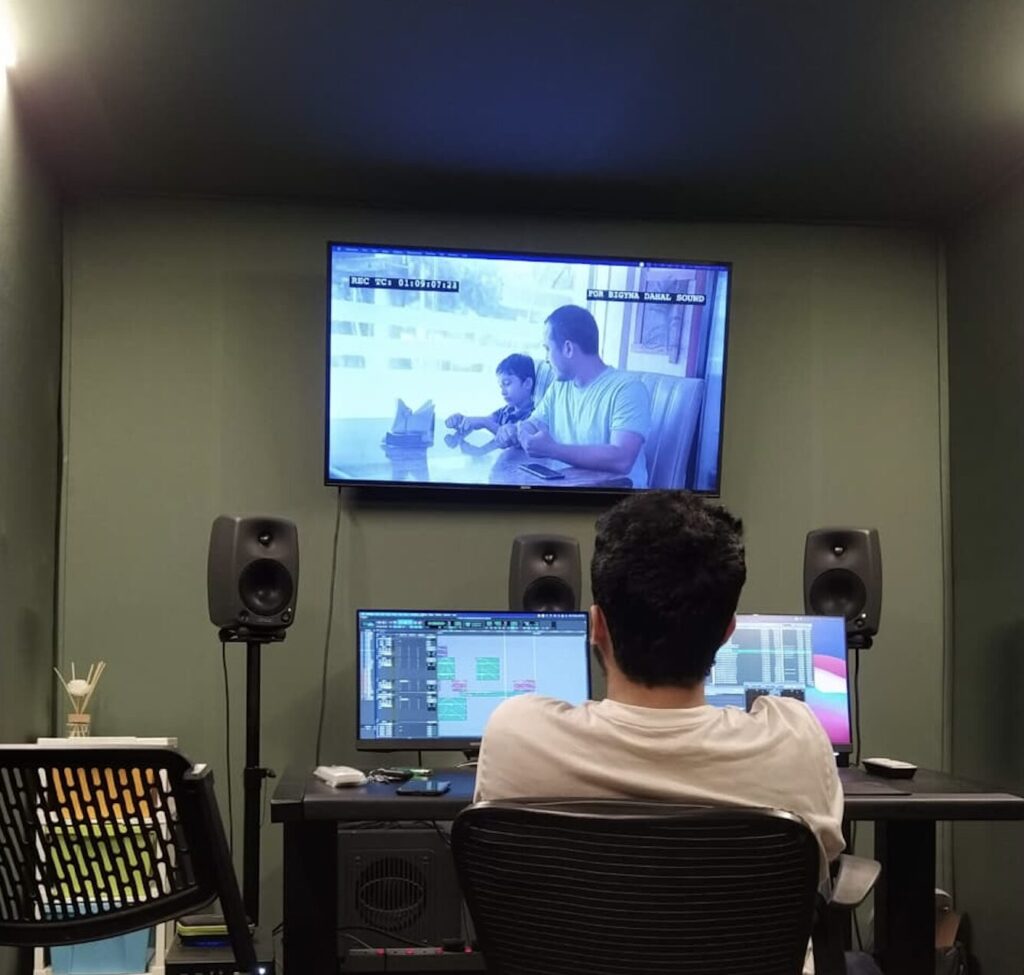
A sound designer is someone who narrates the entire sound of the film; not just the music, but everything. Like how a music director directs the instrumentation in an arrangement, the sound designer takes a collective call with the director on what the sound of a particular scene should be. That includes dialogues, effects, ambiences, atmospheres, background music, songs if there are any. The ADR editor, the Dialogue editor, the Foley editor…They’re all parallel stems feeding into that larger process. The whole thing together is what we call sound design.
Sound design for horror feels like a completely different animal and Khauf especially, because it’s psychological rather than just jump scares. I personally found it genuinely unsettling to watch and loved the feeling.
It also won the award for ‘Best Sound Design‘ at Filmfare OTT Awards 2025. Walk me through how you approach building a soundscape that’s meant to disturb someone. Where do you even start?
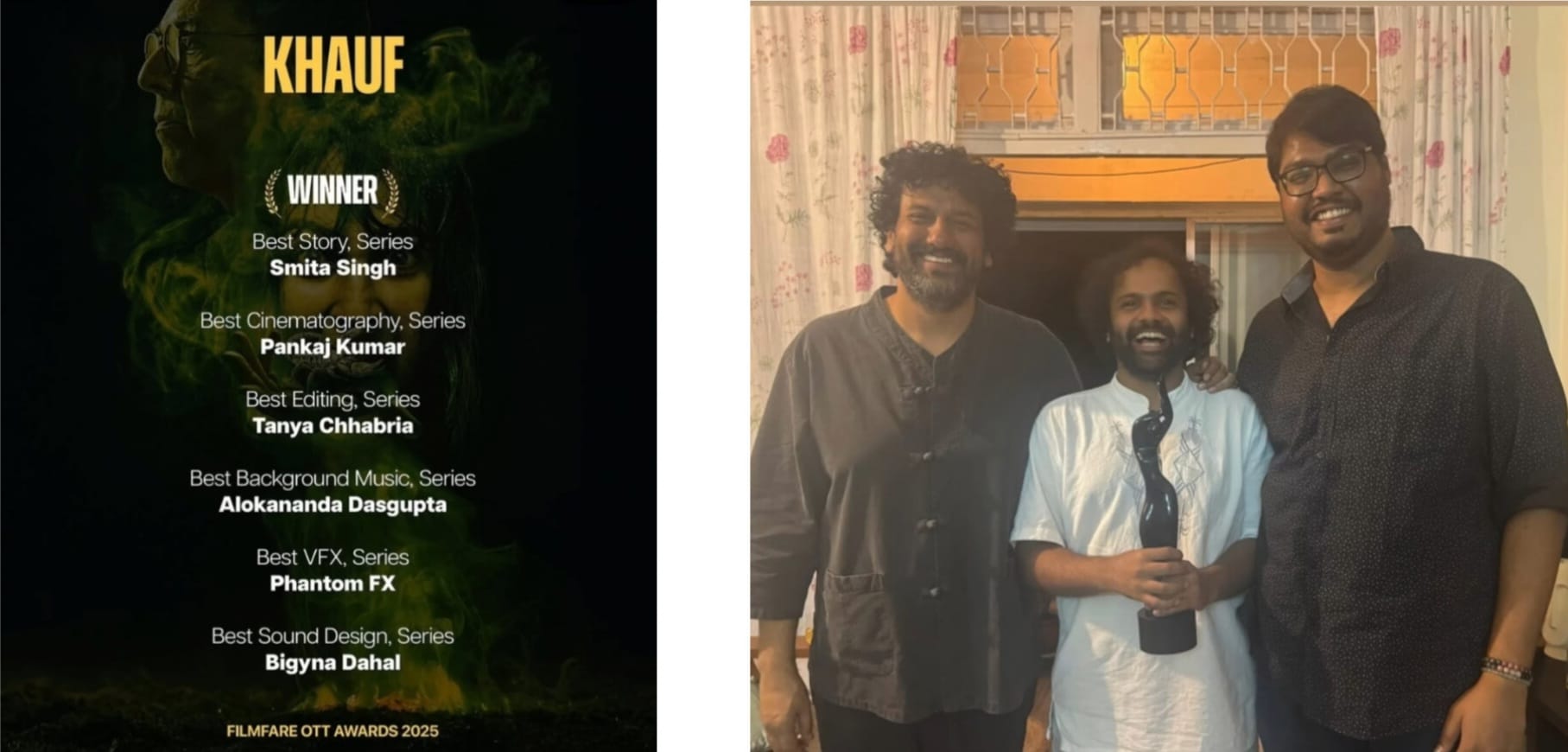
Khauf was one of the most interesting projects I’ve worked on. It’s not just plain jump scares, it’s psychological. The script was amazing, and while we were working with the director and the scriptwriter Smita, we had a few things we knew we wanted to do. The main protagonist keeps getting these feelings tied to her past trauma. We wanted to condition the audience — like how you train a dog to respond to a click — so that involuntarily, just through sound, you’d be pulled back into that headspace whenever the character was.
View this post on Instagram
We even created sound motives for different scenes even before we had the footage. We’d just start building sounds, the head buzz sequence, for instance. There’s a flashback scene where the boyfriend gets beaten up during a stage performance, and just as things are about to get dark, there’s a microphone feedback that bleeds into the whole scene. We actually recorded that in the studio using a guitar amp and some faulty wires.
Because the script was so well-written, we could think of real-life elements that would give you that escape into the scene. The show is happening at the front, the action is happening backstage, and that tension was already in the writing. We just had to listen to it. We were preparing sounds way before we even got the footage, and then once the footage came, we’d play around and see what worked where.
View this post on Instagram
ADR supervision is genuinely one of the most undertalked roles in Indian cinema…people kind of know it exists but nobody really talks about it as an actual job. What does it demand of you, and what’s the most creative or challenging ADR session you’ve navigated?
ADR sessions are actually pretty fun. A lot depends on the actor coming in to dub. Old-school actors who are used to it make it genuinely enjoyable. And what surprised me when I first got into it was how creative you can get with ADR. It’s not just fixing what was broken on set.
One of the more memorable sessions was a crowd dub for Khauf.
There’s a scene on a terrace on New Year’s Eve. The building next door is all lit up, there’s a pre-wedding engagement happening, it’s festive and emotional at the same time. I had a group of women in their forties and fifties for the crowd session. Before we started, I asked them if there were songs they’d sing at gatherings like this in their culture, something before a wedding. They had a few, so I got them to record those. And I just used that as an effect in the film. You can hear them singing in the background as the scene plays out. That’s the kind of thing nobody tells you you can do with ADR, but it works.
Looking at your filmography on IMDb, 2022 was more assistant and associate roles. By 2025 you were leading as a sound designer and ADR supervisor. Was there a turning point where you felt that shift happen?
There was one project that’s not on IMDb…a video of a live art installation. Someone was burning crop waste and using the ash to draw on the ground of a farm, and they’d shot it and needed sound. Without you seeing the footage it’s hard to describe, but I had to create a story entirely out of sound based on what I was watching. No dialogue, no music…just deciding what sounds to use and how. What I remember most is trying to make it feel musical without it actually being music. That’s harder than it sounds. When I finished and sat back and listened to it, I was genuinely shocked. I thought I actually did this. That was the project that gave me confidence. Like, okay, I can do this.
One of your earlier projects, Tora’s Husband carries an 8.0 on IMDb and the reviews are genuinely warm. What was it like working on something that clearly resonated — did you feel that while you were working on it, or is that the kind of thing you only clock in hindsight?
Hindsight, completely. Tora’s Husband is a Rima Das film set in the northeast, Meghalaya, during COVID. It’s about a middle-class man running his shop, dealing with alcohol issues, but also being a genuinely good father. It’s a beautiful film. But when you’re working on a film, it’s very difficult to watch it as a film. You’re just here, there, placing sounds, fixing things. It was only after it was done, when I actually sat and watched it as a viewer, that I thought, oh, wow. This is really good. It’s a feel-good family drama. There’s innocence, there’s conflict, there’s humour. A proper slice of life.
India’s OTT boom has obviously created a massive demand for post-production talent, I feel like I hear about it constantly now. Have you felt that shift personally? More work, different expectations, higher standards?
There is opportunity, I’m not going to deny that. But with more opportunities, quality has also taken a hit in some places. There are platforms, I won’t name them, that are slashing rates and pushing turnaround times to one or two days. You’re literally in the studio for twelve, thirteen hours just to make ends meet. It’s affecting the craft. The demand is there, but the conditions attached to some of that demand are not great.
You mentioned once that you’re always keen on learning. What’s something you’ve picked up in the last year (technically or otherwise) that genuinely changed how you work?
Don’t mix friendship with business. Sometimes you think you’re just helping a friend — doing their first short film, an ad film, whatever, and you do it as a favour because that’s what you do when you’re starting out and so are they. But the least you can expect is that when they get more work, they come back to you. And that doesn’t always happen. People move on, upgrade, forget.
And then there’s the exposure paradox. When I was getting into sound design, I kept asking myself: how will anyone give me a sound design job if I haven’t done one yet? So you do the free work to build the reel. But at some point you have to make that transition. It’s a hard conversation to have, and it can be awkward, but it’s a necessary one.
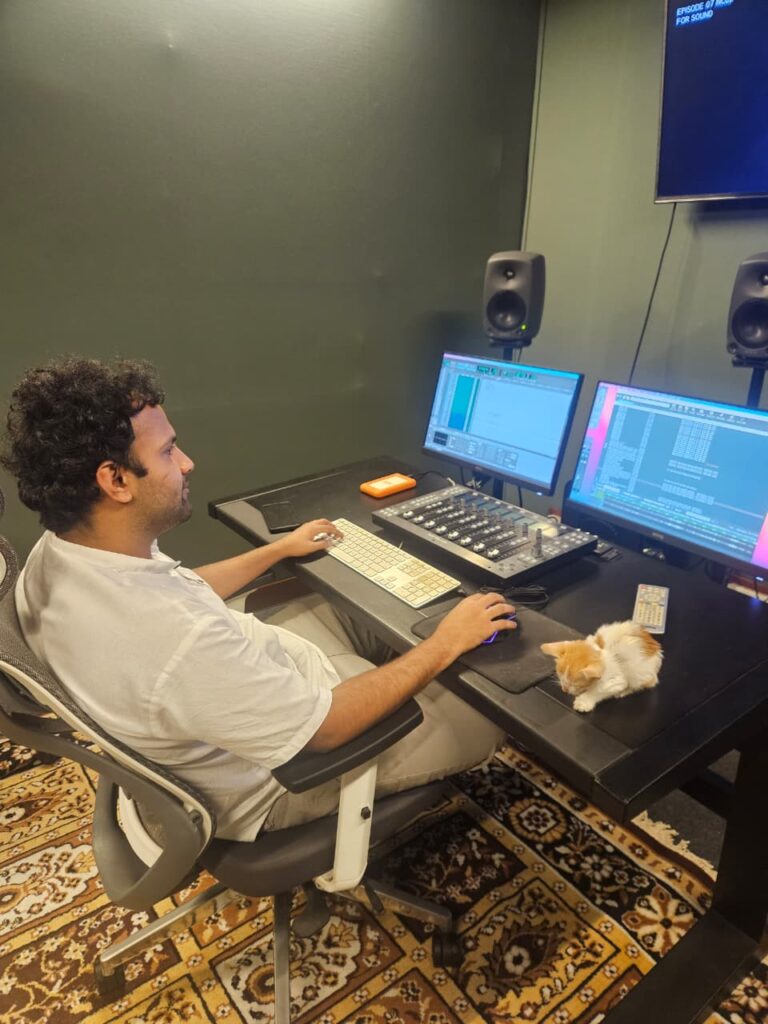
Sound is genuinely one of the most underappreciated departments in Indian cinema. Audiences notice bad sound but rarely credit good sound. If you could fix one thing about how it’s treated, whether that’s budget, timeline, or attitude, what would it be?
It starts with attitude. Not pay, attitude. For a lot of people, sound is considered petty, something minor. The moment that attitude changes, there’s respect for the job you do. And if there’s respect, then to an extent, budgets improve too. It all starts from the mentality people have toward sound engineers and sound designers.
And it shows up everywhere, even on set. When you’re doing production sound, sync sound for location shoots, you’re already one of the last people anyone thinks to consult. A take is happening, there’s some unwanted sound, and the sound guy flags it: sir, we need to go again, there’s something in there. And the director goes, we’ll fix it in post. Just like that. You don’t want to argue, so you let it go. And then guess what? It lands in post and becomes someone else’s problem to fix anyway. More work, same attitude.
It’s a crazy field. It’s not talked about as much as it should be, but it’s genuinely the backbone of the film industry.
Last one. If the musician in you and the engineer in you ever genuinely disagreed about a creative decision…who’s winning?
The musician. Always. The creativity comes from there. I don’t think there’s an argument to be had. The engineering side does help though. When Last Minute India is mixing a track, I hand it off to someone else because you lose perspective on your own music when you’ve been listening to it for days. But knowing the technical language means I can explain to the mixing engineer exactly what I’m hearing and why. That’s not nothing.
You may not have noticed his work the first time around. That, as Bhumit would tell you, is entirely the point. Find his work across Khauf, Class, Nishaanchi, and Panchwa Paratha (so many more!) and follow Last Minute India to see what he sounds like when the engineer steps aside.