They make an album.
A Conversation with Bedroom-pop Band, CHAMPAK
Writer: Aanchal Bordoloi | Editor: Oshin Hephzibah
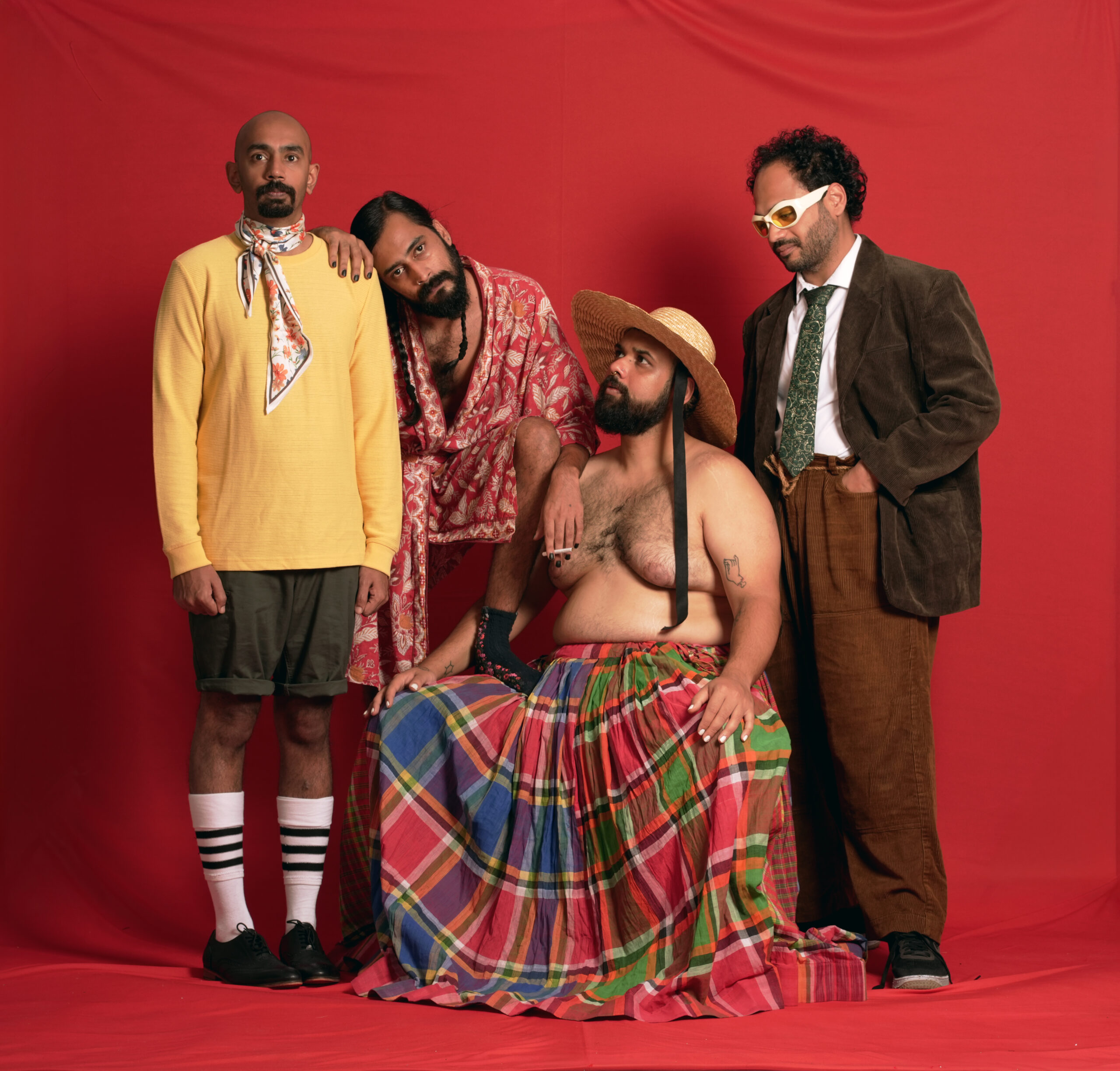
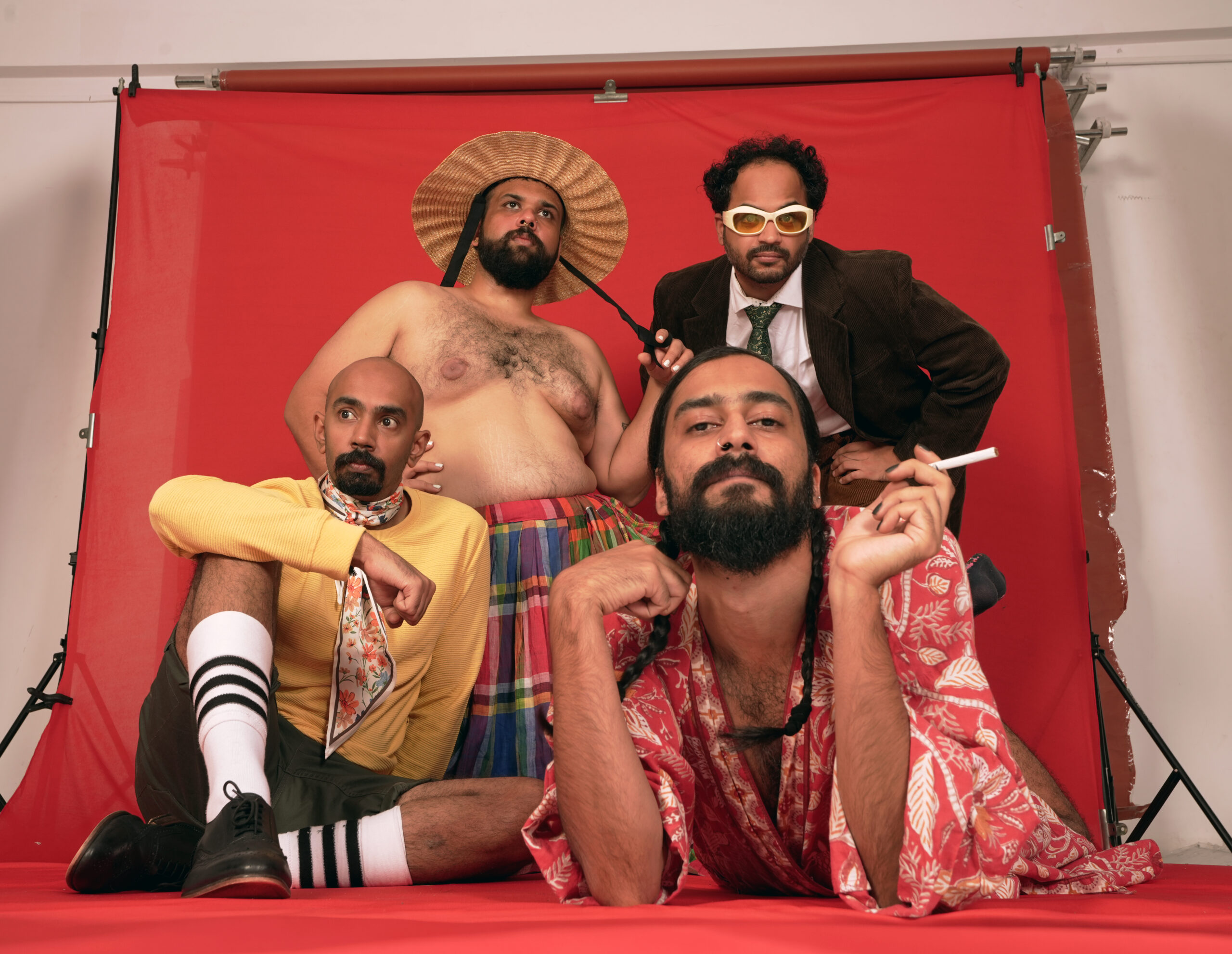
Left to right: Lakshman (guitars), Aditya (vocals, synths, guitar, melodica), Shoumik (vocals, synths, ukulele, guitar, drums, percussion) and Aman (bass, ukulele).
Love is blind like
Bats in the night sky
And nobody can
Come in between us
And if anybody tries
We’ll knock them down like
Pins in a bowling alley
Where we go on Friday nights
Lakshman, Aman, and I are seated in a cosy apartment living room tucked away in Cooke Town, Bangalore. I must admit, most of my attention wanders to the three cats of the house — especially my favourite, Popcorn. It doesn’t seem like much of a formal interview, considering the number of times I have bumped into Lakshman at gigs all across the city.
The band describes itself as a ‘multi-city musical adventure,’ more on this in the conversation that follows.
Every band has an origin story, but Champak feels like it came together with a distinct chemistry. How did the project first take shape, and when did you realise this was something worth building seriously?
“What do a bunch of 30 year olds do when it rains?”
This question should best sum up the time spent together by the band at Aditya’s place in Goa. The story as plainly narrated to me is that one afternoon, when they decided to step out for lunch, it started pouring. So they got together by the dining table and started jamming. It was spontaneous and just felt right to turn those recording sessions into an album. What started out as a fun thing with no clear agenda materialised into an album.
Could you explain the creative process, in terms of everyone coming together, writing and composing the music, adding the magic to the production and the release process?
Aman: There’s definitely a lot of magic that went into production and that was just mostly Lakshman and Shoumik. They were very clear in terms of what needed to be done, in terms of what sort of sounds were missing, and what sort of sounds could be balanced out.
The recording process was challenging as only one member from Champak was in Goa and the rest were shuttling in-between cities. From the album, ‘Feed the Clown’ was easiest to record as it was one song where all the 4 members were in the same room. The others mostly included them bouncing ideas off of each other and finding a convergence of them.
The sessions consisted of using the Casio and Yamaha small keyboard synths and essentially whatever was lying around at home, including toy keyboards.
Lakshman: I mean it’s unfair to call them toys. They’re just small compact keyboards that feel toy-ish. They feel fun and are technically sold as starter keyboards.
There was an extreme minimal use of software plugins for the album.
In terms of sounds we just tried to use whatever we had. So there’s drums that Shoumik recorded in his studio. When I went over, I tried to figure out how to make the sound work for us in that small room because none of us had money to really go to a bigger studio to build drums so we figured out how to make it sound the most appropriate with what we had because it was a small room. We used the floor tom instead of a kick because the kick was too big and it was just not sounding right so stuff like that and ukuleles.
Aman: Shoumik would go into these crazy idea holes like late at night and just put mics in specific places to get the right kind of sound through. With the toy keyboards they have hundreds of tones and songs. We still approach it with a sense of wonder.
I have been listening to the album on repeat and really enjoying it. ‘Until I Find Grace’ is one of my favourite songs. The line, “Will you walk through the fire and wait through the pain” really stood out to me. Would you like to walk us through these lyrics?
Lakshman: Adi wrote that at a time when he was going through a lot of stuff and just trying to find a way to express those emotions and go through that entire process of learning and healing. This song is basically about looking at someone and having that conversation — we’re at this point where it’s rough and we need to find a way to figure this out because we are two people who care for each other. And essentially in the process that’s what you kind of need to do to make this work. Will you walk through the fire and bleed through the pain…because you have to get to the other side of it.
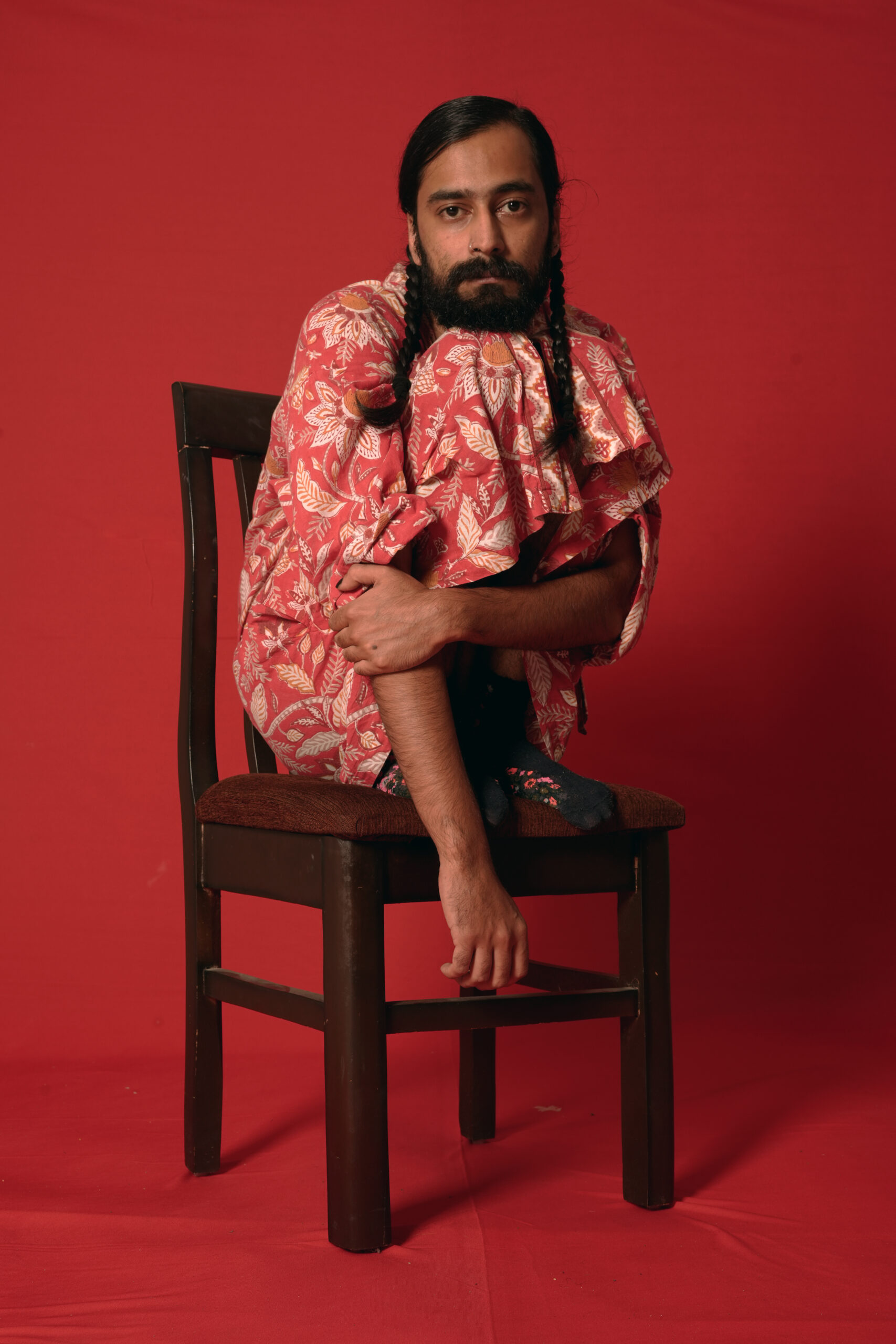
Until I Find Grace can be interpreted in many ways. When they asked me about what I thought about the lyrics, I thought of how we use substances or binge-watch series and movies (among other things) to escape from reality or to simply distract and numb ourselves. The song to me pointed towards sitting with ourselves and really feeling all our feelings: the good, the bad, and the ugly.
The song can also be imagined as a conversation with emptiness and a journey through the five stages of grief.
As far as I am aware, Shoumik aka Disco Puppet is Kolkata-based, and I’m sure the other band members keep shuttling between different cities. How does this work out for the band?
Lakshman: It’s tricky. We’re still trying to get our bearings with that because it is a little tricky when it’s three different cities. But luckily both Shoumik and Adi have work and other reasons to come to Bangalore often, so we do get to sit together every now and then.

We were in Calcutta for rehearsals in January this year and I think that was really interesting because we ended up experimenting with the live videos that are coming. So we did rehearsals plus shot the live videos for the songs. It was the first time all four of us had been in a room since we wrote Feed the Clown almost a year ago. It was last March and it was really interesting because we ended up writing bits of a new song as well, in the chaos of just having two weeks to rehearse. We got the bearings of a couple of new songs…
Aman: We’re working on ideas. I think there’s one very strong cemented idea that we couldn’t build on.
Lakshman: Again, we’ve not been in a room since, so it’s been a little stuck. I think we’re trying to do more to be in a room together and write rather than do the same thing we were doing…just trying to do things slightly differently.
Aman: I think otherwise in terms of us being in three different locations it’s been mostly manageable. During recording we didn’t feel it as much. I think that’s because Shoumik was still here, and Adi was coming by. Plus, Adi is also familiar with Ableton — he was already working on Tempest while we were working on Hydrogen. So, virtual presence helped a lot. Plus we already had a little bit of a basis to build on. With the recordings that we had, we picked up a few ideas and started building on that. At times when we were working on certain things, Adi was working on a different song, and then by the time we were done we’d just sort of swap it; where we’d send what we have done for one song and he would send us what he had done for Tempest and we’d start working on that. It was quite manageable. I think for the live stuff we’re figuring it out, but again it seems manageable for the most part. Let’s see how the new stuff comes together.

Is there anything we can look forward to from Champak in the coming months?
Champak is taking their time and has gigs and a tour in the pipeline. They have planned on compiling all the live videos of songs that weren’t singles into a ‘Live from Golf Green’ compilation.
Aman: We had certain ideas of how people would respond but it’s been different in a very positive way. I think we’re just sort of now trying to figure out how best to do this and how to get it to a live set where everyone including us and people who are coming to watch us, enjoy it as much as they can.
“Feed The Clown” was many listeners’ first introduction to you. Why was that the right song to introduce the band with?
Lakshman: Feed the Clown kind of hits a lot of the essence of what Champak is like — very high energy, very excited and just going ham on the music itself. In terms of trying to showcase what the band was about as a first single, Feed the Clown kind of made sense because it’s also (in a way) a true representation of the four of us in a room. The song came out that way, and the rehearsals and jams have also been with that vibe and energy. There’s strange, fun, quirky nihilism to the song which is pretty on point for us as a band. I think with the first lines of the song, Champak has really captured how the four of us are when we are together:
Sundays are overcast
A storm that’s never passed
Anxiety in full bloom
Quiet riot burst out of tune
Monday’s a time machine
Halfway built in a dream
A weary wheel of fortune
It makes a liar
Your sound has that raw and intimate DIY/bedroom-pop energy, how did your early recording process shape the identity of the band?
Lakshman: The way we approached recording this record was the idea we had in mind — just listen man, this is what we got, this is what we want to do with it, and this is what we make with what we get. What comes out of that energy…I think the process and the attitude both kind of feed into each other. It’s not one begets the other, it’s quite symbiotic in that regard.
The A1 project has multiple moods and textures that feel quite deliberate. When putting it together, were you building a larger narrative, or trusting instinct song by song?
Aman: We didn’t really approach it with a narrative. But obviously once the songs were embedded, more than just demos, things starting to take shape, there was that idea that: okay, this is generally the kind of sound this album has. We were just trying to see whether we could throw something in to break it or enhance it. Either way would work. We weren’t trying to — we were open to having fun and going against ourselves to a large extent. Tempest (the first song on the album) starts with footsteps entering a house, and Until I Find Grace (the closing track) ends with footsteps leaving. So, we knew that was going to happen and that’s how we wanted to bookend the album for sure.
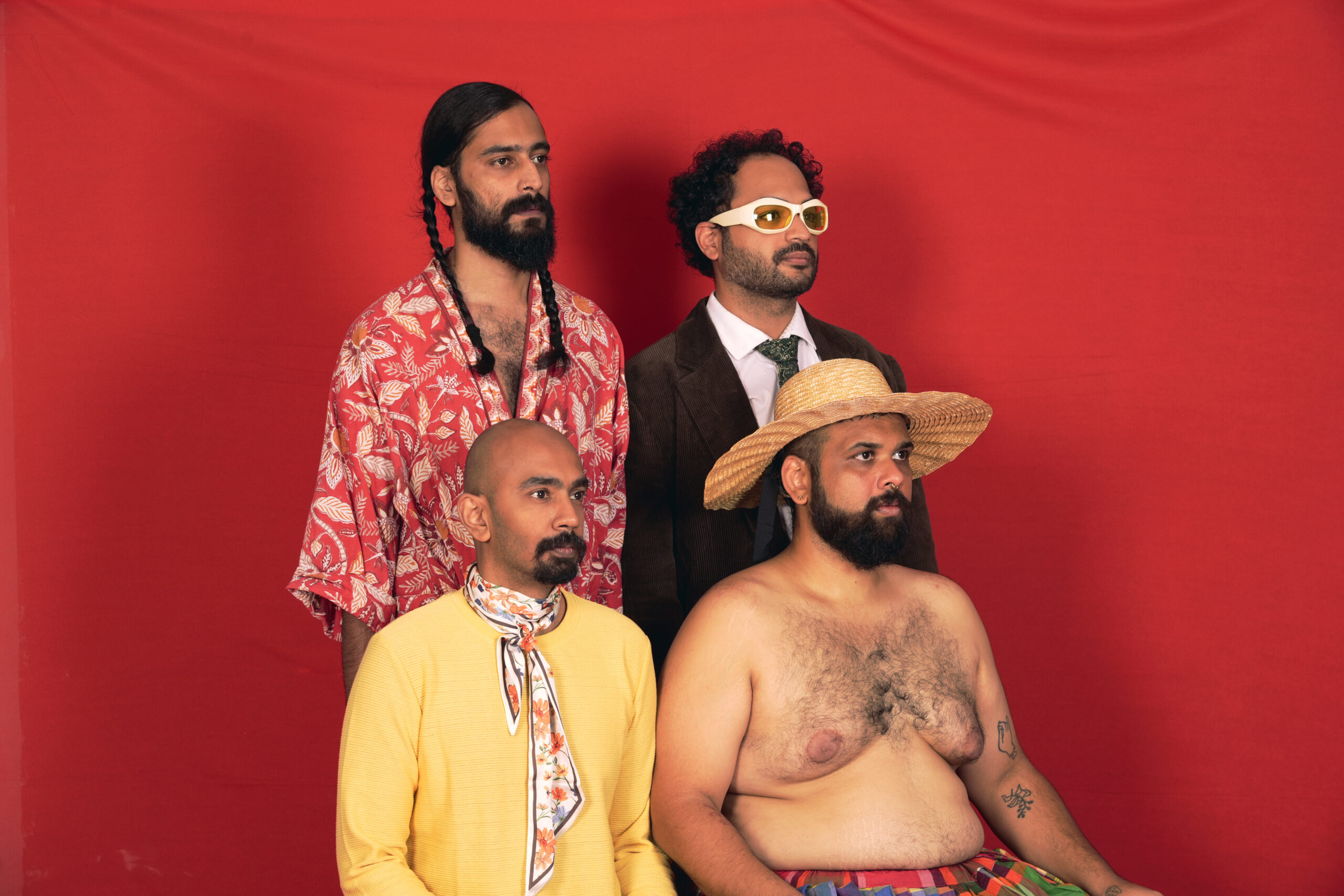
As a singer-songwriter myself, honesty is what draws me to most music that I continue to admire and appreciate. When I first started seeing the content that Champak was posting on their social media, I found their visual identity very quirky and catchy. Feed The Clown was my introduction to the band’s sound though I still wasn’t listening to it on repeat. But the moment I listened to Until I Find Grace and Love is Blind, these songs were on loop. Darkaak is uber-groovy. These songs will find a way to stick with the listener — of that I’m sure.