The ‘It’s Time To Talk’ survey is open to all musicians and music industry professionals, aged 18 and above, across India’s music industry, living and working in India. The online survey takes 10-12 minutes to complete, and participation is entirely voluntary and anonymous.
Fill in the survey now by clicking here!About
‘It’s Time To Talk’ is a collaborative research project being conducted by Global Music Institute (India), TATVA (India), Goldsmiths, University of London (UK), and Creative Empirical (UK). The aim of the study is to gain an understanding of the health and wellbeing of people working in the Indian music industry to foster new cultures of care, and create more forms of tailored support to address industry-specific needs and challenges. This will be done through data derived from a nationwide survey being conducted to understand the scale, nature, and determinants of mental health challenges among musicians and industry professionals.
Why ‘It’s Time To Talk’?
‘It’s Time To Talk’ was created in response to a lack of research, specialist mental health support services, and policy measures to address mental health in the Indian music industry. While celebrated voices have spoken out about mental health, the subject continues to be silenced by shame and stigma. The ‘It’s Time To Talk’ team wants to liberate the conversation from the burden of stigma, and empower the industry to take charge of their mental health, by building sustainable practices to safeguard their health and wellbeing.
Meet the team

Dr. George Musgrave

Kripi Malviya

Megha Balani

Oliver Durcan

Senjuti Maitra
Advisor
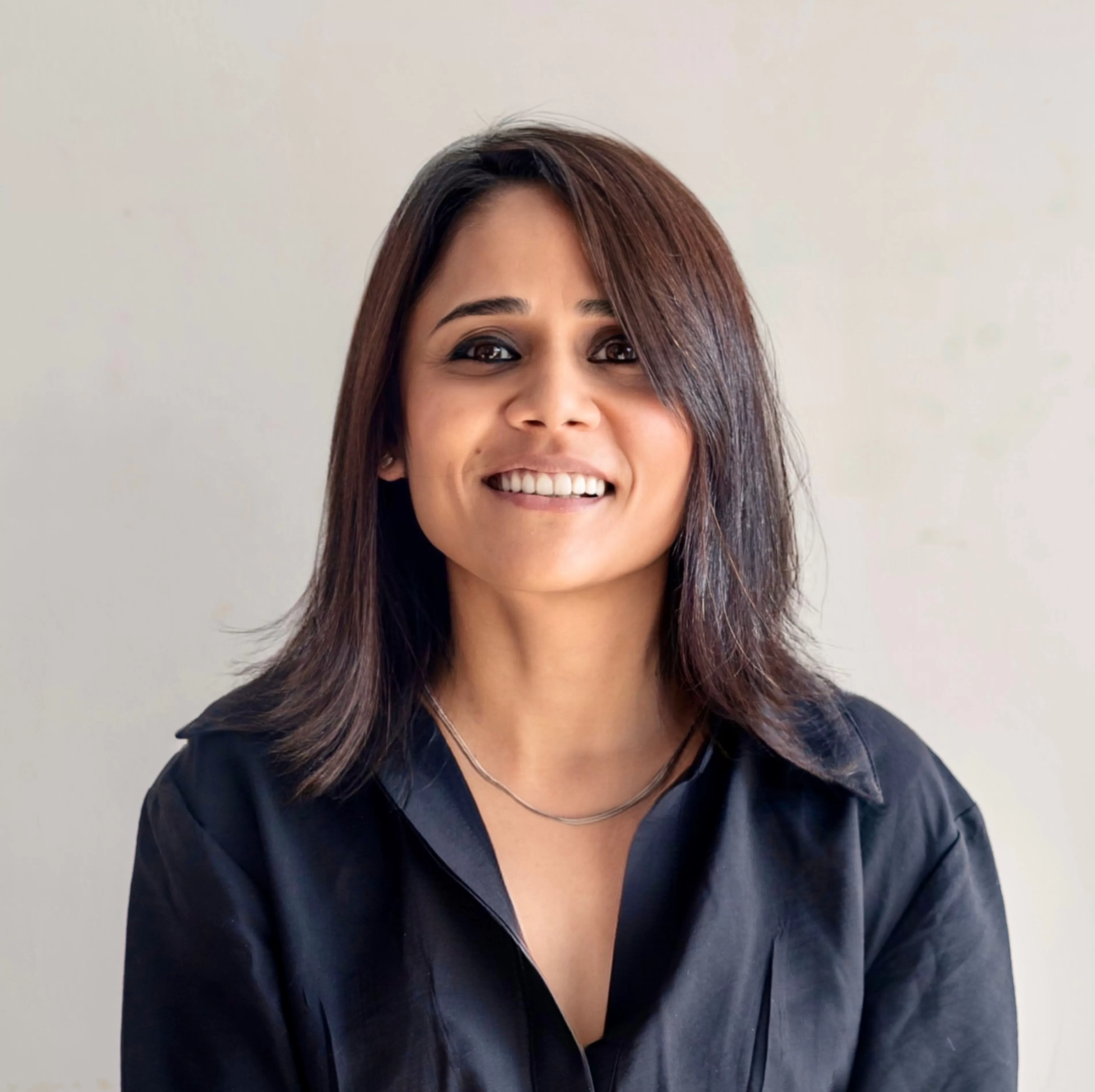
Shilpi Gupta
Our Community Partners

-
Some of the wording in the survey is unusual. Why are you asking me about my feelings over the past few weeks?
Some of the questions in the survey are used internationally to measure things such as anxiety or depression. These are called ‘validated scales’ – it means researchers around the world have tried different kinds of wording, and these words have been found to be reliable at measuring certain kinds of emotional states. Where possible, we have tried to use scales which have been validated in India.
-
What is a validated scale?
A validated scale is a measurement tool—often a questionnaire or rating scale—that has been systematically tested to ensure it accurately and reliably measures what it is intended to measure. Key features of a validated scale:
- Reliability i.e. the scale produces consistent results over time and across different situations or raters.
- Validity i.e. the scale truly measures the intended construct (e.g., anxiety, job satisfaction, pain).
- Standardisation
A validated scale typically has:- Clear instructions
- Scoring procedures
- Norms or comparison data (if applicable)
-
Why do validated scales matter?
Using a validated scale:
- Ensures measurements are trustworthy and reproducible
- Allows comparison across studies or populations
- Avoids misleading results from untested or poorly designed tools
-
Why have you asked me about the primary earner in my household in some questions?
This is referring to a set of questions in the survey which measures socio economic status, or class. The measuring class is complex and contested, but there is a widely used scale in India called the Kuppuswamy Scale. This asks about the education level and occupational status of the primary income earner in the household, and the total family income. We have used identical wording in our survey.
-
Why are you asking us about our background/income/family? What purpose does it serve?
We are asking for data on a range of factors which we know impact mental health outcomes in the wider population both in India and around the world. By understanding the extent of the impact of these variables on mental health outcomes, we can more accurately identify the impact of musical work on mental health, over and above these factors.
-
What is the reason for mentioning my religion/caste in the context of this data?
By collecting this data, we can build an understanding of the extent to which factors like religion, and caste, impact mental health outcomes, because research has shown that there is a correlation between the variables (i.e. religion/caste and mental health outcomes). This will allow us to more accurately identify the extent to which a career in the music industry impacts one’s mental health, over and above these other factors.
-
If I am a music professional, is this survey relevant for me? Some of the language seems focussed on artists and creators.
The survey is relevant for anyone and everyone in the industry. While some questions in the survey may seem focussed on artists and creators, it has been designed to capture the experiences of everyone who keeps the music ecosystem running- educators, lawyers, managers, publishers, tech developers, music photographers, accountants, and more.
-
Why have you asked me about sensitive topics including sexual harassment and suicide? I feel uncomfortable answering these.
We understand that certain questions may be uncomfortable to answer, and cause emotional distress. If you are uncomfortable answering a question, you are welcome to choose ‘Prefer Not to Say’ and skip the question. If you have concerns around sharing experiences that are private and confidential, remember, your answers are entirely anonymous. We do not ask for any information which can identify you – no names, no email address, no employer details. You can feel secure that you can answer truthfully and the answer cannot be traced back to you. If answering the questions causes you emotional distress, we sincerely encourage you to seek support.
These are important questions to help us identify some of the most significant stressors in the music industry, and their significance in terms of their impact on mental health outcomes. Your answers to these questions will help us identify the biggest issues facing the Indian music industry, which will allow us to create the right interventions in the right place.
-
I am wary of filling out the survey by myself because it might be triggering- should I still fill it out?
If you are worried about being triggered by the questions in the survey, we strongly recommend that you complete it in the presence of a trusted family member, partner, friend, colleague, or health professional. If you would like additional support after completing the survey, you are welcome to reach out to Kripi Malviya, a psychotherapist on our research team, at kripimalviya@gmail.com
-
We’ve seen conversations of this kind in the past and nothing changes. What is different this time?
This is the first time a research study of this nature is being done with broad institutional support (GMI, TATVA, Goldsmiths, Creative Empirical), and being conducted at an unprecedented scale throughout the nation. We are proud to have mobilised leading industry stakeholders around the cause, and we have their support as community partners to ensure reach and meaningful action well beyond the publication of academic data. We have also allocated sufficient time to data collection to ensure adequate data is collected, to have as rich a dataset as possible. We are doing this survey with the hope to represent the underlying issues affecting the music industry ecosystem. Our purpose is to utilize this data to drive impactful change in the future.
-
When there are other more pressing problems in the world/society/music industry that are more important, why is a survey on mental health important?
Our health – both mental and physical – is the foundation that we stand on to solve all urgent problems facing the world. If people doing the work are burnt out, unwell, and unsupported, this work cannot be sustained in the long-term. By addressing mental health, we are indirectly addressing a myriad of problems in the world, and ensuring that the people doing this work can continue to do so in a supported, sustainable manner.
-
There seems to be no real ecosystem in India apart from the film industry: I don’t belong to that so what/how does my experience matter or prove?
We understand and empathise with the general sense of disillusionment, given the state of affairs in the industry. However, this survey is a moment of possibility for everyone who identifies as a musician or a music professional in India, irrespective of whether they consider themselves a part of the pre-defined structures and ecosystems. Your experience is vital in gaining an understanding of the lived experience of musicians and music professionals in India. Every voice, and every experience matters in providing us with a richer understanding of your lived reality. Through this understanding, we will endeavour to create solutions that meet your needs, and address the challenges that you bring to our attention through this survey.
-
Why is the survey only in the English language? India has many languages and this is limiting.
India is a rich and diverse country with many languages. When designing a survey, it’s important to ensure that it has ‘translation validity’. This refers to the degree to which a survey measures the concepts being measured in an identical way, when translated from one language to another. This is not as simple as merely translating a survey word-for-word. Instead, it must achieve ‘conceptual equivalence’ i.e. that the concept being measured (e.g. anxiety, depression) in one language is being measured in precisely the same way in the other language(s); and normative equivalence i.e. that the wording means the same thing and is understood the same way in the other language(s). This can be ensured in two ways. The first is by existing psychological scales being translated by other research teams because their translation validity is tested on large populations. This is absolutely the case for many of the validated scales we have used in ‘It’s Time to Talk’. However, this is not the case for every question. For those questions with no pre-existing translation which had been validated, we would have needed to undertake extensive piloting for every translation with various communities to check each translation was appropriate. This is a lengthy process. As such, given that it was not possible to ensure translation validity for every single question in our survey, this meant that we were working with a constraint, which meant we had to choose one language for the survey to ensure it was robust. The language we chose was English, given its widespread use in the music industry, and that it is one of the official languages of India. The trade off here is that it means it necessarily excludes those who cannot speak English, which is, without question, a limitation of this survey design.
-
How will our answers be used?
Your individual answer will be pooled together with other answers to try, where possible, to identify trends in the data at a group level.
-
What is the guarantee that my data will not be used without my permission?
The General Data Protection Regulation (GDPR) sets out that data subjects should be treated in a lawful and fair manner. Under GDPR, you have the right to:
- Be informed if your personal data is being used
- Ask for your data to be deleted
- Limit the way an organisation uses your personal data if you are concerned about the accuracy of the data or how it is being used
Your participation in this research is very valuable and any personal data you provide will be treated in confidence using the best technical means available to us. If your data contributes to data from a group then your ability to remove data may be limited as the study progresses, when removal of your data may cause damage to the dataset.
You should also know that you may contact any of the following people if you are unhappy about the way your data or your participation in this study are being treated:
- Goldsmiths Data Protection Officer – dp@gold.ac.uk (concerning your rights to control personal data).
- Chair, Goldsmiths Research Ethics and Integrity Sub-Committee – via reisc@gold.ac.uk, REISC Secretary (for any other element of the study).
- You also have the right to lodge a complaint with the Information Commissioner’s Office at https://ico.org.uk/make-a-complaint/
-
How representative can a survey of this kind be?
It is always a challenge to ensure a survey of this kind is truly representative. It is hard to know because we lack accurate data on the number of musicians and music industry professionals in the Indian music industry.
A representative survey is one in which the people who participate accurately reflect the larger population the survey aims to describe. In other words, the sample’s characteristics match the population’s characteristics well enough that the survey results can be generalized beyond the respondents.
Key aspects of a representative survey is that:
1. The sample mirrors the population
A representative sample has similar proportions of important characteristics such as:- Age
- Gender
- Race/ethnicity
- Income or education
- Geography
- Other relevant traits (e.g., occupation, political affiliation)
2. Everyone in the population has a fair chance of being selected
Often achieved through:- Random sampling (e.g., simple random, stratified random)
- Systematic sampling
This is near impossible to achieve in the music industry as there is no register of all musicians and music industry workers in any country.
Representation is compromised if:
- Certain groups are underrepresented or overrepresented
- Participation is uneven (e.g., low response rates among specific groups)
While it will be challenging to make this survey truly ‘representative’, we do hope to secure a large sample size to ensure it is ‘statistically significant’.
-
What does it mean to have collected data which is ‘statistically significant’?
To say that data you’ve collected is statistically significant means that the pattern or difference you observed is unlikely to be due to random chance alone, based on a formal statistical test.
More precisely:
What “statistically significant” means
When researchers analyze data, they test a null hypothesis—usually the idea that there is no real effect, no difference between groups, or no relationship.
If the analysis produces a p-value below a chosen threshold (often 0.05), the result is called statistically significant.
This indicates that:
The observed result would be very unlikely to occur just by random variation if the null hypothesis were true.What it doesn’t mean:
Statistical significance does not mean:- The result is large or important
- The effect is practically meaningful
- The finding is guaranteed to be true
It only indicates that the result is unlikely to be random given the model and assumptions.
Why it matters
Statistical significance helps researchers decide whether:- An effect is likely real rather than random noise
- A hypothesis should be rejected
- Further investigation is justified
The ‘It’s Time To Talk’ survey is open to all musicians and music industry professionals, aged 18 and above, across India’s music industry, living and working in India. The online survey takes 10-12 minutes to complete, and participation is entirely voluntary and anonymous.
Fill in the survey now by clicking here!