In Conversation with Dushyant Mishra
Interview by Oshin
When Dushyant Mishra opened DM Records Recording Studio in Ajmer last year, it marked a rare moment for the city’s music scene. A visually impaired musician and graduate of the Global Music Institute (GMI), he has built one of the first properly acoustically treated production studios in the region … something Ajmer has not traditionally been known for.
Dushyant’s journey began with challenges from the very start. He was born extremely premature, at just six months, weighing only around 800 grams, small enough to fit in the palm of a hand. He was kept in an incubator, and during that time a treatment related to his eyes was supposed to be done when he was around one and a half months old. Unfortunately, that treatment window was missed, and his retina got damaged. His parents consulted doctors all over India, but they were told that no treatment was possible.
Despite this, he grew up in a family deeply connected to the arts, and music became a natural part of his life. Over time, curiosity, persistence, and the support of a few key mentors led him into music production and eventually to building his own studio in his hometown.
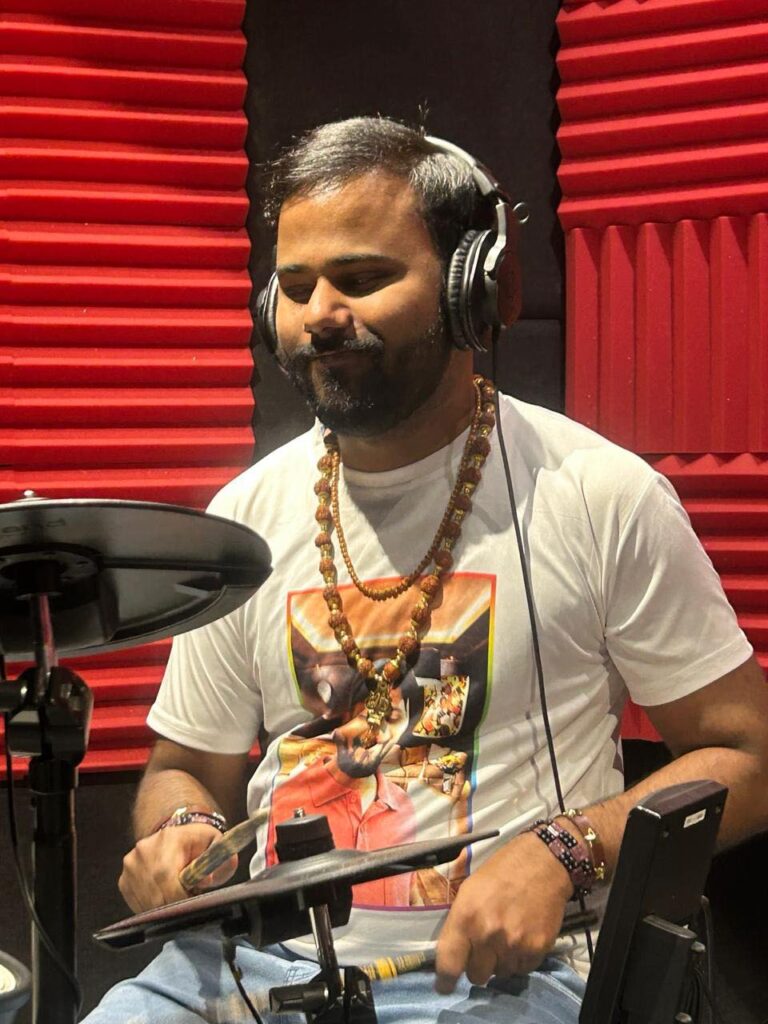
We spoke over a virtual call about his upbringing, his struggles learning production as a visually impaired student, the people who helped him along the way, and why he chose to create something new in Ajmer instead of leaving it behind.
O: Can you tell us about your journey into music, and what first inspired you to pursue it professionally? I know you mentioned your family background earlier, and it’s really interesting because your family comes from roots in traditional art forms, which not everyone has, especially in India where creative careers aren’t always encouraged.
D: Music has been with me since my birth. My family background is full of musicians. My parental uncle is a musician, he can play many instruments, but his primary instrument is flute. He encouraged me a lot and motivated me from childhood. My mother is a classical dancer, so there was always an artistic environment at home.
Because of that, I got interested in music very early. During my school time, I started playing the drums. There were teachers who supported me a lot, and my family also supported me, which is very important, because many people say don’t go into music or get the necessary support, but my family always said if you want to do it, then do it properly.
So from childhood itself, I knew that music is something I wanted to continue, though my formal training came with its own challenges.
University x Accessibility
O: Let’s talk about your time studying music. You graduated from Global Music Institute as a visually impaired musician, and I wanted to bring that into the conversation so people understand the full journey. What was that experience like, and how did it shape your career?
D: Before GMI, I was in xxxx (another music college in Noida). The experience there was not very good for me. They refused to teach me music production because they thought it would be difficult for me as a visually impaired student. At the same time, I also wondered how I would learn staff notation, because Western music uses staff notation. But there was one faculty member, Mohit Arora sir, who helped me a lot. He is a drum teacher who taught me drums and guided me step by step.
Because of him, I started my Rockschool grades in drums. So far I have completed three grades. I gave my first grade exam online in 2021 and got a distinction.
He also taught music theory and supported me a lot during my time at pre-GMI college days. Even today he supports me. He explained everything in such a clear way that slowly, I started understanding further musical concepts.
Later I heard about GMI from someone who knew the faculty (a GMI alum who was a vocal teacher at my earlier music college). When I came to GMI, the experience was completely different. Megha ma’am and all the faculty were fully supportive. Whenever I had doubts, they were always there for me, whether day or night and because of that support, I was able to learn properly, and it really helped shape my career.
Learning Music Production x DAW Accessibility
O: Production itself is such a technical field, and even for people without accessibility challenges it can be confusing as there are so many directions you can go in: recording, live sound, sound design, studio work, and more. What challenges did you face while training in music production, and did your dream change while you were learning, or did you always know this is what you wanted to do?
D: When I was in school, I heard about Digital Audio Workstations (DAWs) and I became interested. I started researching whether the software was accessible for me using voiceover or talking software.
I kept trying different DAWs and learning slowly. I asked friends, groups, and online communities for help. After 12th, I decided I want to make my career in music, but many people told me to keep a backup plan because this field is not stable.
In India, people don’t know how a visually impaired person can do music production, so I faced problems. But I like technology a lot, so I experimented with hardware and software. I used to open electronic items, try things myself, and learn practically.
For accessibility, Logic Pro is the best DAW. The workflow is smooth and works well with screen readers. We always have to stay updated with technology. We cannot learn the same way as sighted people, so we depend on tutorials and communities.
There is one YouTube channel called ‘Blind Logic Pro’ run by Oreo Monster (his YouTube name). He teaches Logic Pro for visually impaired users, and that helped me a lot.
Another channel I would suggest is Andre Louis, a visually impaired musician based in London, UK and is a great pianist/music producer whose videos cater to accessibility as well!
Internship Struggles → Starting his Own Studio
O: Now coming to the big thing — you recently opened what is being described as Ajmer’s first proper music production studio, which is honestly a huge deal, because Ajmer hasn’t really had that kind of space before. What inspired you to start this venture, and why Ajmer? You could have gone to a bigger city, so why build it there?
D: Yes, before opening the studio I planned to do an internship in some studios. I approached many studios, but I did not get a proper reply. Some people asked ‘how will you record,’ ‘what software you use,’ and I explained everything. They said ‘okay we will call,’ but no reply came.
Then, I decided that instead of waiting, I should open my own studio. I opened it in Ajmer because this is my hometown, and also there are very few proper studios here. Some small studios exist, but they are mostly home-type studios without proper treatment. My studio is in my house, and I started step by step. I wanted to create a place where artists here can come, record, and feel comfortable without going to big cities.
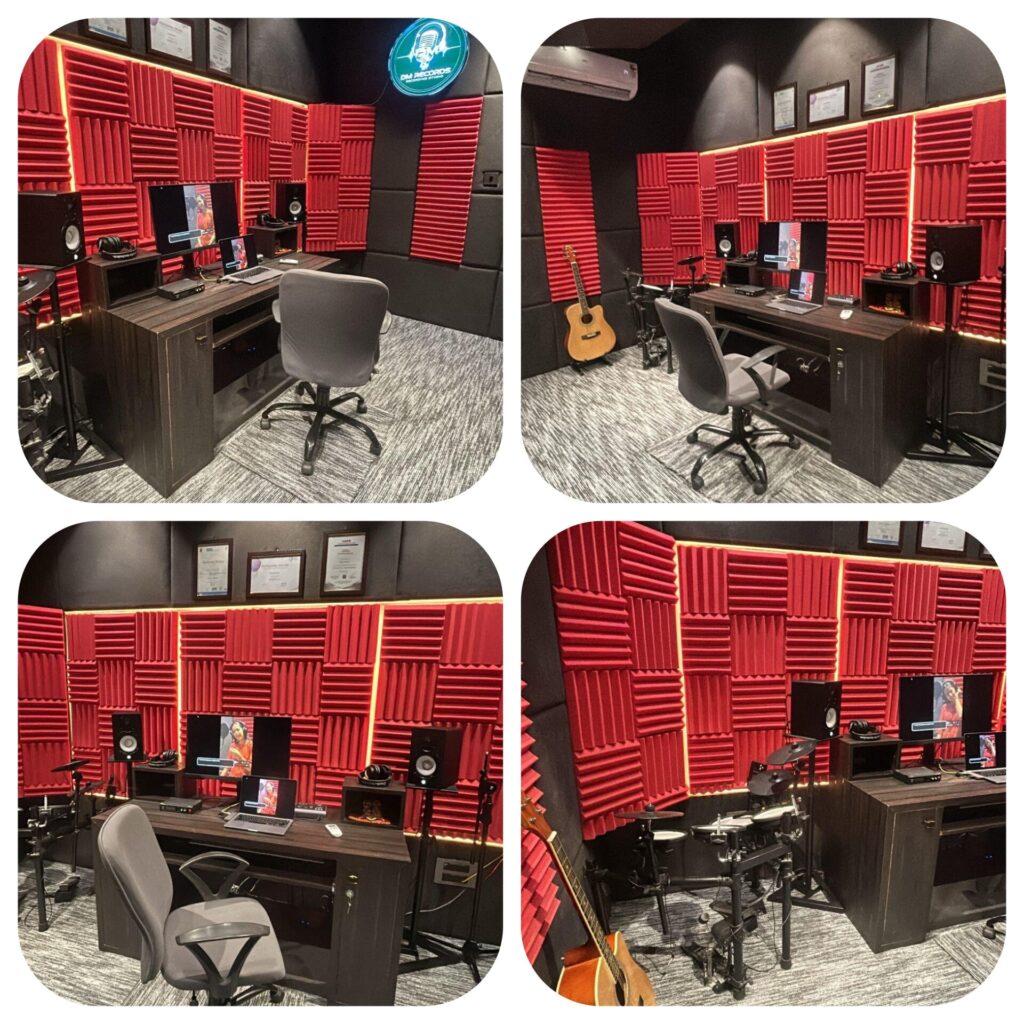
When I was building my studio, I also got a lot of help from the GMI faculty. Especially Aditya Balani sir, Amit sir, and Anhad, who was my mentor during the production course. Whenever I called them, they guided me step by step.
After my studio was completed, GMI gifted me a Rode NT1 Signature Series microphone, which meant a lot to me and because I built this studio step by step with guidance from my teachers and mentors, it feels very personal.
Studio Services
O: Can you tell us more about the facilities and services your studio offers? From what I can see, it looks like you’ve made it a full setup, which is amazing, especially for a city that didn’t have this before.
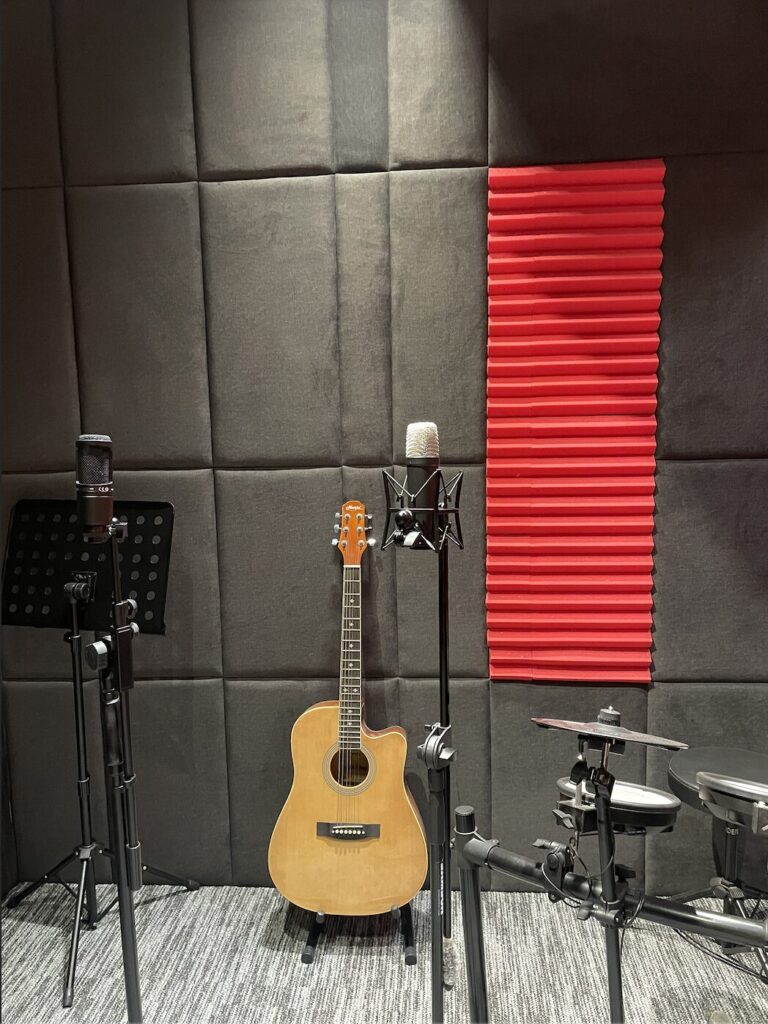
D: My studio is fully acoustically treated and soundproof. Many studios don’t do proper treatment because it needs technical work and money.
In terms of services, I provide recording, mixing, mastering, song production, karaoke tracks, podcast recording, jingles, everything related to music. In the future, I also want to start music lessons.
Ajmer’s Music Culture
O: Ajmer hasn’t traditionally been known for music production, but it does have a strong music culture, especially folk and live performance. Do you think this studio will change the local scene? Are you hoping to create opportunities for artists there?
D: Here in Ajmer, the karaoke culture is very popular currently as it’s quite accessible. Karaoke sound systems are easily available, so anyone can use them. You can just connect your phone via Bluetooth and sing along, and because of that, the karaoke culture has grown a lot here.
Many people book a restaurant or café, with around 40–50 people coming together, and they just enjoy singing karaoke. They have dinner, refreshments, everything, and it becomes like a small event.
Also, in Rajasthan, folk music is very famous. Because of that, people might come to record their folk songs as well.
So I hope more people will come and record here.
Musical Influences
O: Who were the biggest influences in your musical journey?
D: First my family and my teachers. Artists like A.R. Rahman inspired me a lot. Amit Trivedi also. I also like John Mayer very much.
Expectations
O: This is something many people may relate to but did you ever feel people underestimated your abilities? And what would you say to other visually impaired musicians?
D: Yeah, people may discourage you, but you have to always work hard and show them that you are actively working. If your content is strong, or your portfolio is strong, then it doesn’t matter whether you are visually impaired or not. If your work is good and keeps improving, then that’s what matters.
As a visually impaired person, you have to be strong mentally, because from the time you are born, people discourage you in daily activities. Not just as a musician, but in normal life as well, people often say ‘you can’t do this,’ ‘you can’t go there,’ ‘how will you do this’ — things like that.
So you just have to keep working hard, whatever you are doing, whether it’s music or any other profession. Do as much as you can and don’t make excuses.
I also understand that sometimes things are not accessible, that is true. But sometimes visually impaired people do have the needed resources and support, so my advice is to keep working hard, use whatever resources you have, and don’t stop because of excuses.
Future, Gigs, and Socials
O: Finally, what are your goals for the studio in the next few years? Do you want to collaborate with artists from other cities or even other countries? Additionally, if people want to find your work or contact you, where can they follow you?
D: Of course! Music is incomplete without collaboration. I want to work with Ajmer artists first, then with artists from other cities, and then from other countries also. And I will keep moving forward and grow step by step.
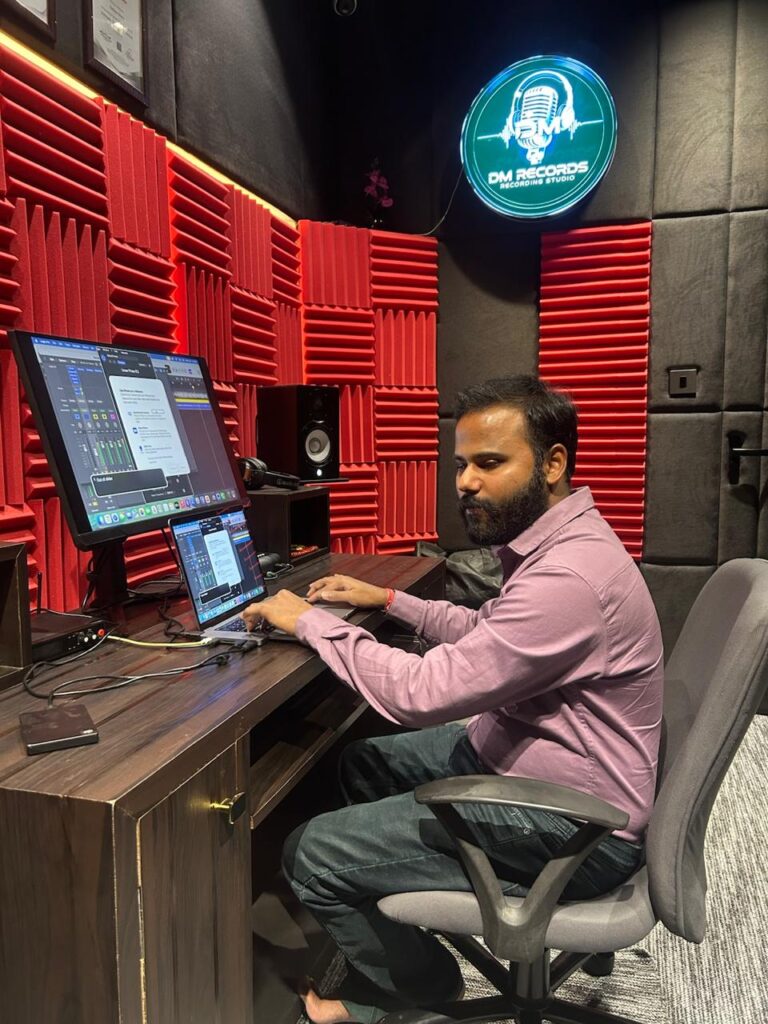
I also do live gigs. I performed in Delhi in front of the Air Chief Marshal, and in 2024 I also performed at the President House, which was a very big moment for me.
My studio address is: DM Records Recording Studio, A-802, Chandra Vardai Nagar, Ajmer, Rajasthan 305003
People can also find the location on Google with a simple search.
Instagram: @dushyantmishra374 | Youtube: Soulful Hits
Anyone who wants to record, collaborate, or perform can contact me anytime.