In Conversation with Pianist Andreas König
(Q/A with Maya, Written by Oshin)
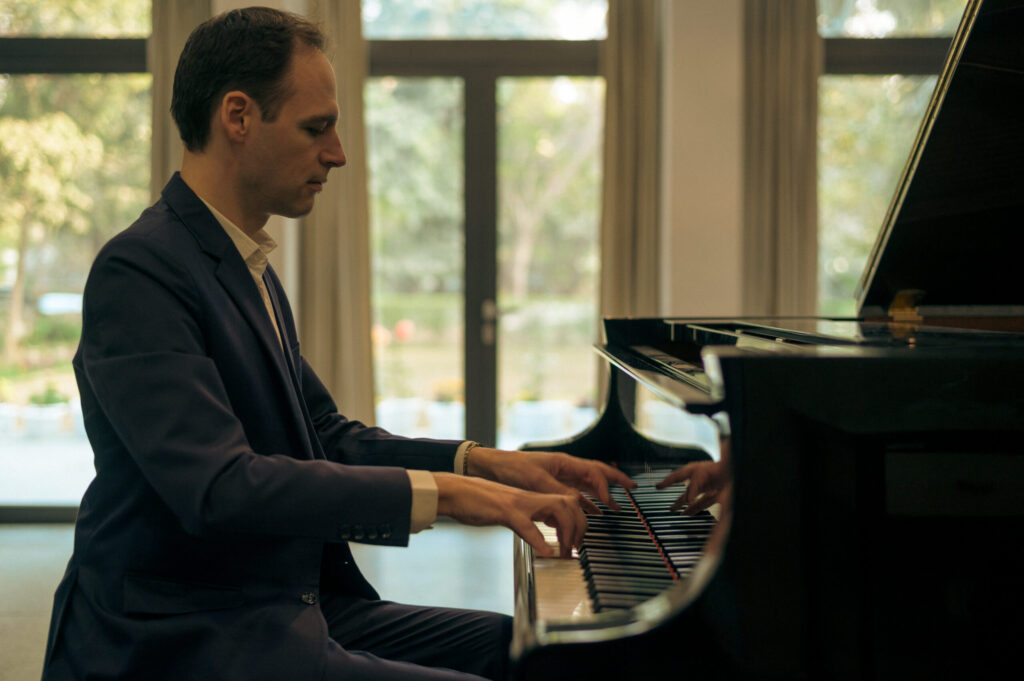
Over the past year, German classical pianist Andreas König has been performing all across India while also teaching and engaging with the country’s evolving interest in western classical music. His season has included concerts in Delhi, Mumbai, Bengaluru and Kolkata, along with collaborations that focus on bridging Western classical traditions and Indian music. GMI students might best remember from his contribution as a panelist in the Changemakers ‘24 event.
In a conversation with GMI team member Maya, Andreas reflects on the season so far, the audiences he has encountered, and the realities young musicians face today.

A Season of Discovery
The current performance season runs until March, and for Andreas it has already been filled with new experiences.
‘It has been an adventurous time, much like my entire experience in India so far,’ he says.
One particularly unique aspect of the season has been the nature of the programmes themselves. Many concerts were organised in collaboration with embassies and cultural institutions, with each programme focusing on a specific country.
‘This is something I hadn’t done much of before… I found myself designing an Austrian programme, a German one, a Finnish one, a Spanish one, and so on,’ he explains. ‘It’s quite amusing, but it also pushes you to discover new repertoire, which I actually find very enriching.’
The concerts have also given him the opportunity to travel across India as he got to perform in cities such as Mumbai, Bangalore and Kolkata.
‘I’ve been grateful for the chance to travel across the country because of these concerts,’ he says, ‘and for the meaningful encounters with fellow musicians that came out of those journeys.’
Overall, he describes the season as ‘a very rewarding experience.’
Collaborations Across Musical Traditions
While most of his concerts last year were solo recitals, Andreas also got the opportunity to collaborate with other musicians, including one particularly memorable project with a sitarist from Mumbai.
‘We performed the two national anthems together,’ he recalls, ‘and in addition to that we played repertoire from both traditions, some classical European music and some classical Indian music.’
Bringing these musical languages together required careful thought.
‘We had to find a way to bring these very different musical traditions together,’ he says. ‘That process of meeting in the middle was a real novelty for me.’
Western Classical Audience in India
As a Western classical pianist performing across India, Andreas has been observing the audience response closely. When asked if he feels that audiences in Delhi and other places have become more receptive to classical, especially solo piano performances, Andreas has been optimistic.
‘The audience here is genuinely receptive,’ he says. ‘The concerts I played in Delhi were well attended, and I think much of that comes from people’s curiosity and desire to experience something new.’
Many listeners are already familiar with Bollywood or popular music, as per his observation, but attending a Western classical concert may be a completely new experience.
‘That novelty actually helps draw them in.’
What struck him even more was the diversity within the audience.
‘In Europe, there is a lot of discussion about classical music audiences becoming older,’ he explains. ‘But here, the audiences I encountered were truly diverse, cutting across age groups and sections of society.’
Before arriving, he had heard predictions that the audience might consist largely of diplomats or expats . Instead, he estimates that ‘around 95% of the audience was local,’ with only a small portion coming from the expat community.
‘That tells me there is a huge openness and even greater potential,’ he says.
The main limitation, in his view, is not audience interest but the number of concerts available.
‘Right now they are still relatively sparse. There could definitely be many more.’
Dire Need for More Concerts
When asked whether accessibility or concert organisation is the issue, Andreas explains:
‘For the most part, concerts are accessible, the bigger issue is simply that there are not enough concerts being offered.’
He believes that if more western classical concerts were organised, audiences would attend.
‘The audience exists,’ he says. ‘More concerts would benefit everyone involved: the listeners, the organisers, and the musicians.’
Memorable Moments
Over the past year, several experiences have stood out for Andreas as particularly meaningful.
When asked about memorable moments that shaped his journey as an expat pianist living in India while building both a performance and teaching career, he reflects on a few that left a lasting impression.
One was a collaboration with an Indian classical dancer, which reminded him of historical connections between India and European composers.
‘One of the composers I deeply admire is Claude Debussy,’ he says. ‘He was influenced by Indian musicians who came to Paris in his time. He studied their music and became friends with Hazrat Inayat Khan and his group from Rajasthan.’
Reflecting on those historical connections while performing in India himself felt surprisingly personal.
‘Drawing parallels between Debussy’s experience and mine was quite enthralling. It was strange, but deeply meaningful.’
Another unforgettable moment came during a performance at the Kolkata Book Fair.
‘The setting itself was extraordinary,’ he recalls. ‘It was the last day, so the fair was especially crowded, and a stage had been set up right in the middle of the grounds, outdoors and without amplification.’
Most of the people there had not come for a concert.
‘They came for the book fair,’ he says. ‘But suddenly there was a grand piano in the middle of it all.’
Seeing people stop, curious and surprised, and gradually gather around the performance created a special atmosphere.
‘Feeling their presence as you play… that was an incredible moment.’
He also mentions performing at the India Habitat Centre, praising both the venue and the audience.
‘It has a beautiful hall, a good piano, and an audience that truly appreciates what musicians have to offer.’
A Celeb Moment
At one point in the conversation, Maya returns to the Kolkata story.
‘I especially love that image,’ she says. ‘A grand piano onstage, right in the middle of a massive fairground.’
‘Exactly!’ Andreas responds. ‘The audience isn’t just in front of you — they’re all around you. There’s no real escape, you just have to play.’
Leaving the stage turned out to be just as memorable.
‘I could only leave by moving through the crowd, people wanted selfies and everything.’ Andreas laughs.
Maya jokes that it must have felt like a celebrity moment.
‘Which you almost never get as a classical pianist in Europe,’ Andreas replies. ‘There it’s all very normal and professional.’
Staying Grounded as an Artist
Maintaining discipline and resilience in a performance career requires inner balance.
Maya asks Andreas what practices help him sustain artistic integrity and consistency while navigating the demands of a performance career.
‘The main foundation for me has actually been yogic philosophy and practice,’ he explains.
He has practised yoga for more than fifteen years and credits breathing techniques and concentration practices with helping him stay focused.
‘Yoga supports discipline, resilience, and inner stability.’
He also believes musicians benefit from engaging with philosophical texts.
‘I would encourage people to find time to read ancient texts that impart timeless wisdom. They give you something deeper to return to when everything else feels uncertain.’
Another principle he emphasises is the difference between goals and virtues.
‘Goals can disappoint you,’ he says. ‘But virtues are commitments you can renew every day. They give you the chance to come back and make good on your promises to yourself.’
Music Education vs. Pursuing a Music career
As the conversation turns to music education and the realities of pursuing a career in music in India, Maya asks Andreas about what forms the foundation of strong music education, and how young musicians in India can prepare themselves for the demands of a professional performance career.
‘First of all, I want to point out that these two parts of the question are actually quite far apart,’ he explains. ‘They may sound closely connected, but they are not. Music education in general applies to about 99% of students who will not become professional musicians. The 1% who want to become professionals need a very different kind of training.’
For the majority of students, however, the most important element is not methodology but the human relationship between a teacher and student.
‘Music is emotional,’ he says. ‘It speaks to our inner world in a way that many scientific subjects do not.’
According to Andreas, a passionate teacher can have a profound influence.
‘A teacher who truly loves music but may be weaker in methodology will often have a greater impact than someone who is technically perfect but has lost that love — or never developed it at all. This is not to say that methodology is unimportant’ he explains. ‘But we must never forget the human dimension. That means supporting, valuing, and encouraging teachers while creating conditions where music education can be joyful and not just “efficient” or “economically driven”.’
He also emphasises the importance of ensemble playing. At the Delhi School of Music, efforts are made to bring students together in choirs and collaborative projects.
‘Students spend several months working together towards a programme,’ he explains.
‘We bring together violinists and pianists, singers and accompanists, and we also run a choir project. Students don’t only go to their individual lessons — they spend several months working together towards a programme, often using their voices instead of just their instruments. This kind of collective music-making adds enormous joy to the journey. It reminds us why we fell in love with music in the first place. We should even encourage this at home. If two siblings are learning piano, let them play four-hand pieces together. If it’s piano and violin, let them explore that combination.’
Music, after all, is meant to be shared.
‘And by the way,’ he adds with a smile, ‘we need more cellists.’
Prepping One’s Professional Career
When discussing how young musicians can prepare for a professional performance career, Andreas emphasises realism.
‘Expose yourself to international performance standards,’ he advises, encouraging students to closely follow major international competitions and listen carefully to how competitors perform, even in the early rounds.
‘It is extraordinarily difficult,’ he says. ‘Sometimes it can be shocking to see the level that is required.’
Because of this, he encourages young musicians not to focus exclusively on performance careers.
He also insisted how teaching can become an equally meaningful path.
‘It may not be your biggest dream, but if you find that it resonates, it can be deeply meaningful. There comes a moment when you want to pass on what you’ve learned,’ he says.
The Challenge of Time
When Maya raises the question of whether young musicians should explore widely or focus primarily on developing their skills in the early years, Andreas is clear that building strong foundations must come first.
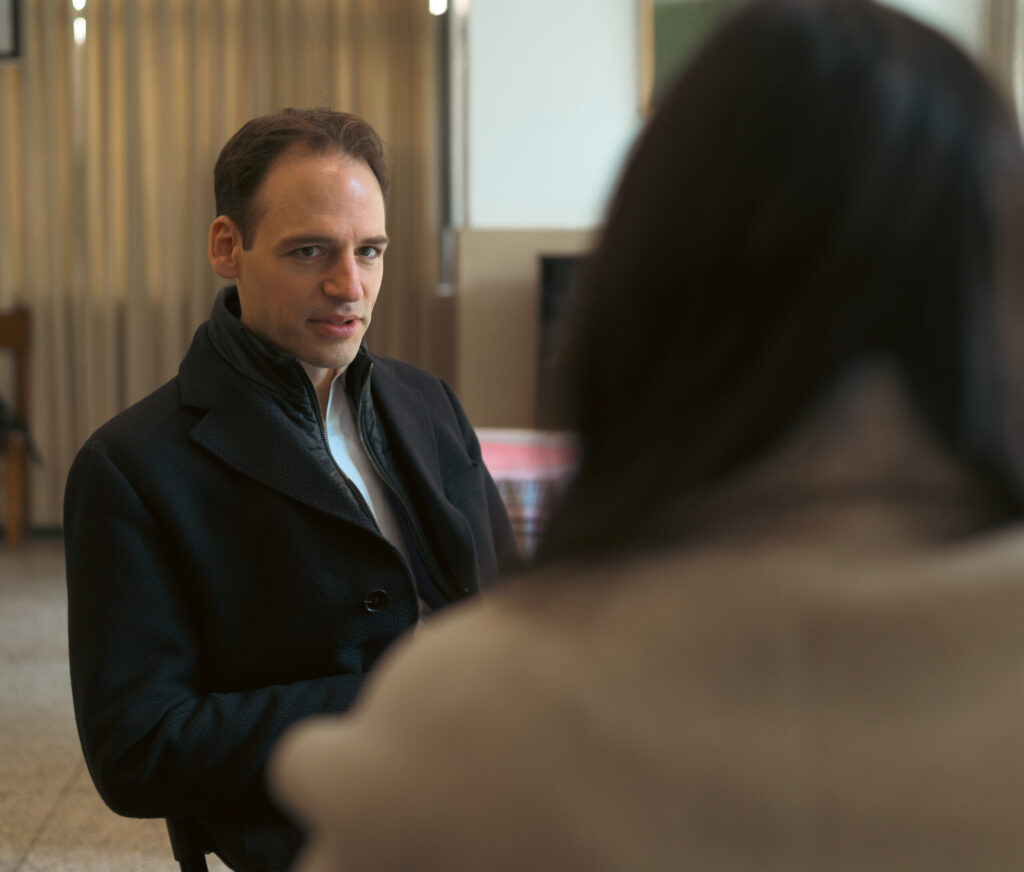
‘Above all, young musicians need to be deeply engaged in building their skills — and to do so as early as possible,’ he says.
One of the biggest challenges he sees, particularly in India, is time management. If practice is squeezed into whatever time remains after school, homework and other activities, serious development becomes difficult.
‘I have seen people who reorganise their lives so they can devote real, sustained time to developing as performers. And this is essential. You cannot become a classical musician — let alone a world-class one — if you only practise for an hour here and there.’
For those who are serious about a performance career, he believes this often requires honest conversations with parents, teachers and schools about creating the time and space needed to practise consistently.
Adaptability and Artistic Standards
Maya reflects on how India’s music industry has been expanding rapidly, with more international artists performing in the country and more Indian musicians touring abroad. While the traditional October–March performance season still shapes much of the classical calendar, new opportunities are increasingly emerging beyond it.
At the same time, many young musicians struggle to balance the desire for job stability with the uncertainty that often accompanies a music career. When asked how he sees the evolving nature of the profession and how important adaptability is for young musicians today, Andreas reflects on the realities of the field.
However, he draws an important distinction between adapting to circumstances and compromising on deeper values.
‘When it comes to your goals and values, you need to do the opposite of being endlessly flexible,’ he explains. ‘You have to set clear standards and draw some red lines.’
For musicians, he believes, aesthetic and artistic standards are even more important than economic ones.
‘Life will test them,’ he says. ‘And if you haven’t thought carefully about what you stand for, those tests can break you.’
At the same time, Andreas encourages young musicians not to be overly cautious early in their careers.
‘If you are in your twenties, you actually have room to take risks,’ he says. ‘Within that frame, risk is necessary if you truly want to grow as an artist and find your own voice. Higher risk often means higher reward.’
Those risks may also bring setbacks and uncertainty, but he sees them as an unavoidable part of a musician’s journey.
‘You will struggle at times. Things will not always work out the way you hope. But that is not a failure, that is the reality of being a musician.’
Over time, he adds, the desire for stability tends to emerge naturally and how stability usually becomes more important later in life. The early years, however, remain the most important period for exploration, experimentation and artistic discovery.
What’s in Store for Classical Music in India
As the conversation draws to a close, Maya asks Andreas what changes he would most like to see in the Indian music ecosystem as it continues to diversify — particularly developments that could better support classical musicians in the years ahead.
The first thing that comes to mind, he says, is the need for a full-fledged orchestra in the capital.
‘This is admittedly Delhi-centric, but a major orchestra would act as a beacon for the entire classical music community,’ he explains. ‘An orchestra creates an ecosystem around it: chamber music, collaborations, ensembles of every kind. It also gives an entire generation something to aspire to.’
Beyond that, Andreas believes India has enormous potential to host many more classical concerts.
‘Budget, funding and sponsorship are always part of the conversation, but there is actually a lot of untapped potential here,’ he says. With India’s growing corporate sector increasingly involved in cultural initiatives, the resources required to support concert series are relatively modest compared to the artistic activity they could enable.
‘The venues already exist,’ he adds. ‘What is really needed is stronger networks, collaboration and alignment of common interests.’
He also points to one very specific but important challenge: the lack of acoustic pianos in cultural institutions.
‘This is particularly important to me as a pianist,’ he explains, ‘but it goes far beyond Western classical music. The piano is a neutral, universal instrument. It belongs just as much to pop, jazz and contemporary music as it does to classical.’
Yet grand pianos remain surprisingly rare in many cultural venues.
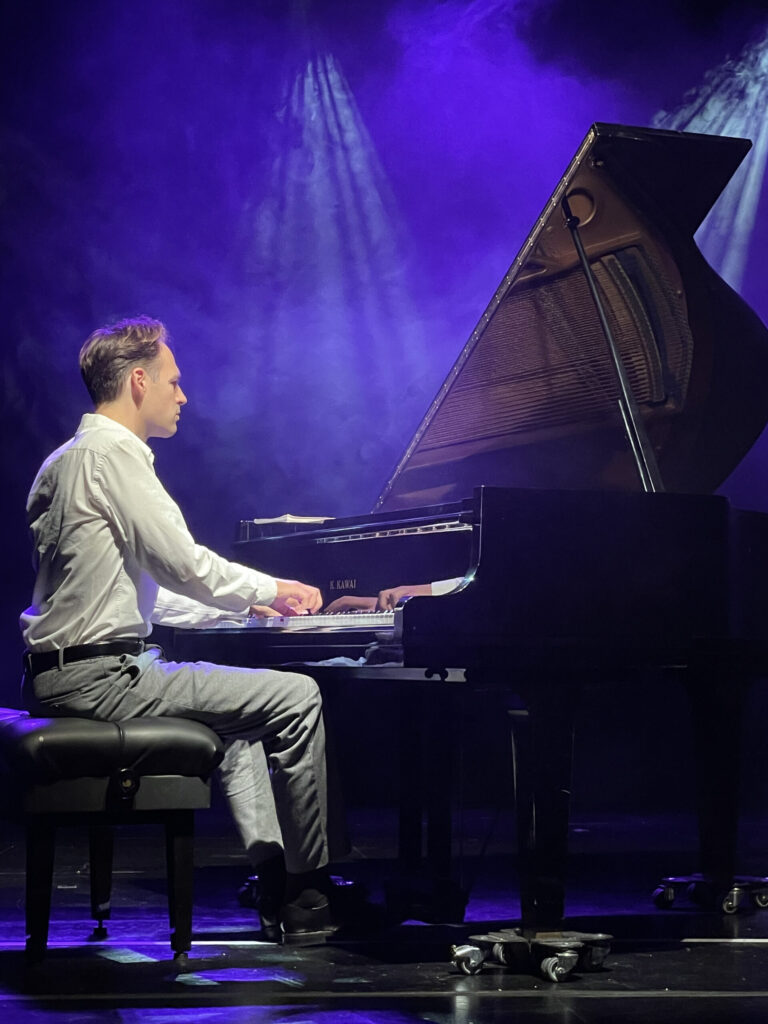
‘A grand piano is not an exaggerated luxury…it’s a long-term investment,’ he says. ‘These instruments can last a hundred years or more, while most other investments depreciate within decades. Having more of them in cultural centres would transform what is artistically possible.’
As Andreas reflects on the possibilities ahead, his perspective is both practical and hopeful. With stronger networks, greater institutional support and simple investments such as more performance opportunities and better instruments, he believes India’s classical music scene has the potential to grow significantly. For him, the foundations are already there — what remains is the collective effort to build on them.
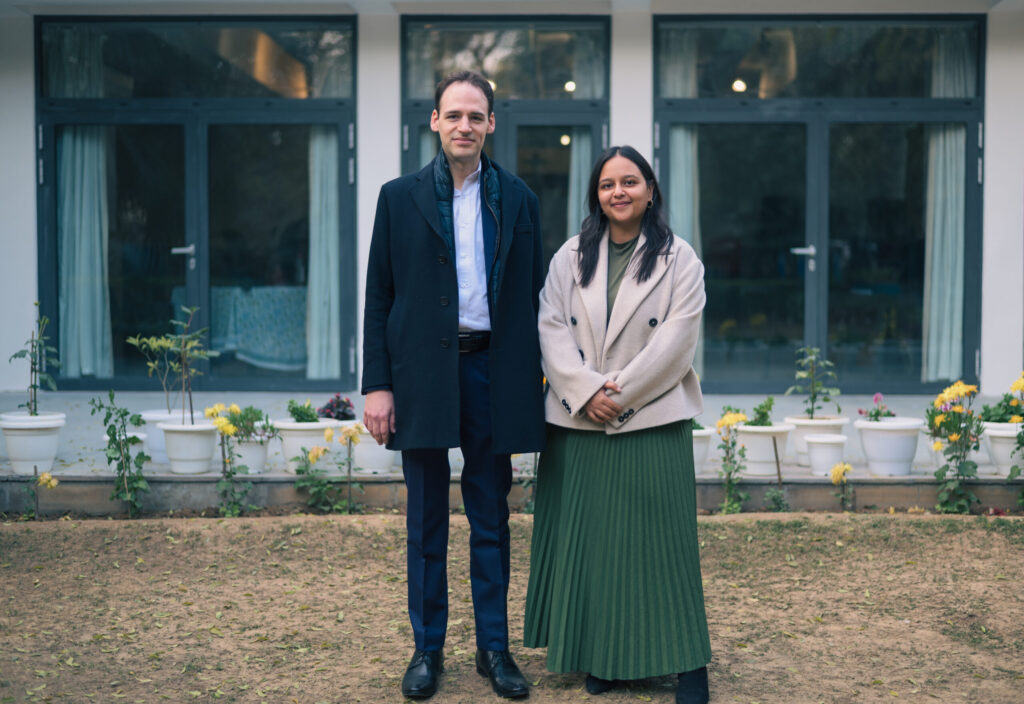
Follow him to keep up with his journey:
Website: www.andreaskoenig.es
Instagram: andreas_koenig_pianist