Small Town, Big Love, Little Homes:
In Conversation with When Chai Met Toast
Written by Aanchal Bordoloi;
Edited by Sohaib Durrani
When Chai Met Toast is a multilingual Indie-folk alternative band, formed in Kerala, consisting of lead vocalist Ashwin Gopakumar, guitarist Achyuth Jaigopal, keyboardist Palee Francis, and drummer Pai Sailesh. They have been on an incredible journey for the past 10 years and are doing more than just performing and making music — they’re focusing on community and really experimenting sonically and musically. From interacting with each other in their college days through their early venture into the Kerala Indie music scene to their international tours, connecting with audiences worldwide, they’ve stuck with each other through thick and thin, spreading only joy and positivity.
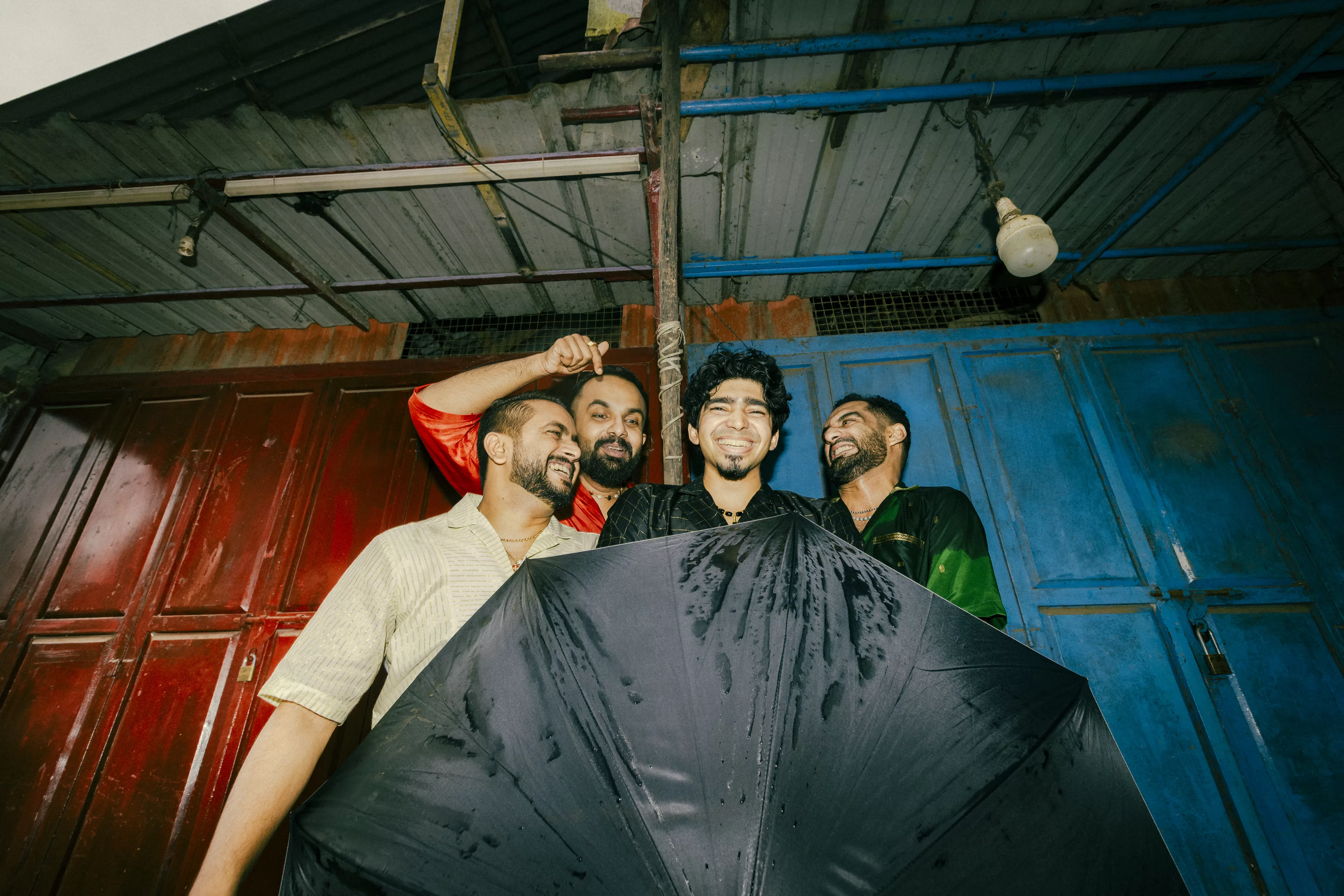
When asked about their advice to aspiring singer-songwriters, they say it’s important to build a niche for themselves — work around an original identity and focus on their core community of fans and supporters. According to them, being a musician alone in this day and age is not enough. Efforts need to be made to connect with the community beyond the screen and actually engage with them.
Dreamland is When Chai Met Toast’s first single from their upcoming album, Small Town, Big Love, Little Homes. The spectacular music video is directed by Anto Phillip, and with Job Kurian on vocals making it as Kerala-esque as it can possibly get, the song is elevated to a whole new level.
“Oh I am living in a dreamland,
God’s own paradise”.
I feel lucky to have learnt so much through this one conversation. Here are 2 lines that really stuck with me —
“The melody dictates the language”
“When we were having our exclusive listening sessions for close friends and family, a lot of people were appreciative of how the various languages intertwined so effortlessly in the music – and this is something that we’ve established as an USP for ourselves over the past ten years”.
How was the experience collaborating with Anto Phillip and Job Kurian on the music video for Dreamland?
We initially didn’t have any plans for a feature, but when it came to conveying lyrics in Malayalam, we thought that the best person would be Job Kurian. It would be a great representation of Kerala. Job was very happy to be a part of the song when we presented it to him.
He’s a person we admire a lot from the Kerala music circle and is very influential in the Indie space. He was the first person to start singing in English in Kerala. There’s a lot of identity attached to him and we are very big fans of his independent work. The message of our song, Dreamland is deeply rooted in Kerala and points to it being a dreamland. We couldn’t think of a voice more divine than Job Kurian’s to enhance and take this song to the next level. He’s done complete justice to his part in the song.
With regards to Anto, he’s been a long-term friend of ours. From his musician days, doing shows with his band, Athma, to our multiple collaborations on his Under 25 events, he’s been a big admirer and supporter of our work. His work and messaging on Instagram and general media presence has been very pro-Kerala. He looks at Kerala through a different lens and has a great style of storytelling. We knew he’d be a good fit to represent the song visually. It’s actually his first video as a director.
The costumes in the music video have been thought of, and put together brilliantly – weaving tradition with modern design – how did it feel to don repurposed pattu sarees, once worn by your mothers?
The album is called Small Town, Big Love, Little Homes. It’s very rooted in our homes. One of the major elements is the Panjavarnam sarees. We wanted to bring in similar representations such as the colours of the Kathakali – black red, green,white and yellow. This is the palette for the entire album. The concept was to find something that we identify with as home and family. We had designers on board – Revathy and Hiba, who helped realise this and bring this to life. These were indeed repurposed saris that were worn by our mothers. We also have a documentary that we have made on this (costumes), which will be coming out after the release.
The feeling of home here extends beyond the music – into the costumes. It is fascinating to see how artists truly embody their culture and the clothes themselves become a medium of expression. This reminds me of singer-songwriter Ditty’s clothing too — which is very rooted in sustainability and loving our natural environment. Her music and clothing both bring out what she stands for.
Bands such as Avial, Indian Ocean, The Tapi Project and Alva Kuuto have been successful in making music in their mother tongues and merging them with modern elements. How has your journey been in this regard — in using a multi-lingual approach in your music?
I think ours is quite different when you look at it from let’s say Alva Kuuto who has been hyper-localising for a very niche language. English is the dominant medium for us – there’s Hindi, some Malayalam and Tamil intertwined. Here, the difference is that there is something for everyone. We don’t want to localise because we have listeners all around the world. For us, lyrics are just a medium of what conveys the meaning better and does the same for the melody. We sound better for certain songs in English, whereas other things, we feel are better expressed in Hindi or Malayalam. The melody dictates the language.
In Dreamland, for example, the moment we had the melody, we were certain of singing in Malayalam. The verses are a mix of English and Hindi. There, Malayalam would not have sounded so nice as the meter for the melody isn’t something that flows easily for Malayalam. The bridge section could really integrate Malayalam seamlessly. When we were having our exclusive listening sessions for close friends and family, a lot of people were appreciative of how the various languages intertwined so effortlessly in the music -and this is something that we’ve established as an USP for ourselves over the past ten years.
We do not force-fit any language into the song. If Malayalam fits most, then we go ahead with that. Ashwin tends to make melodies which can accommodate both English and Hindi.
It has a lot to do with Ashwin’s multi-lingual background. The way he sings in English is not similar sounding to any Western singer. It is sort of a middle-ground between English and an Indian sound which makes it relatable to Indian listeners.
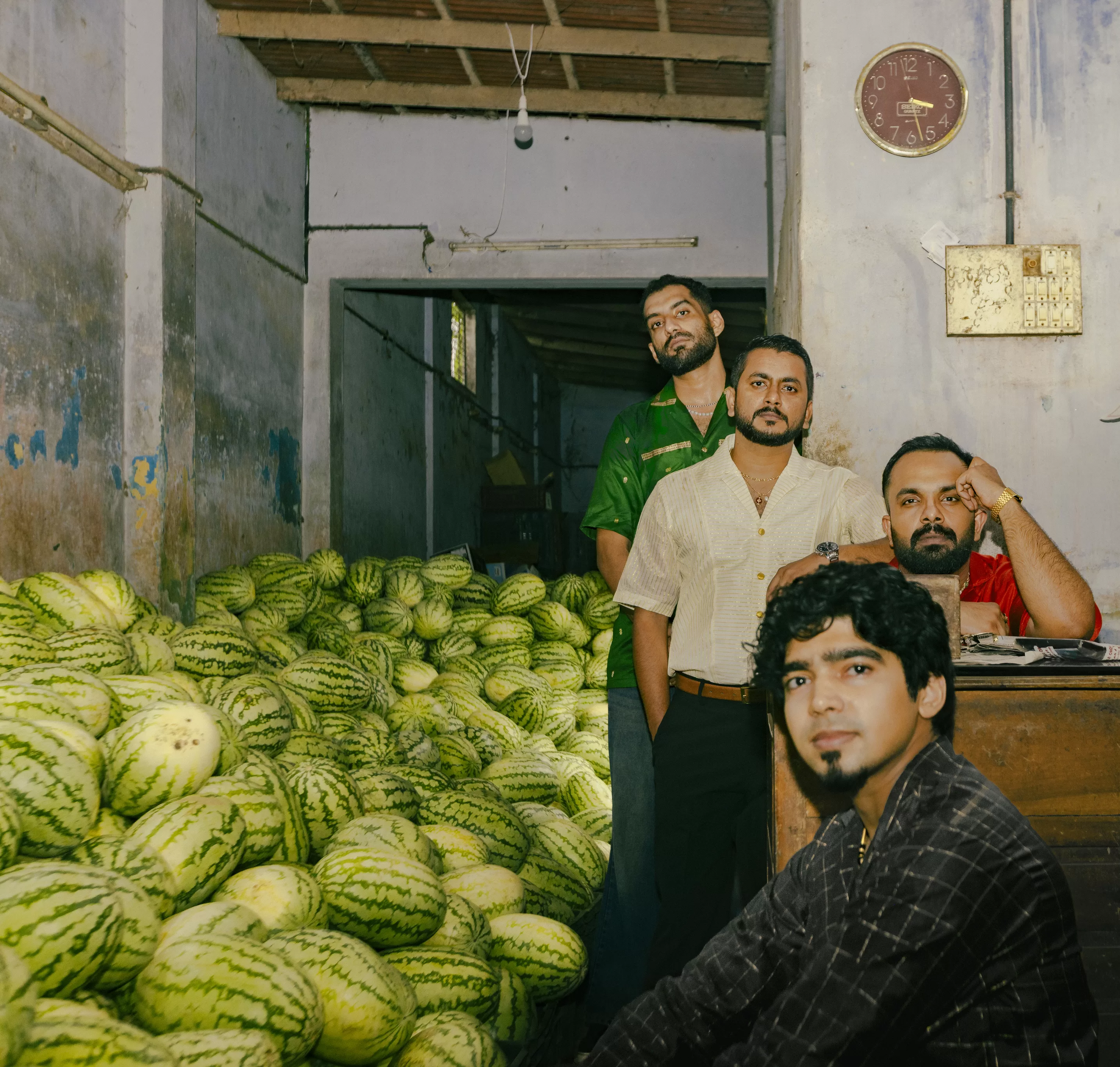
As a band, you have surely traveled and toured across several countries and breathtaking locations across the world – what are some of the fondest memories that you can recall of having travelled and spent time together?
When we went to the UK, to record our EP, we stayed in an AirBnB for 45 days — the 4 of us have spent so much time together. We were cooking and cleaning together and everybody had their own duties. This was when we realised that it was indeed possible for us to spend so much time together.
We were on the road once — driving for eleven hours to Oregon. That’s when we wrote one of the songs from the album called I’m Coming Home. We even celebrated Onam together since we were in Chicago during that time. Pai visited the Kennedy Space Centre, since he is a massive fan of all things space-related.
In the UK, we just took a van and drove it all around. Traveling with the team surely is an experience. We tried to pick up new instruments along the way to enhance our sound. The upcoming album includes such instruments — banjo, mandolin, octave mandolin, charango — a lot of string instruments incorporated in a very contemporary way. We play these instruments quite differently from how they are traditionally played — mainly because of technical limitations, but we make it work with sound that the album brings. We go with what feels right.
We have now done three tours in the UK, one on the West Coast, one in Australia and a few around Asia. If we had to name stories, there would be too many. It’s been a good journey.
Dreamland is your first single from your upcoming album, “Small Town, Big Love, Little Homes”. What can we expect from your upcoming album?
There is something for everyone in the album — there are fun songs, slow and emotional songs… covering aspects that everybody can relate to. Home is the central theme of the album — not just home represented as a place but feelings that can be associated with home… that’s embodied in a lot of the songs in different ways. Home is the overarching theme but it’s home represented in different facets. We’re very excited about the album since it has taken us a good year and a half of multiple iterations and it’s been a long process.
We have experimented a lot sonically and musically. For Dreamland, we have really experimented with different instruments such as the Chimta and longhorn.
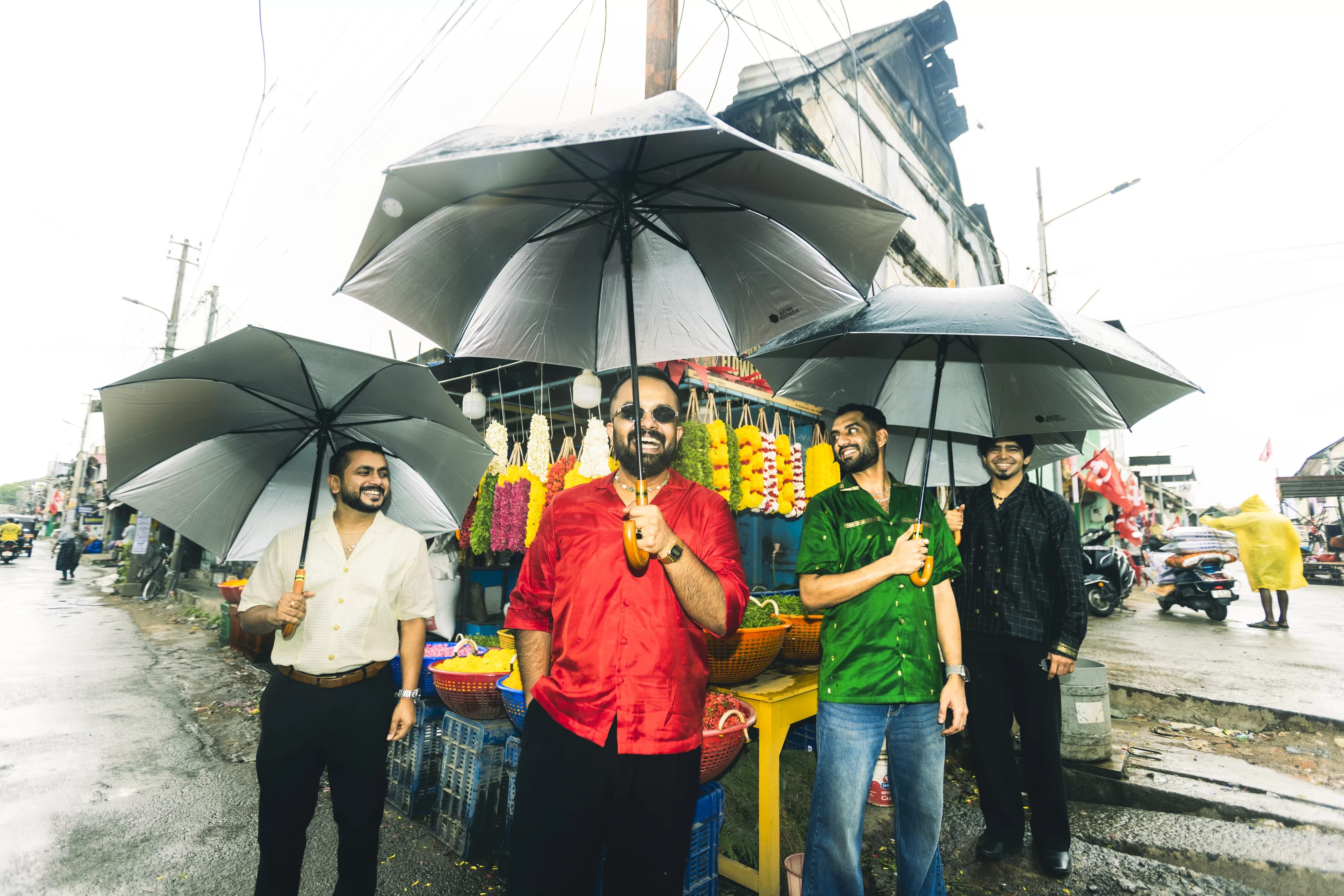
Could you tell us a bit about the Nature Tapes Festival?
It was an idea that we had 4-5 years back where we wanted to invite a close set of fans with us on a retreat. We were finally able to make it happen this year. We would like to call it more of a community hang, more than a festival. It included people who had seen us live multiple times and stuck with us for a very long time… people who had memories and stories attached to our music. It was an opportunity for us to get to meet them and for them to share their stories. The festival took place for a duration of two days and consisted of activities such as the community kitchen, listening session and live performances. We were able to fit several community events into one festival. This is going to be a yearly occurrence. This took place in Wayanad, Kerala and is something we’ve always wanted to do. It was a great experience to cook with the fans and for them to take part in the listening sessions. The property where this happened was a bungalow with great scenery, near a tea estate. We look forward to doing this a lot more.
It was great to take the versions of our Nature Tapes sessions and perform them in a live setting. We’re sort of multi-instrumentalists, so it was nice to switch around our instruments and bring about different versions of the songs — for example with the xylophone — to execute chill and laid-back arrangements. It’s a different atmosphere altogether and was super fun.